
Portfolio - Work
This is a selection of what I have produced at work; from my role as a Prototype Engineer in the point-of-sale industry, to my role as a design engineer for a company dealing with locks and handles for automotive and defence.
Rimmel "Mibar" Unit
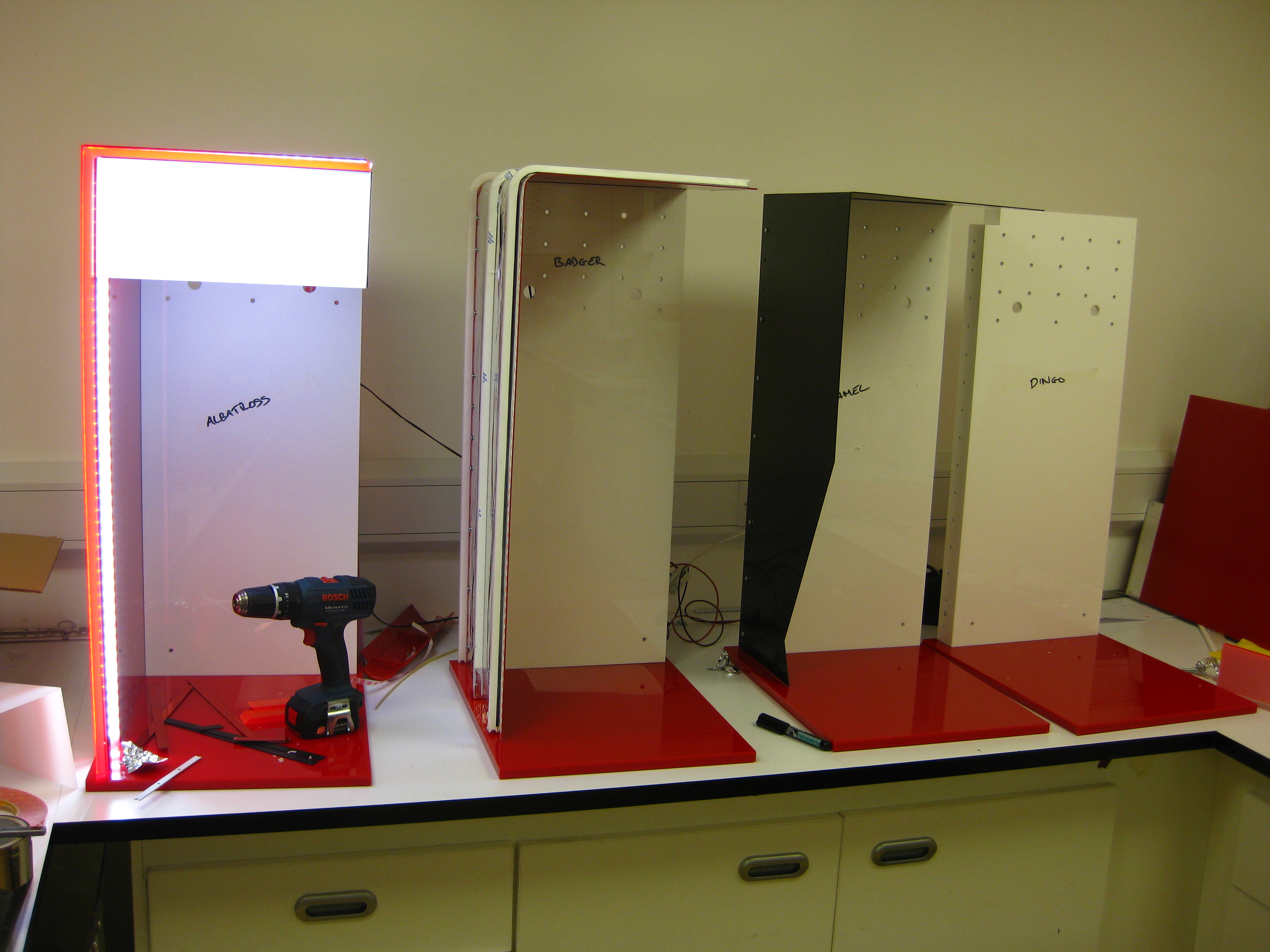
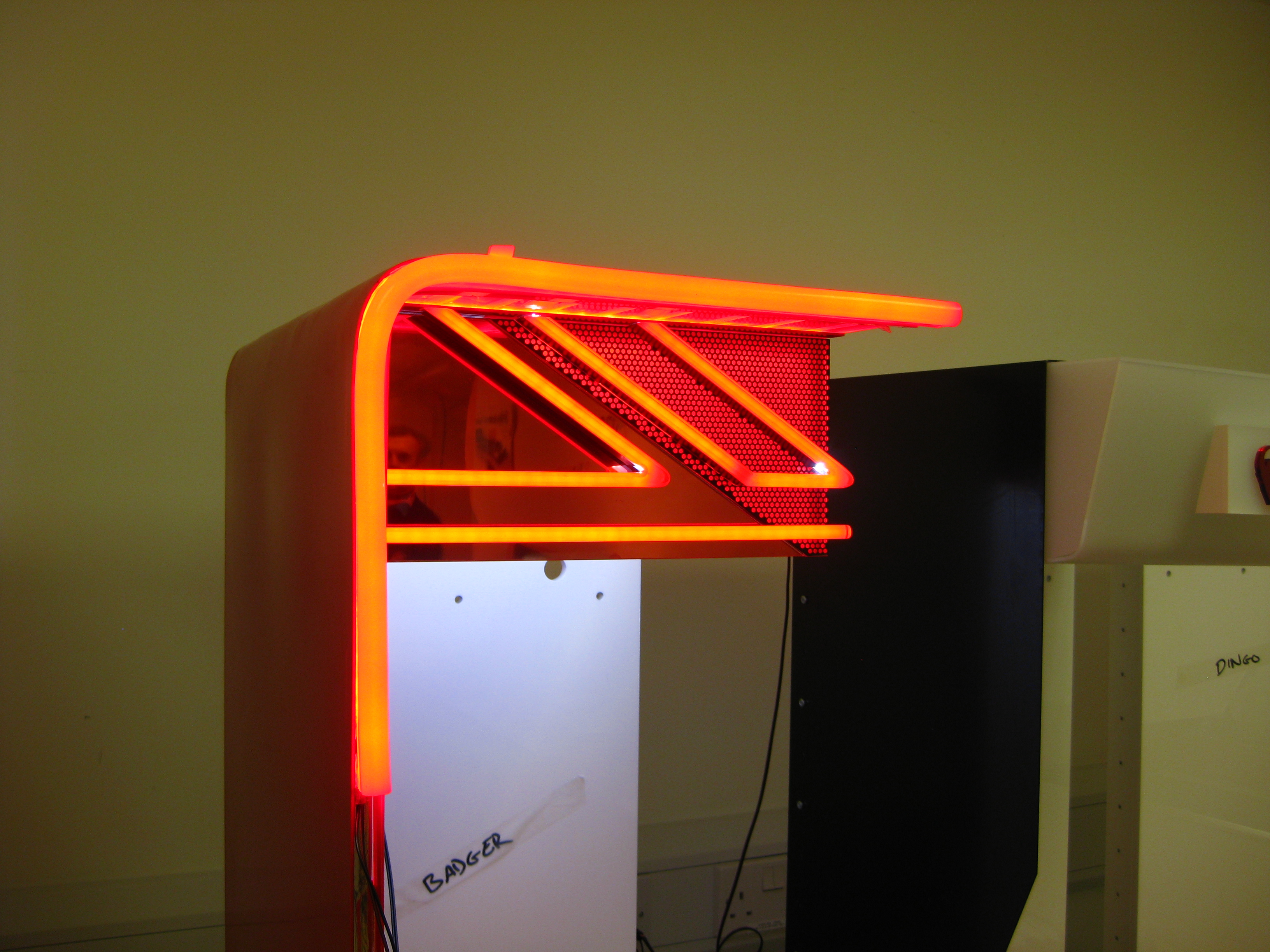
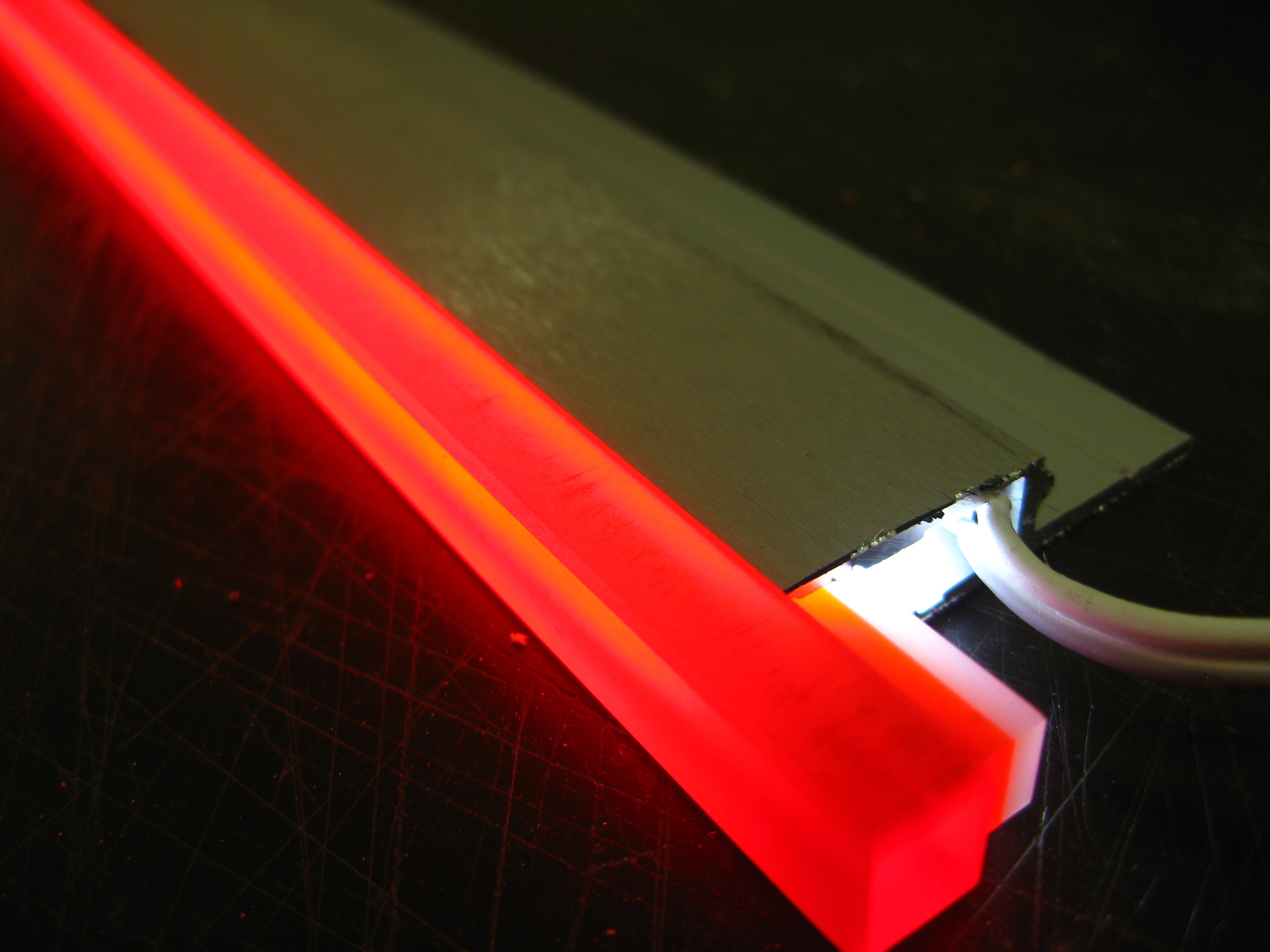
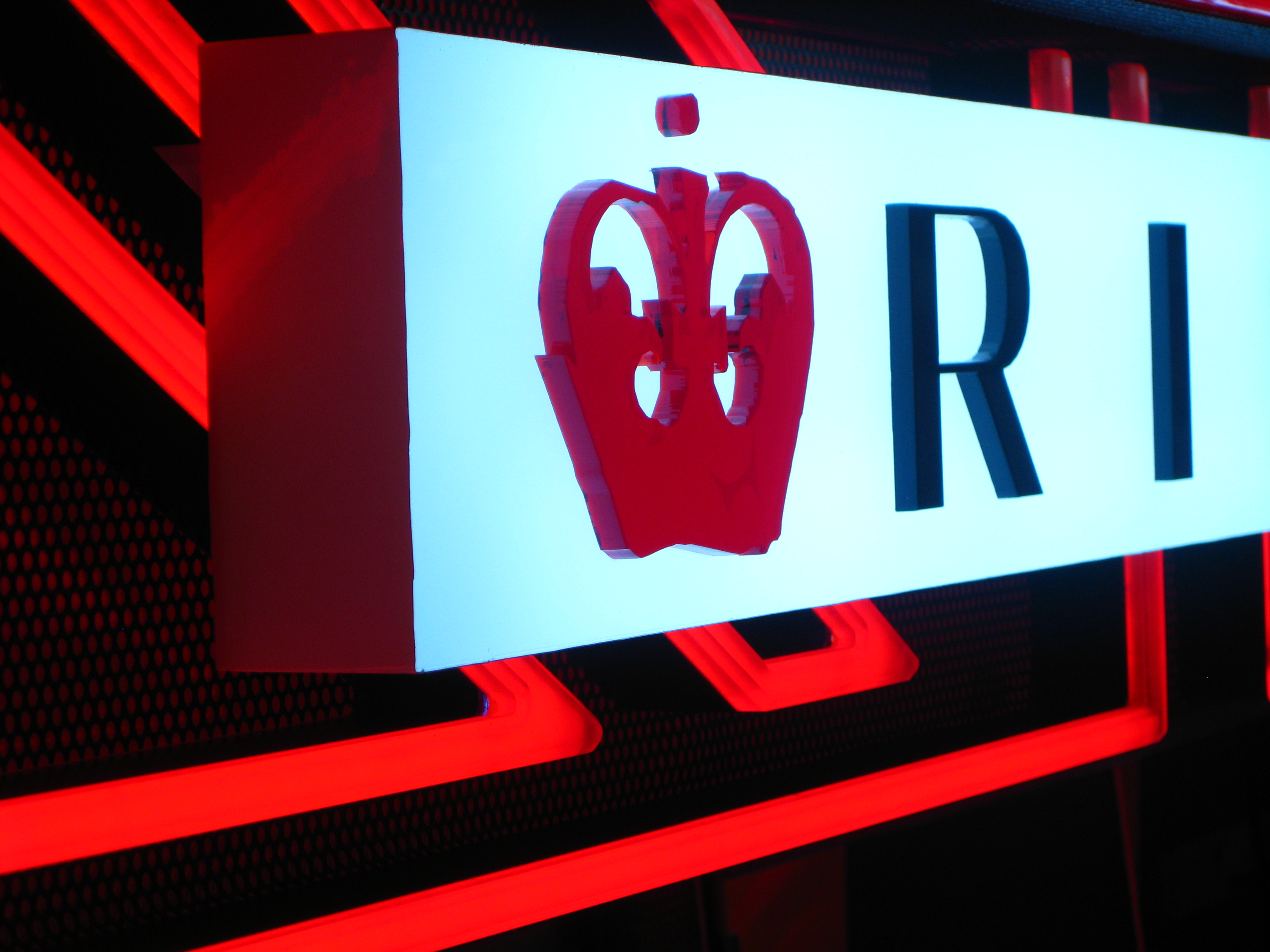
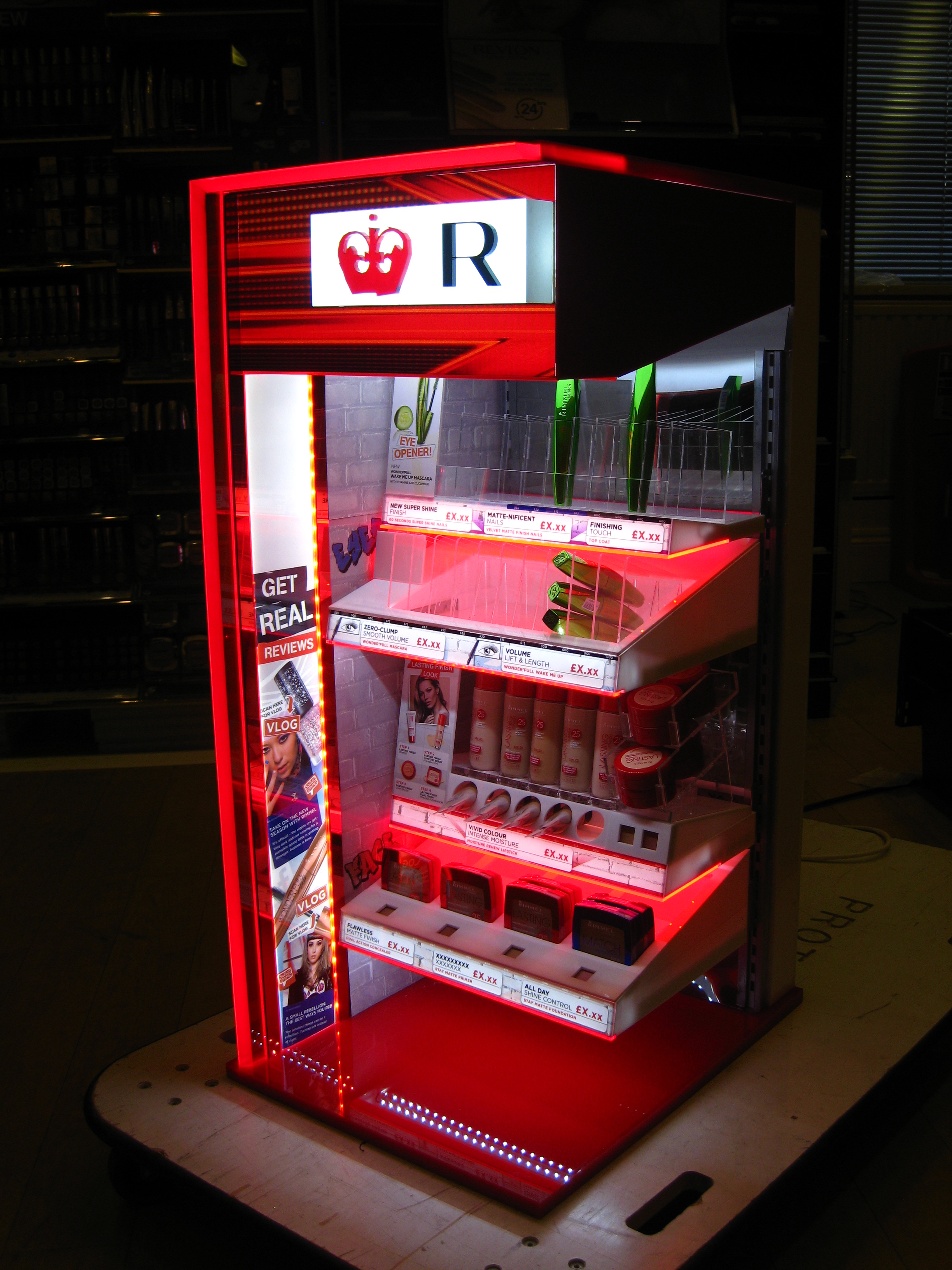
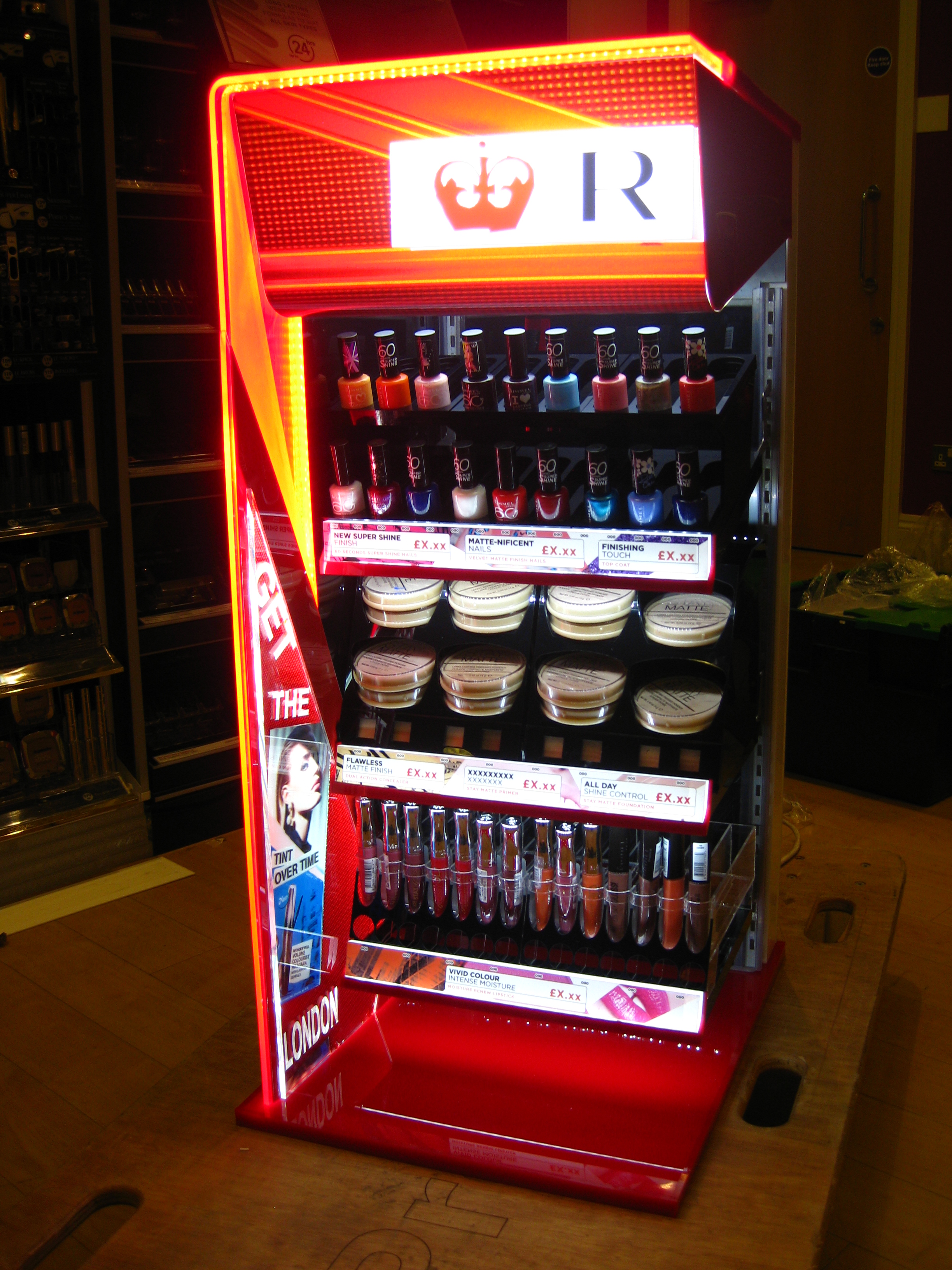
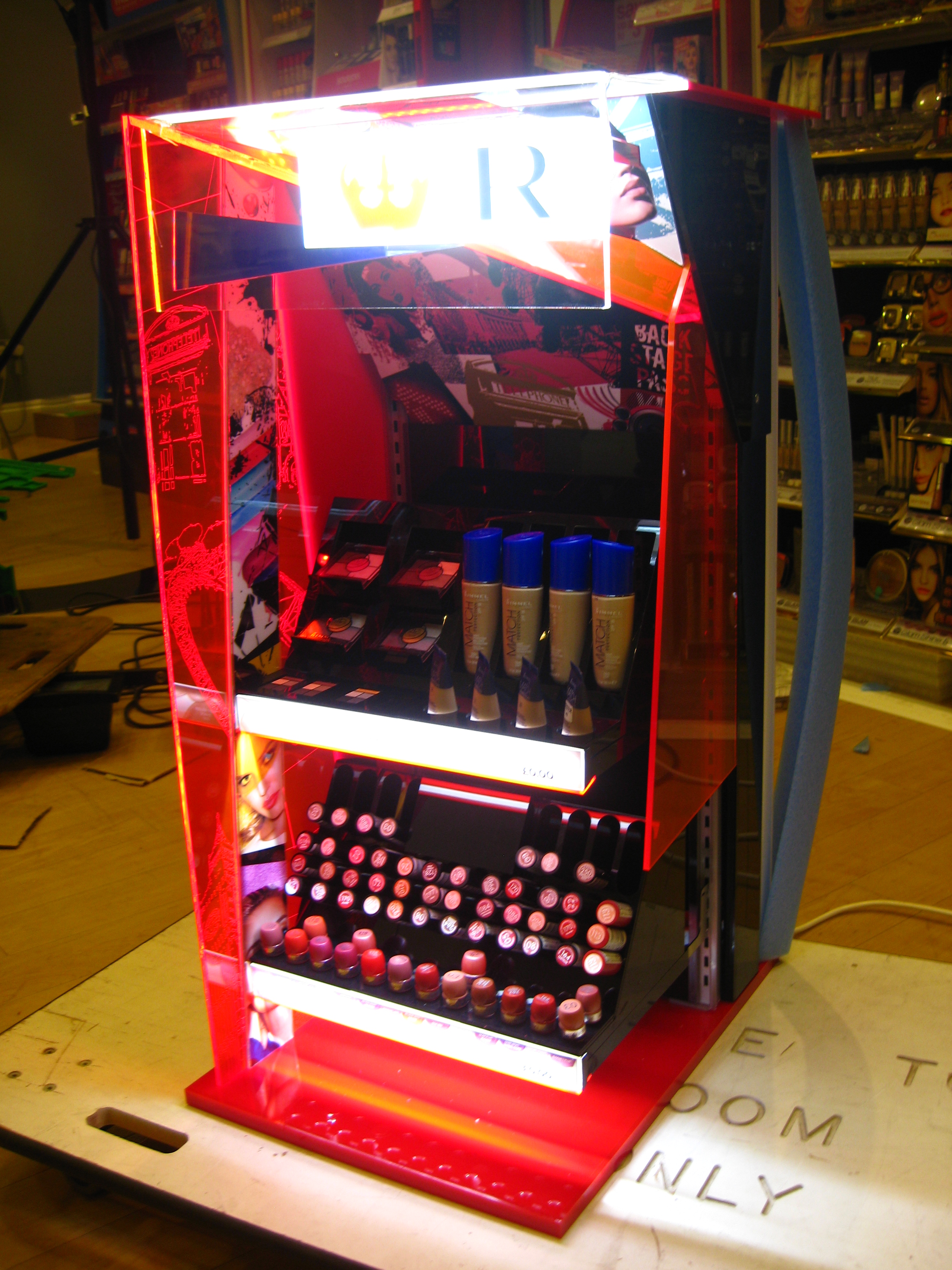
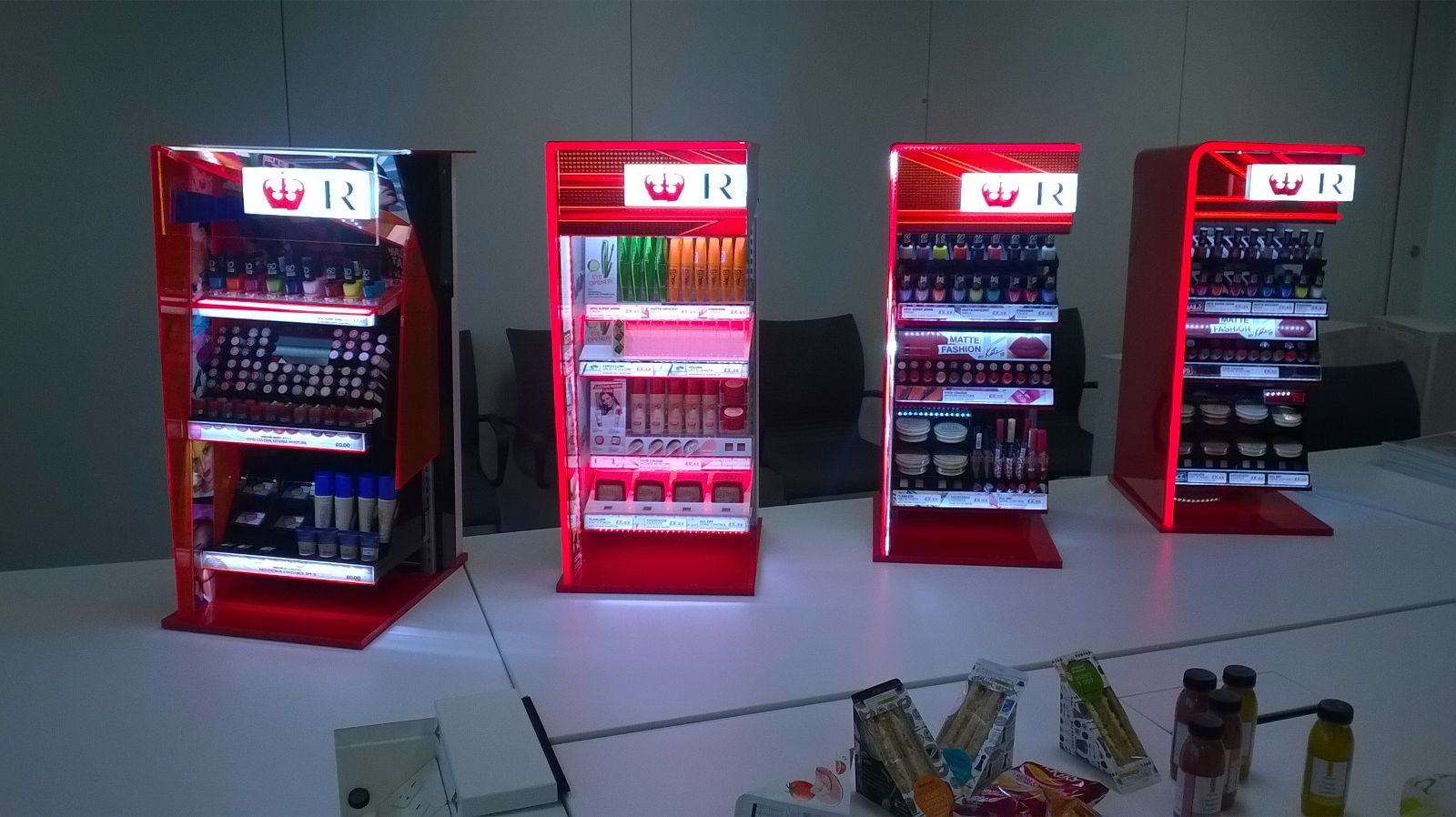
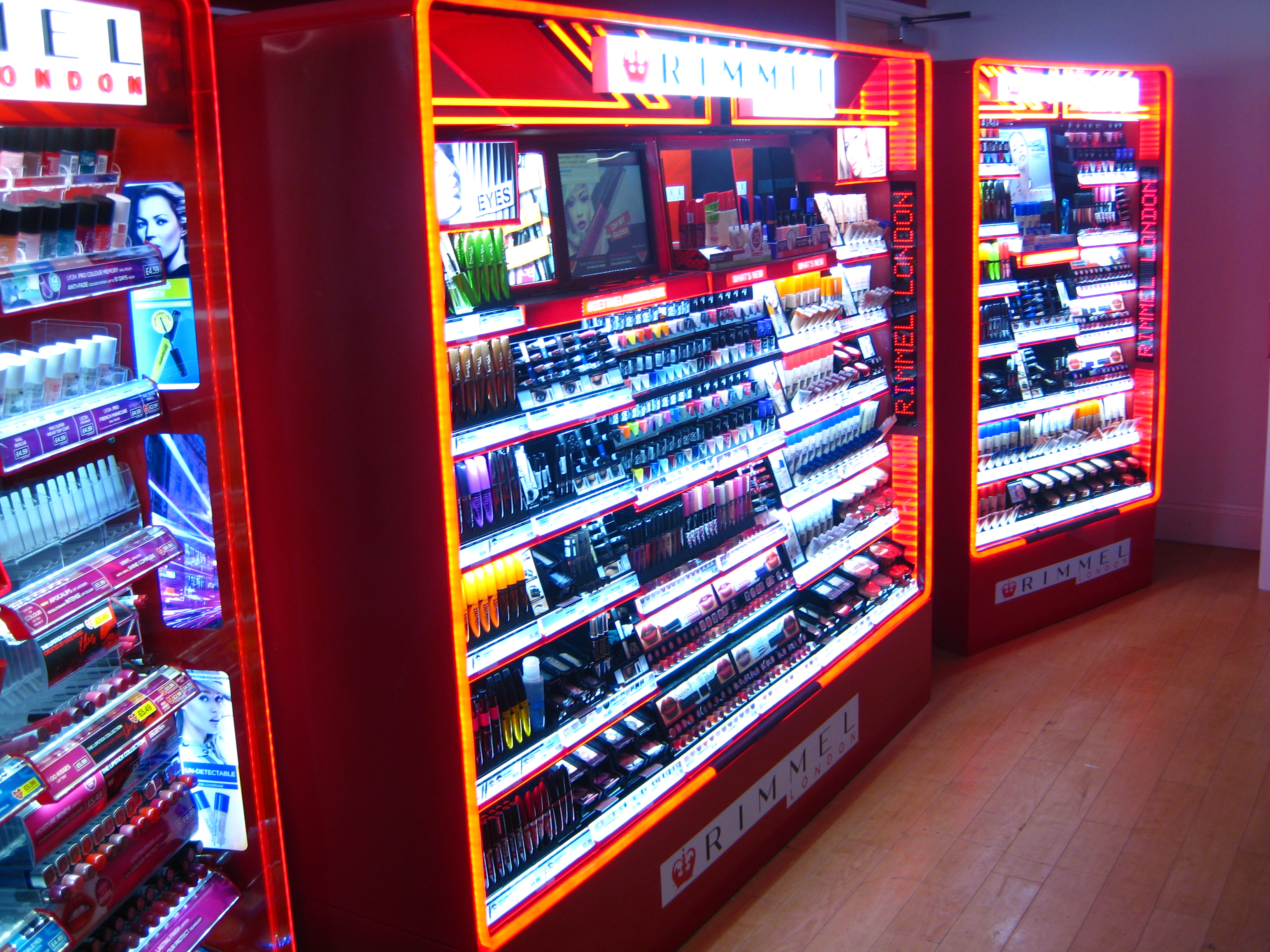
In 2015 we were asked to tender designs for Rimmel's new suite of store units, taking the previous generation "iBar" and making it feel more up-to-date and contiguous. Our Creative team came up with four designs and we decided to create "Quarter Rigs" for the presentation meeting to best show them off.
We in Prototype took the original sketches, and an approximate size to create these four rigs. Fully fabricated, they show off materials, lighting, cassettes and brand identity in a small package, that can be transported to the meeting with ease. The client were not expecting this level of design, and were very impressed. These were created in about a fortnight.
 |
 |
 |
 |
 |
 |
 |
 |
| The Rigs Take Shape | The First Header Test | Flag Neon Lighting Test | Header Details | A Finished Rig | A Finished Rig | A Finished Rig | The Finished Rigs |
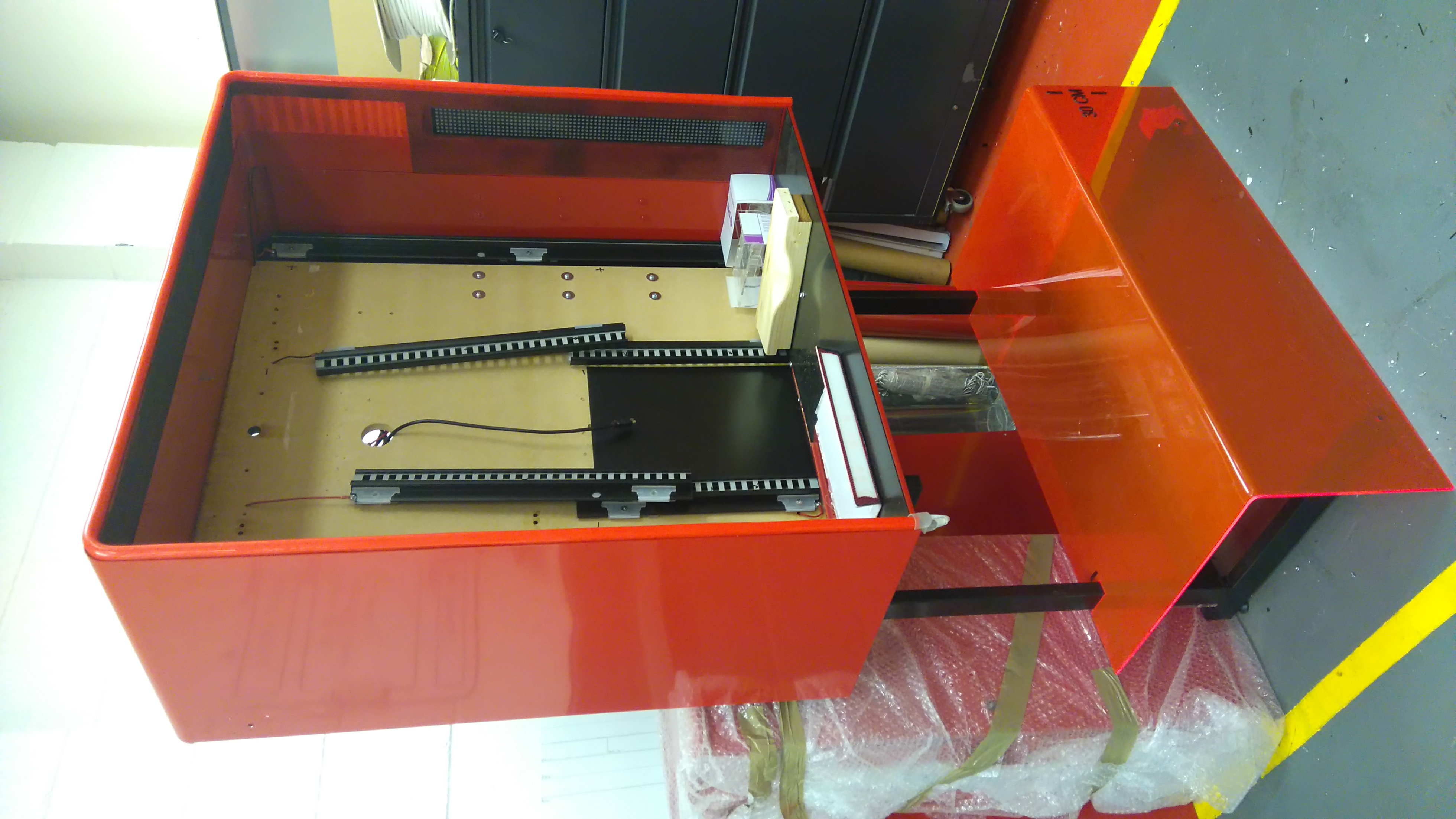
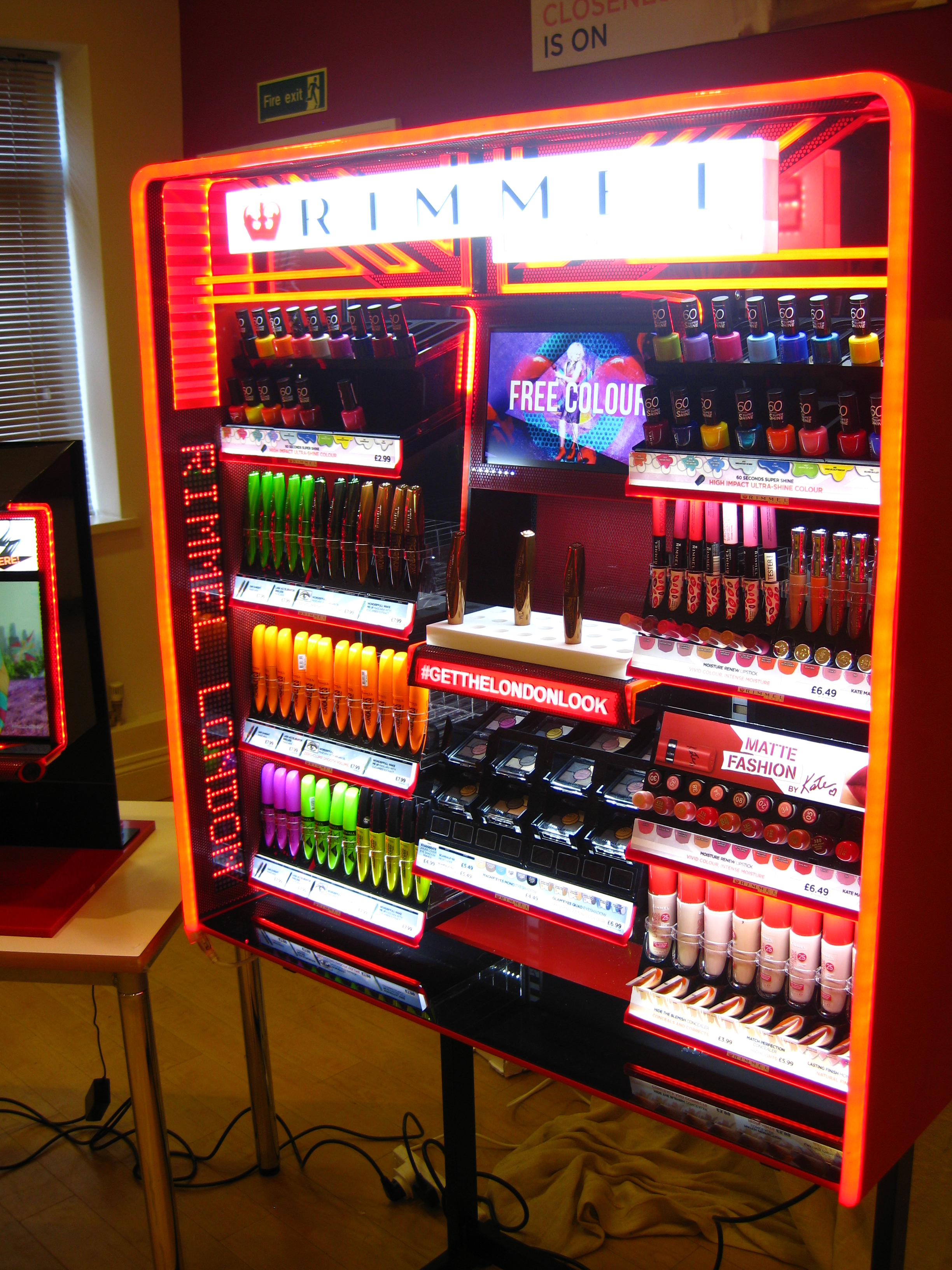
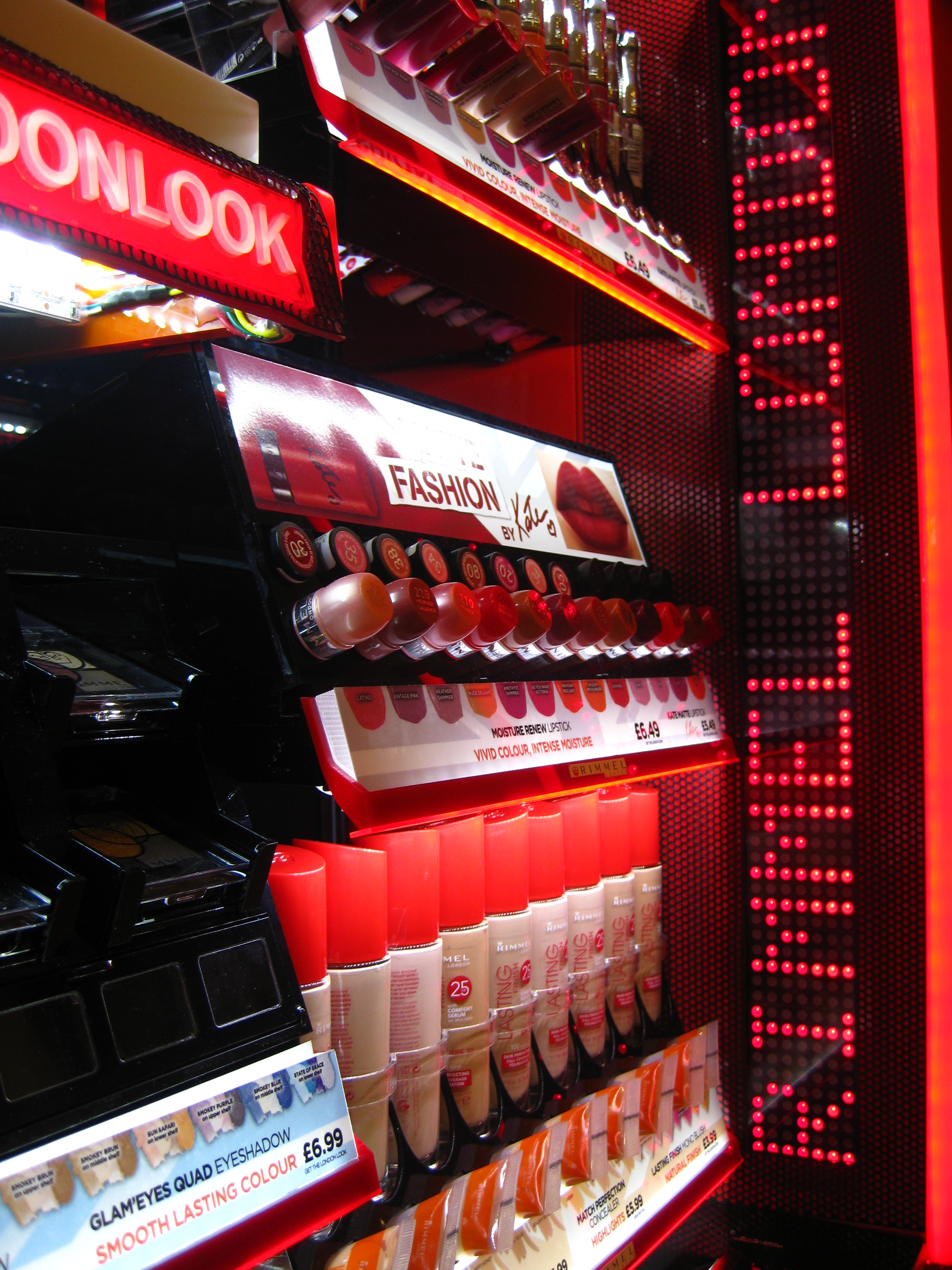
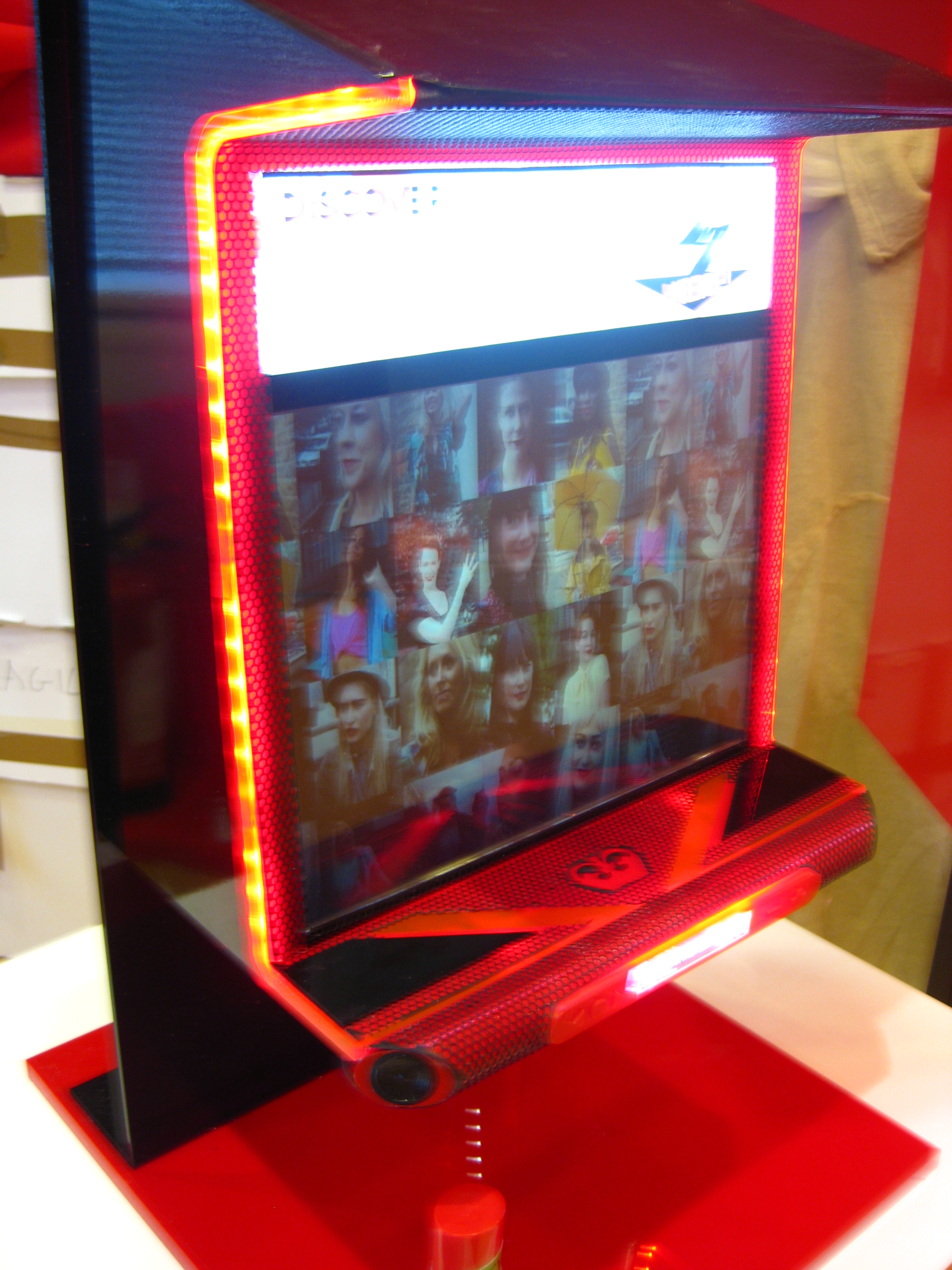
From these rigs a design was chosen to go forward with. It was developed further and a second prototype was proposed; this time half of a unit to showcase the "Promo" area, featuring a display screen and flowing lighting. In addition to fabricating the unit, I developed the code that ran the lighting utilising individually addressable LEDs and an Arduino. This was completed in under a fortnight.
 |
 |
 |
 |
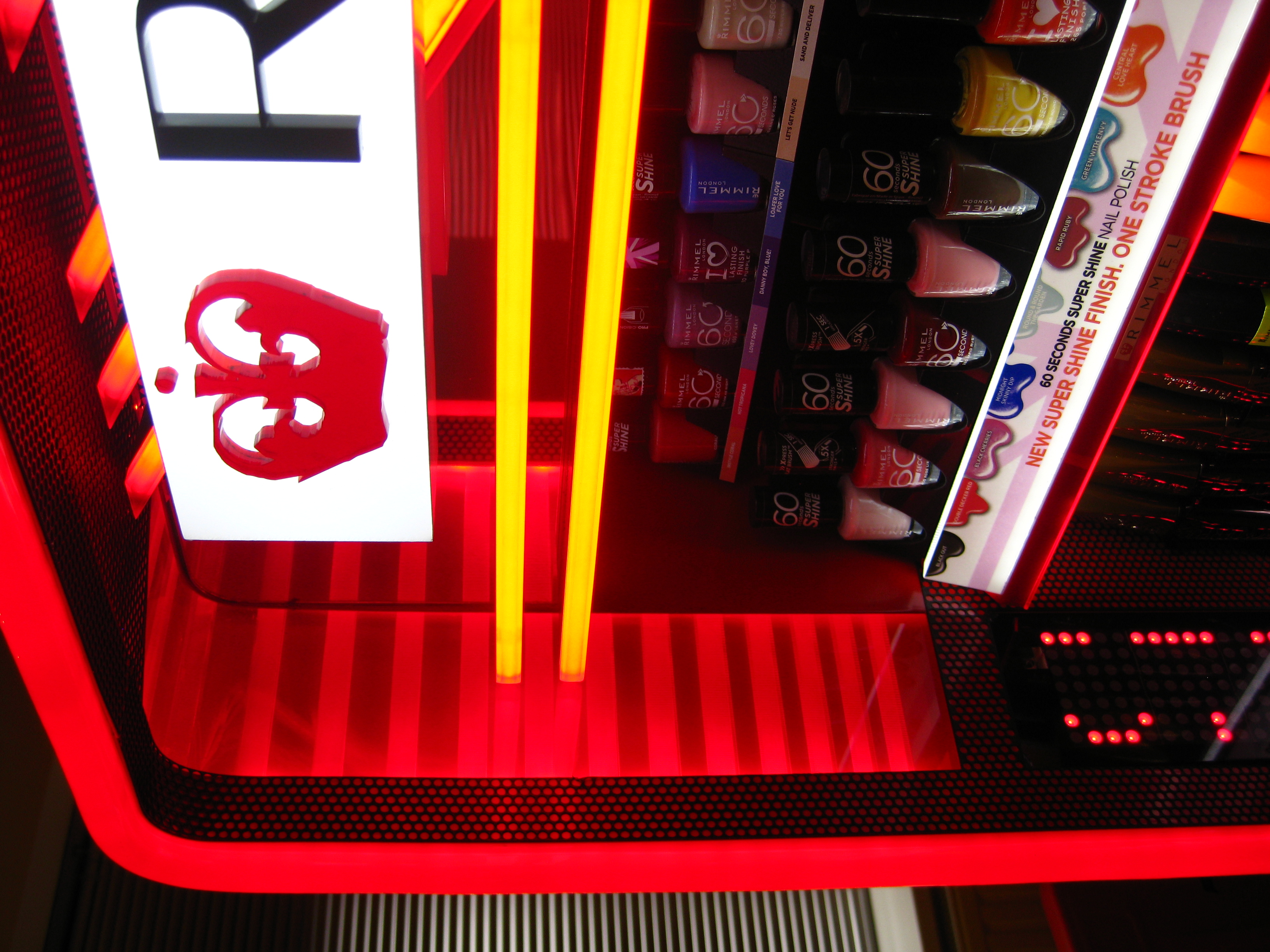 |
| The Half Unit Carcass | The Finished Unit | Scrolling LED Text | The Promo area | The Final Header Style |
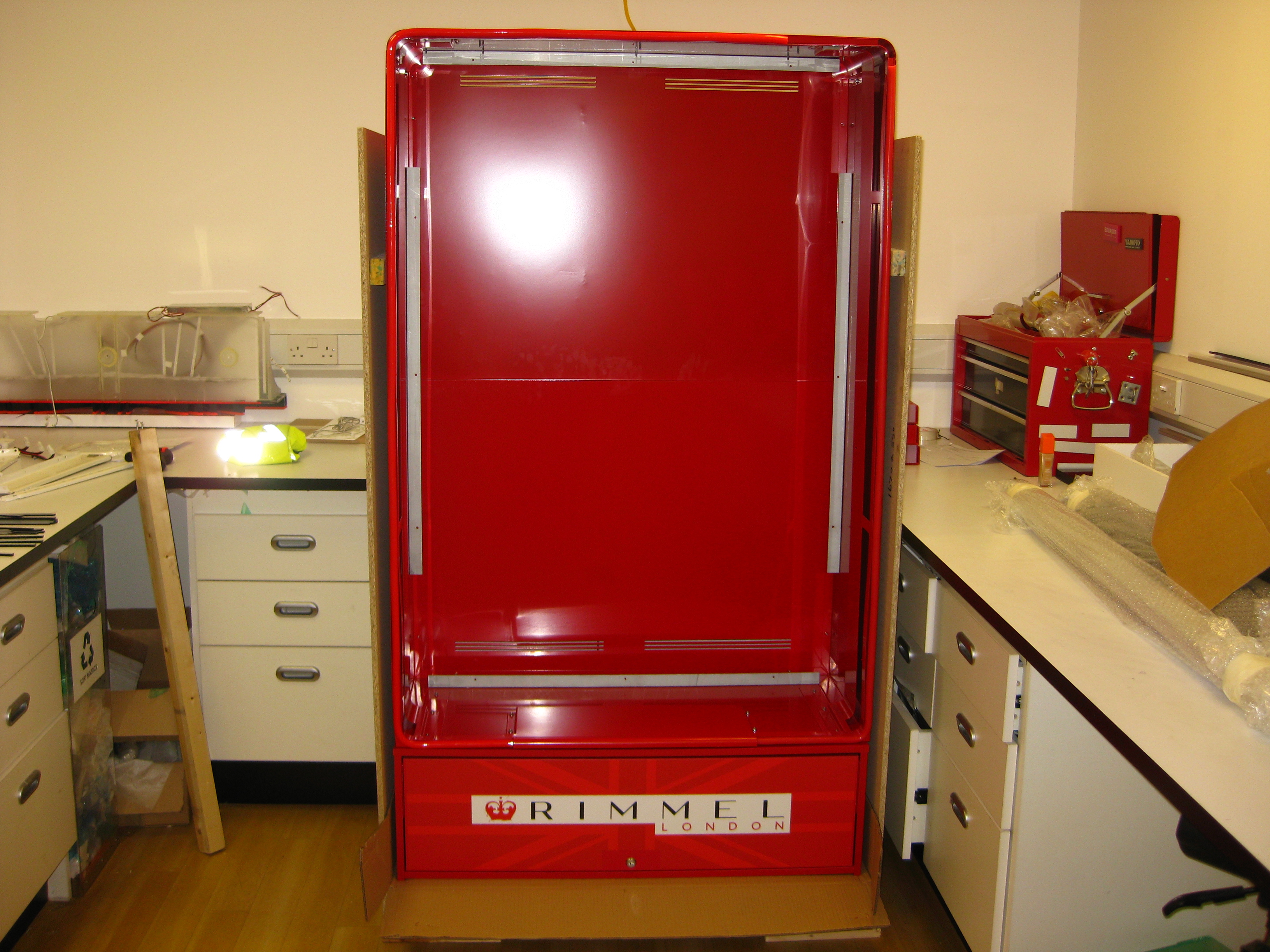
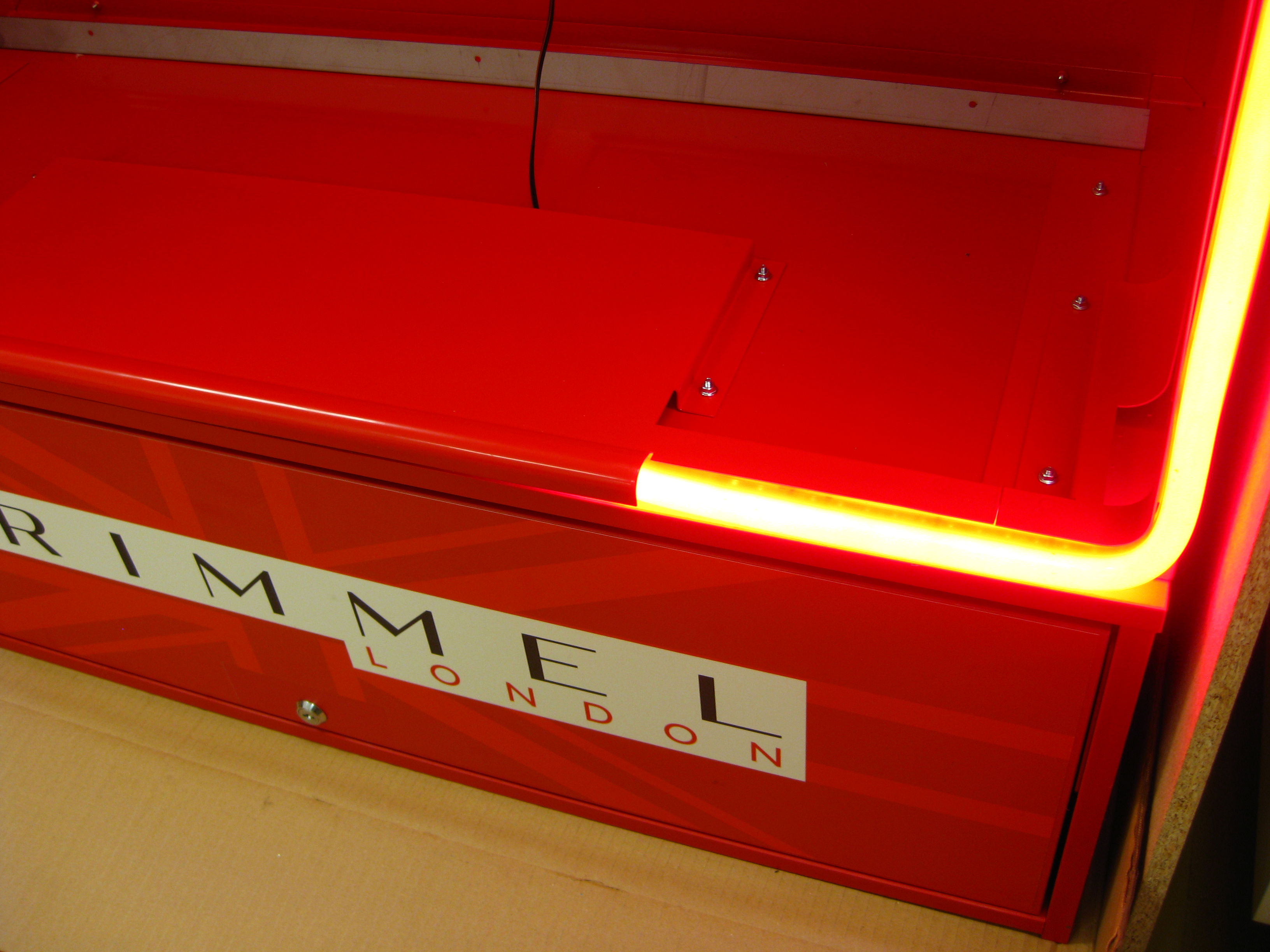
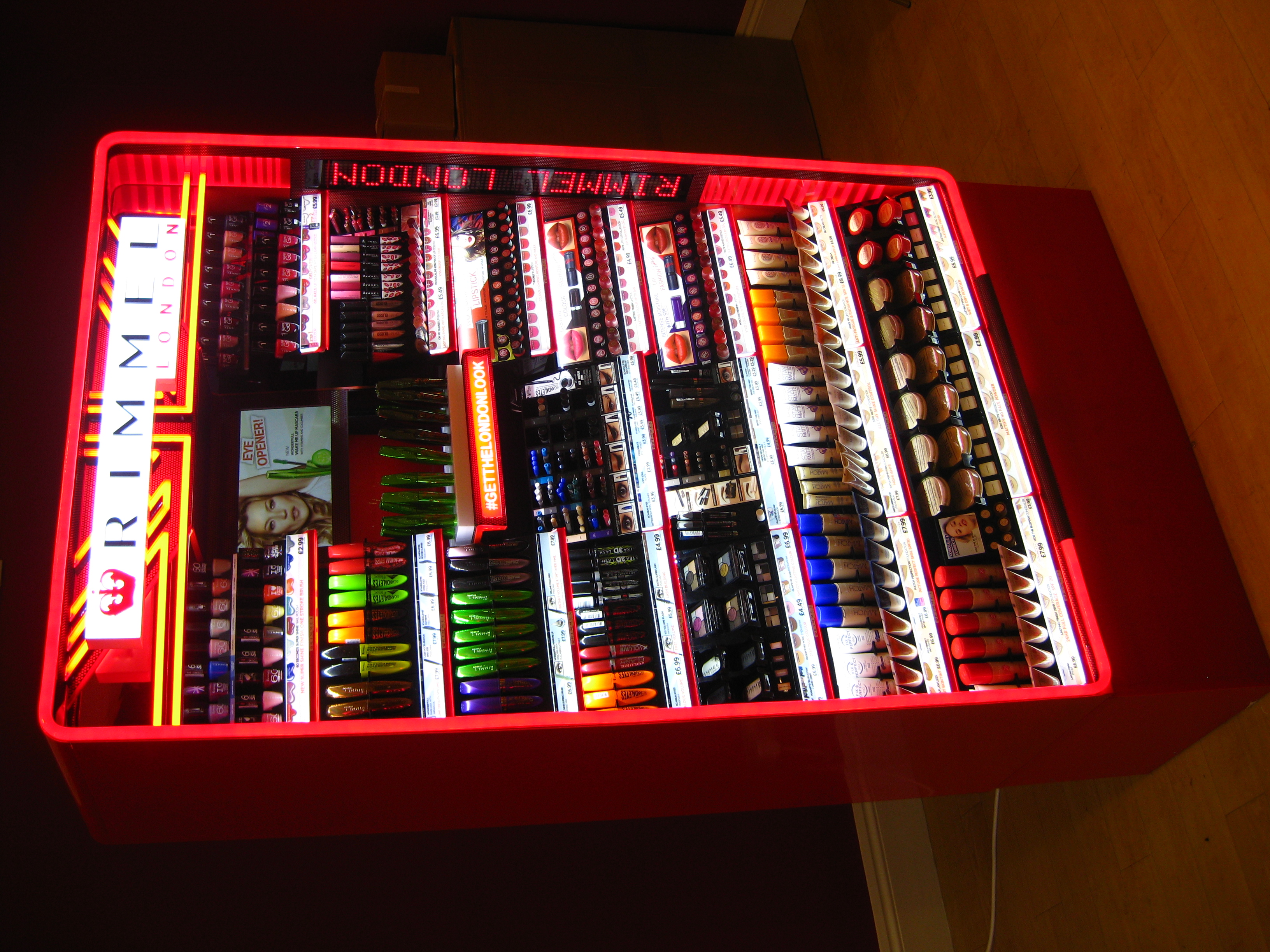
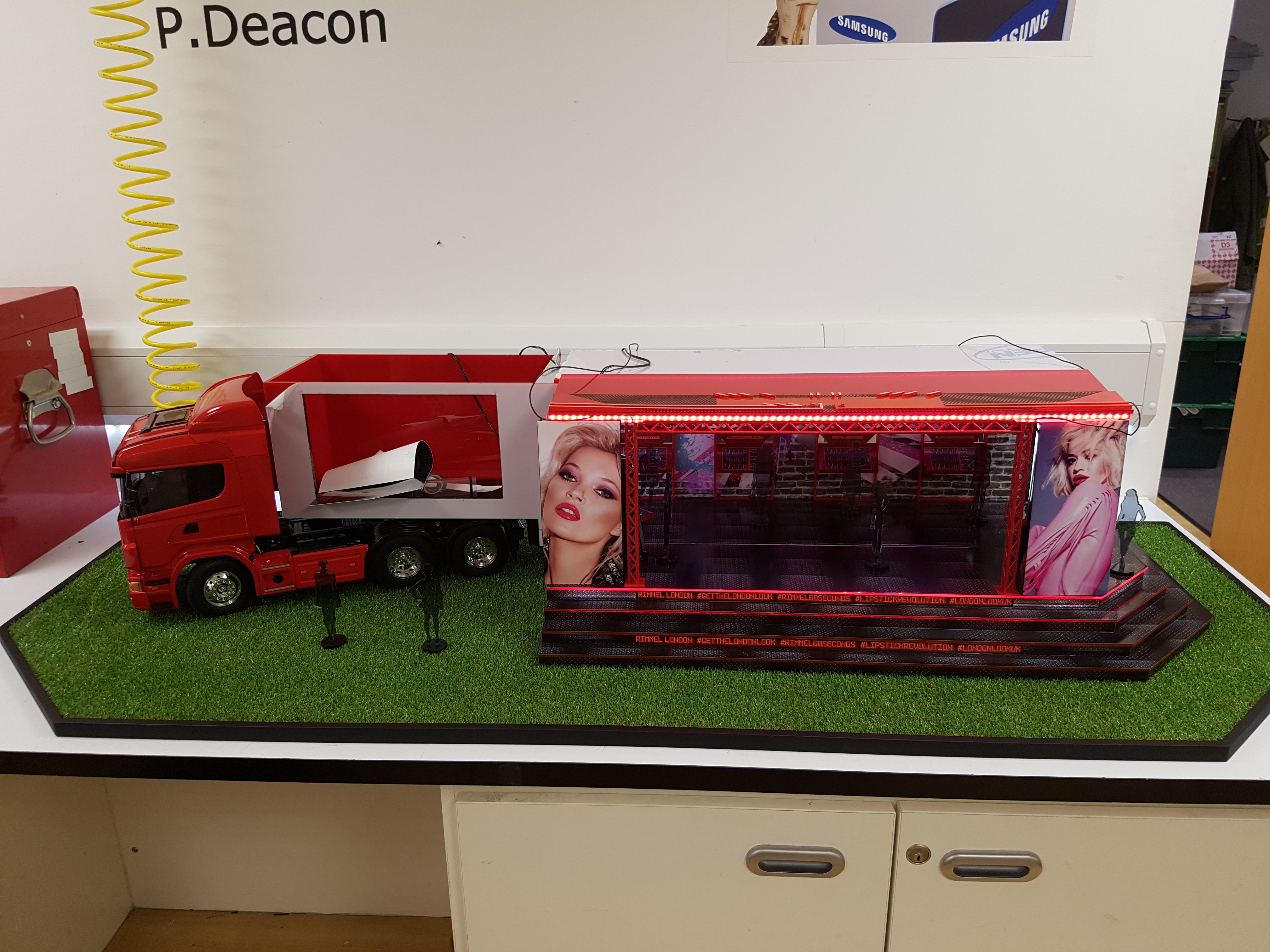
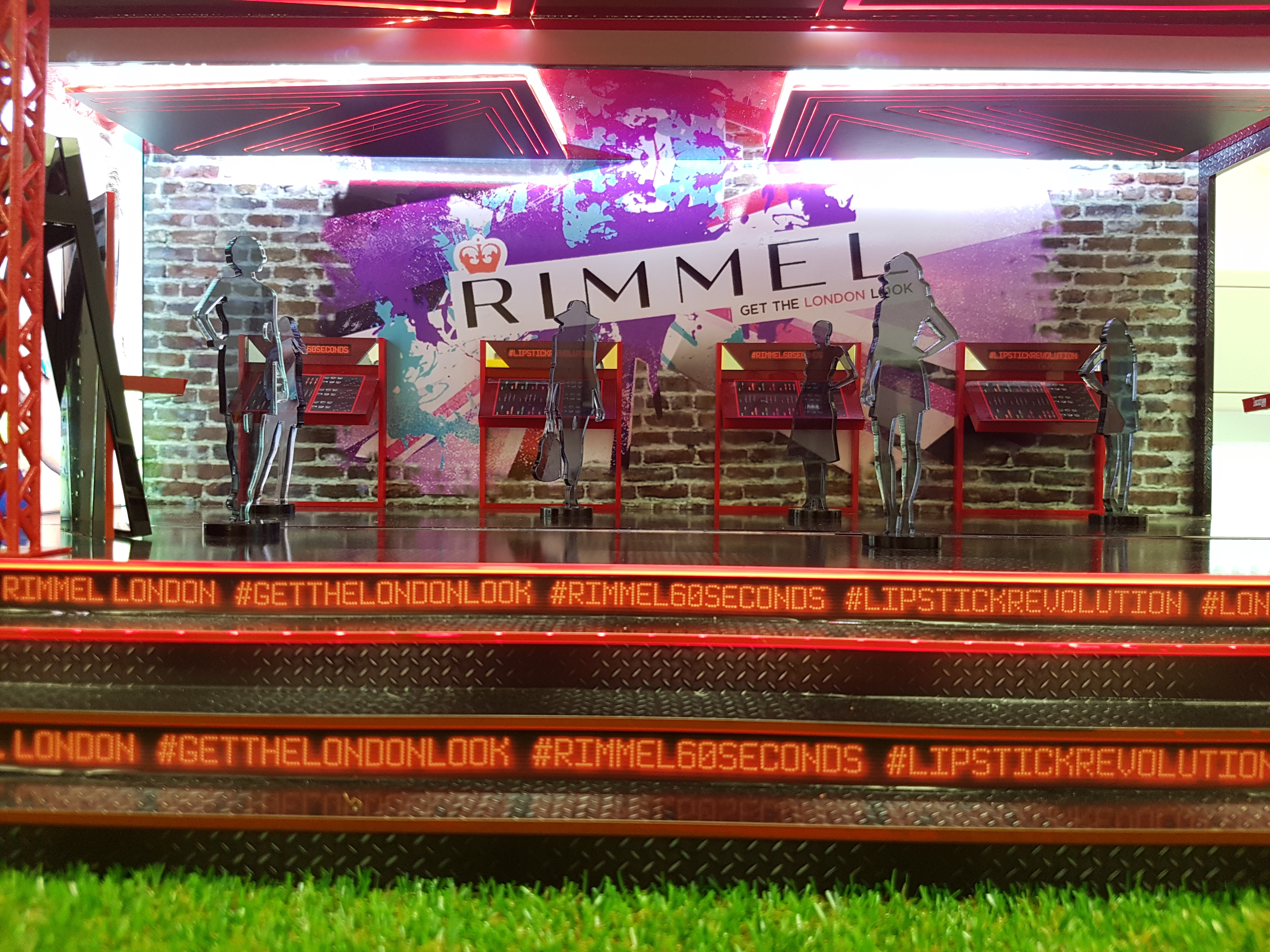
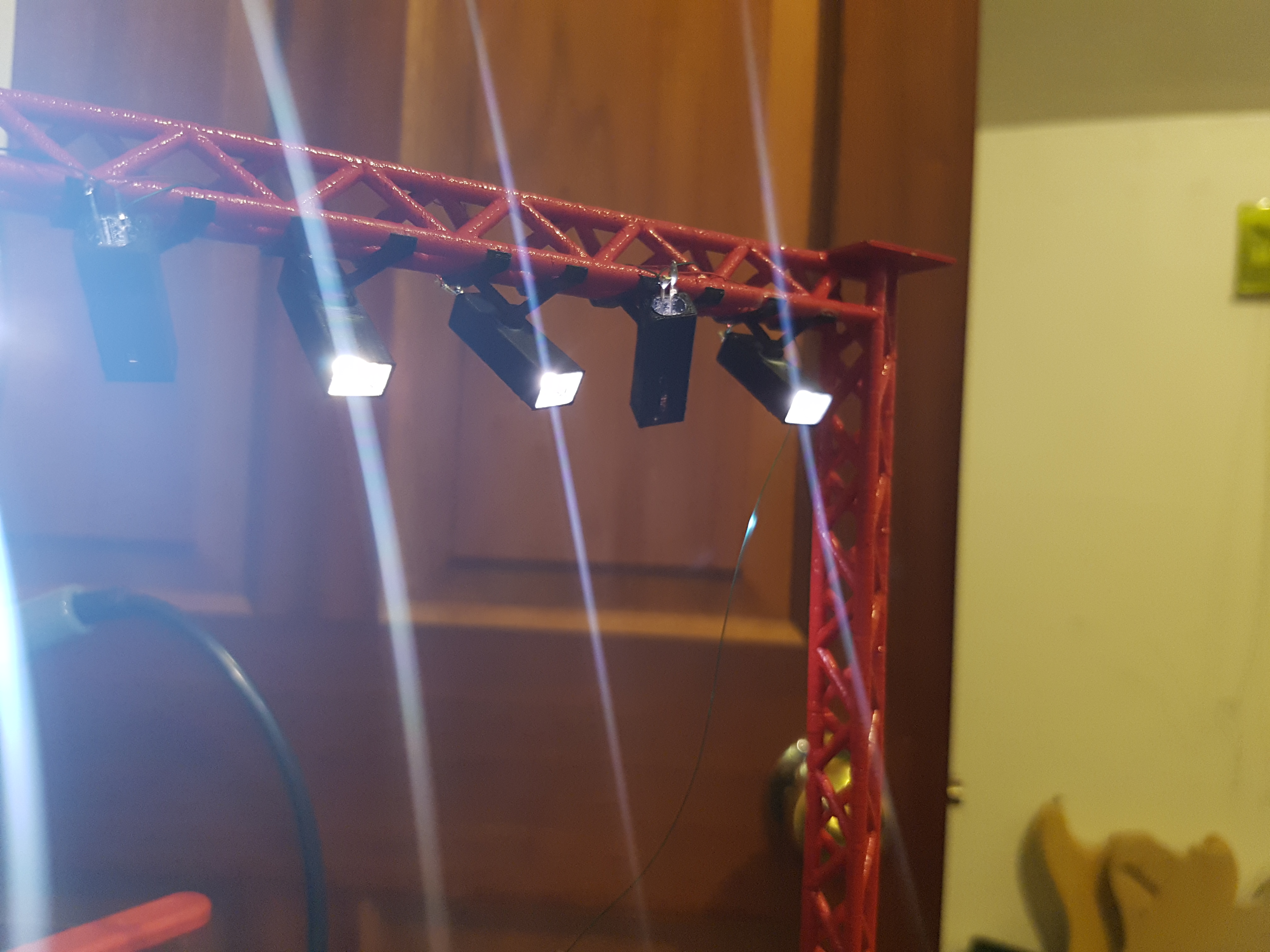
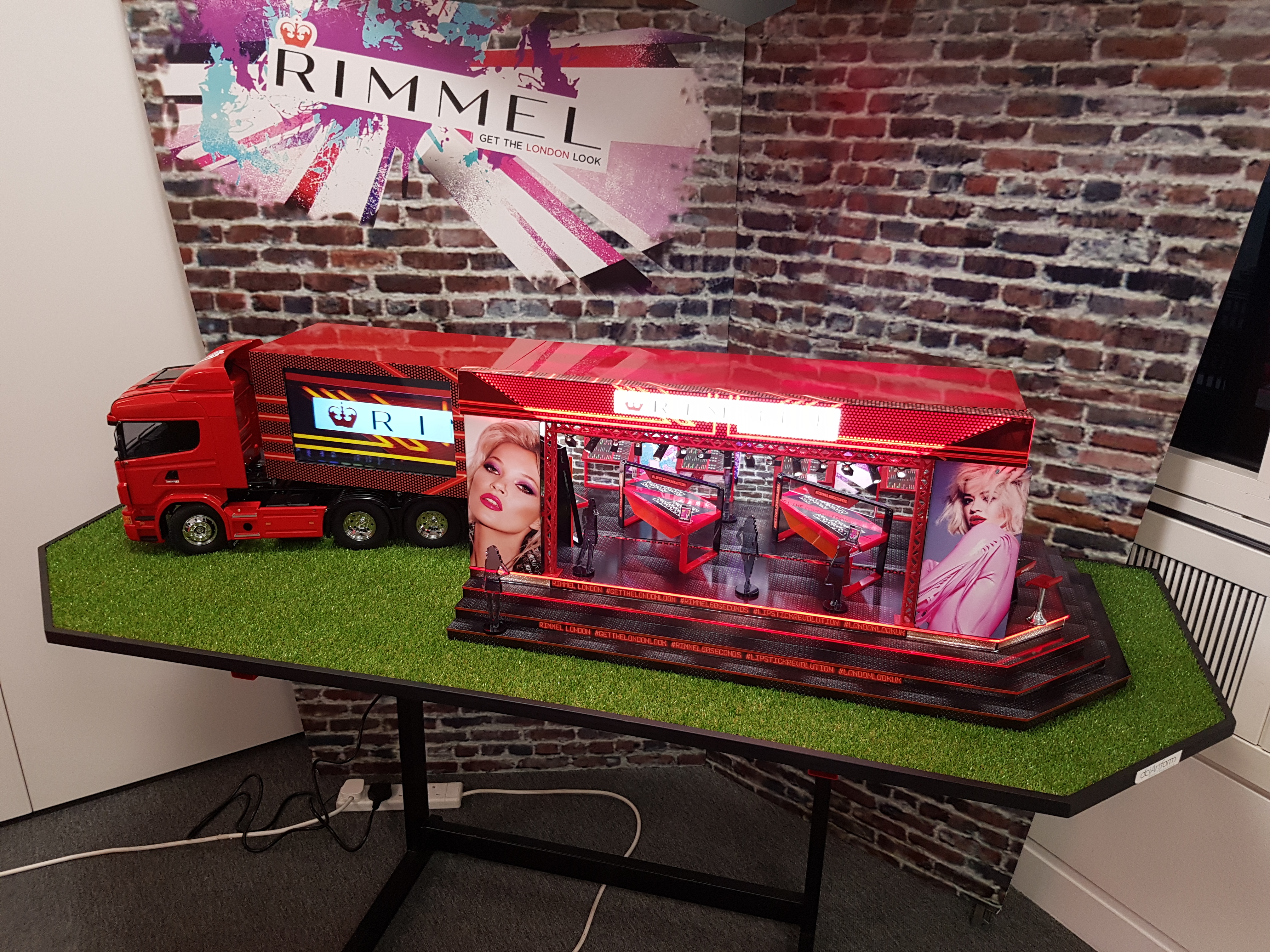
For the next meeting we made a full unit, and also a discussion piece: a scale model of a travelling pop-up store. Based around the scale of a Tamiya RC lorry (1:14), we designed the entire thing from scratch. It has a small screen in the side and island units. Designed to give the impression that it could indeed fold up, we even designed the trailer chassis such that it could move. The spotlights were 3D printed, and then had 5mm LEDs fitted, joined by magnet wire. The finishing touch was a piece of short-cut astro-turf on the display table.
The meeting was a great success, everything we made was well received by the client; they even asked for quotes to produce the lorry for real! These prototypes took three weeks from start to finish.
 |
 |
 |
 |
 |
 |
 |
| The Full Unit Carcass | Testing The Fitment Of Neon Rope | The Finished Unit | Part Built Lorry | Details Of The Stage | Spotlight Gantry | The Finished Lorry |
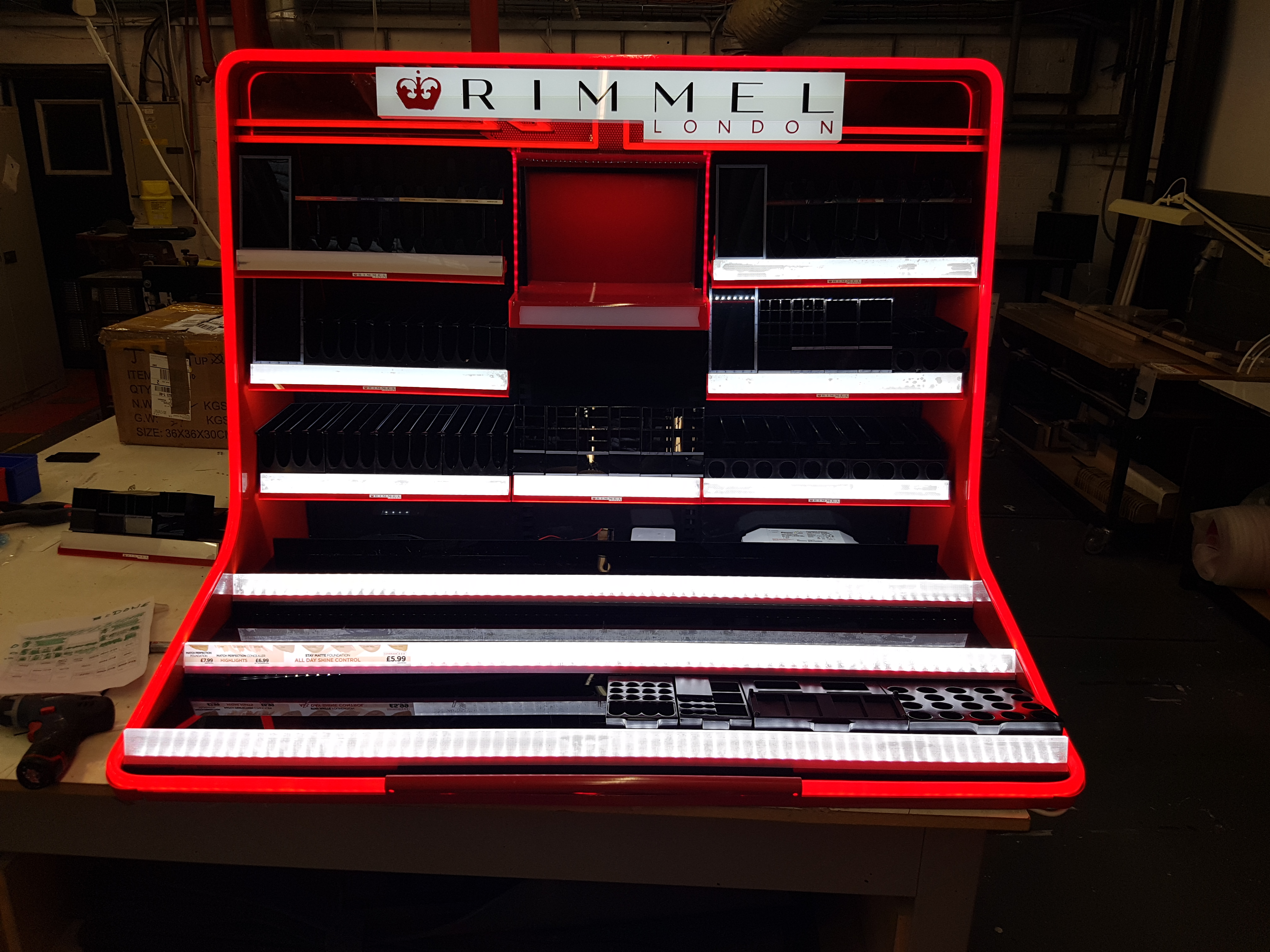
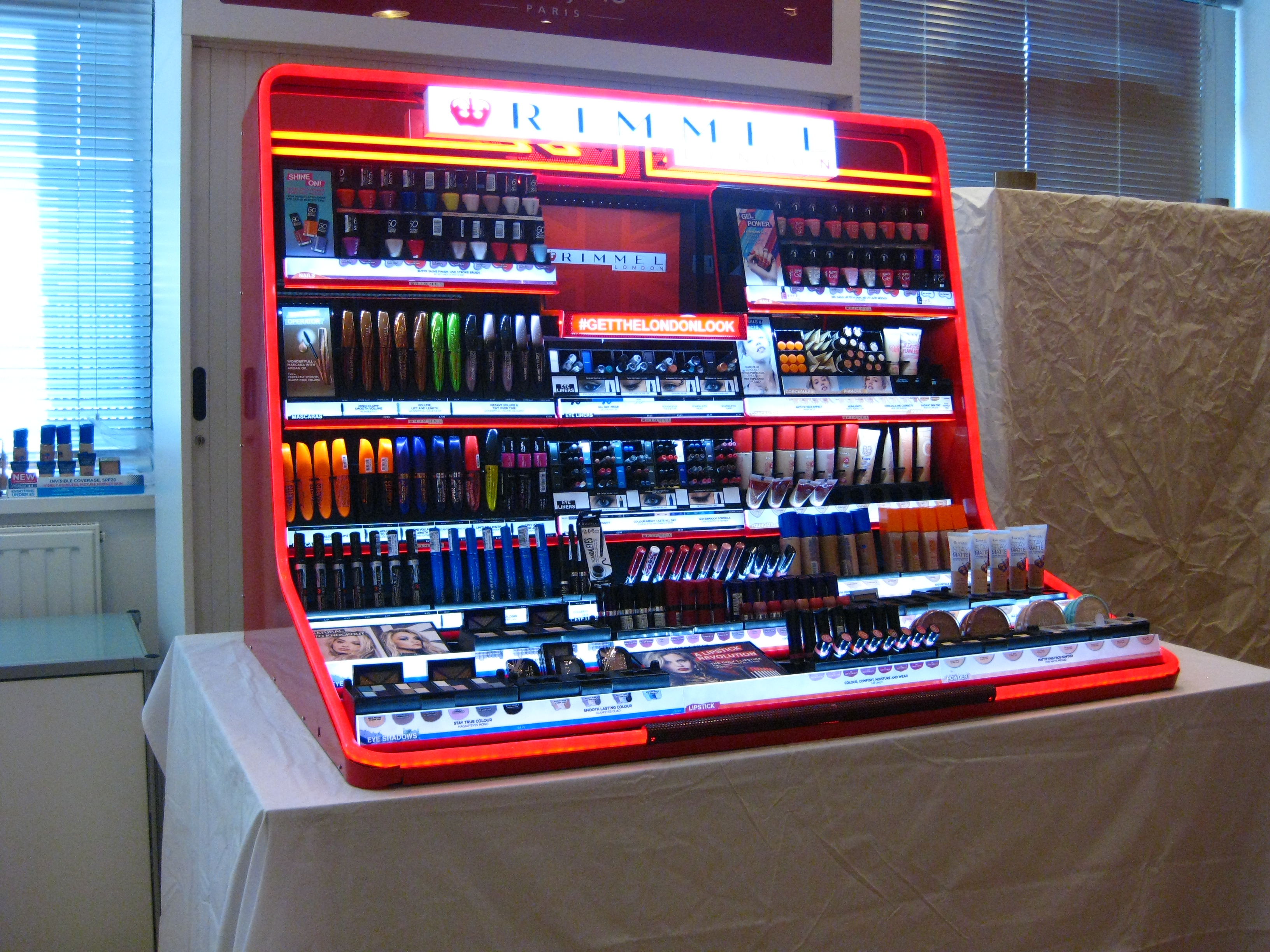
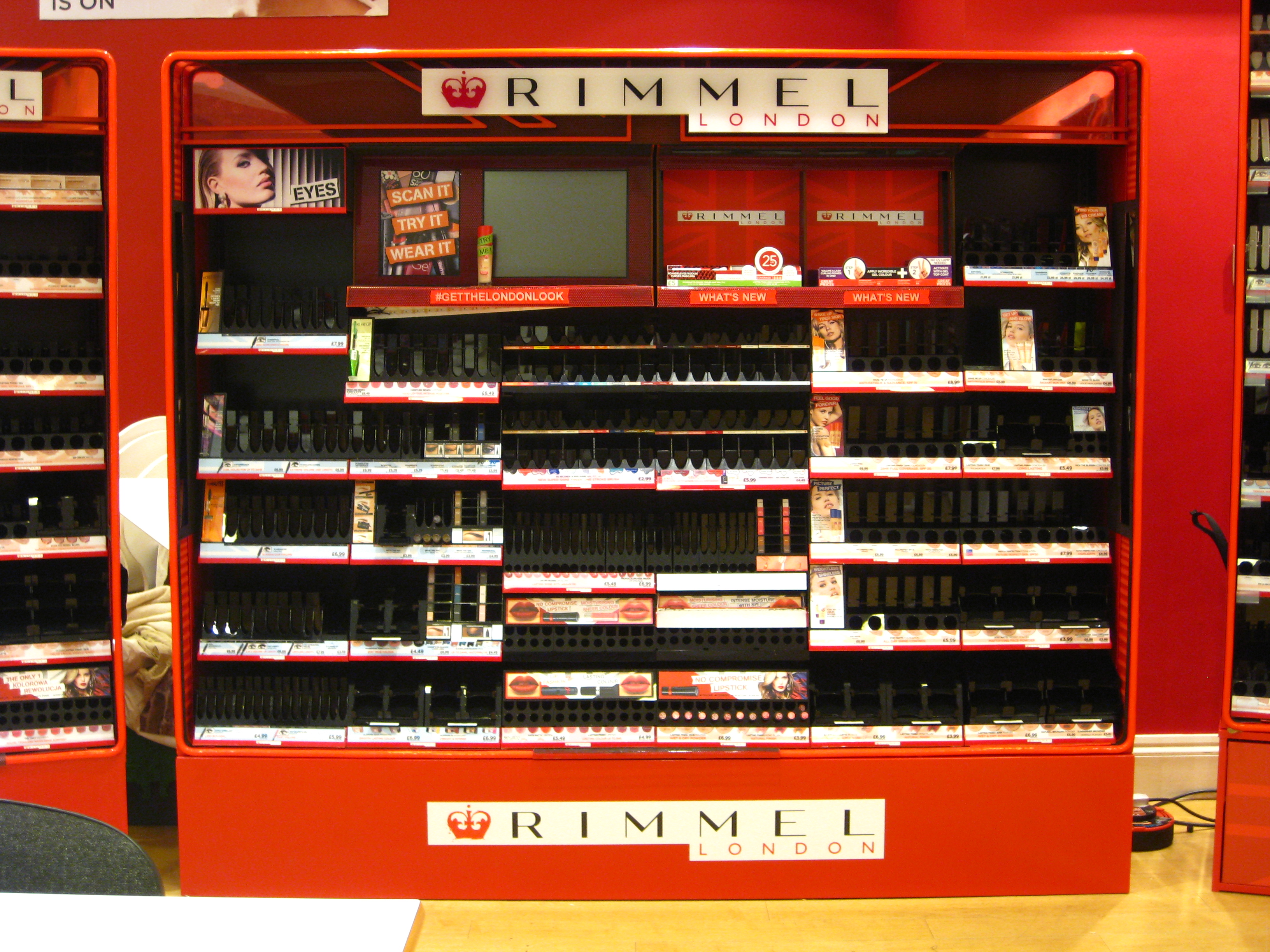
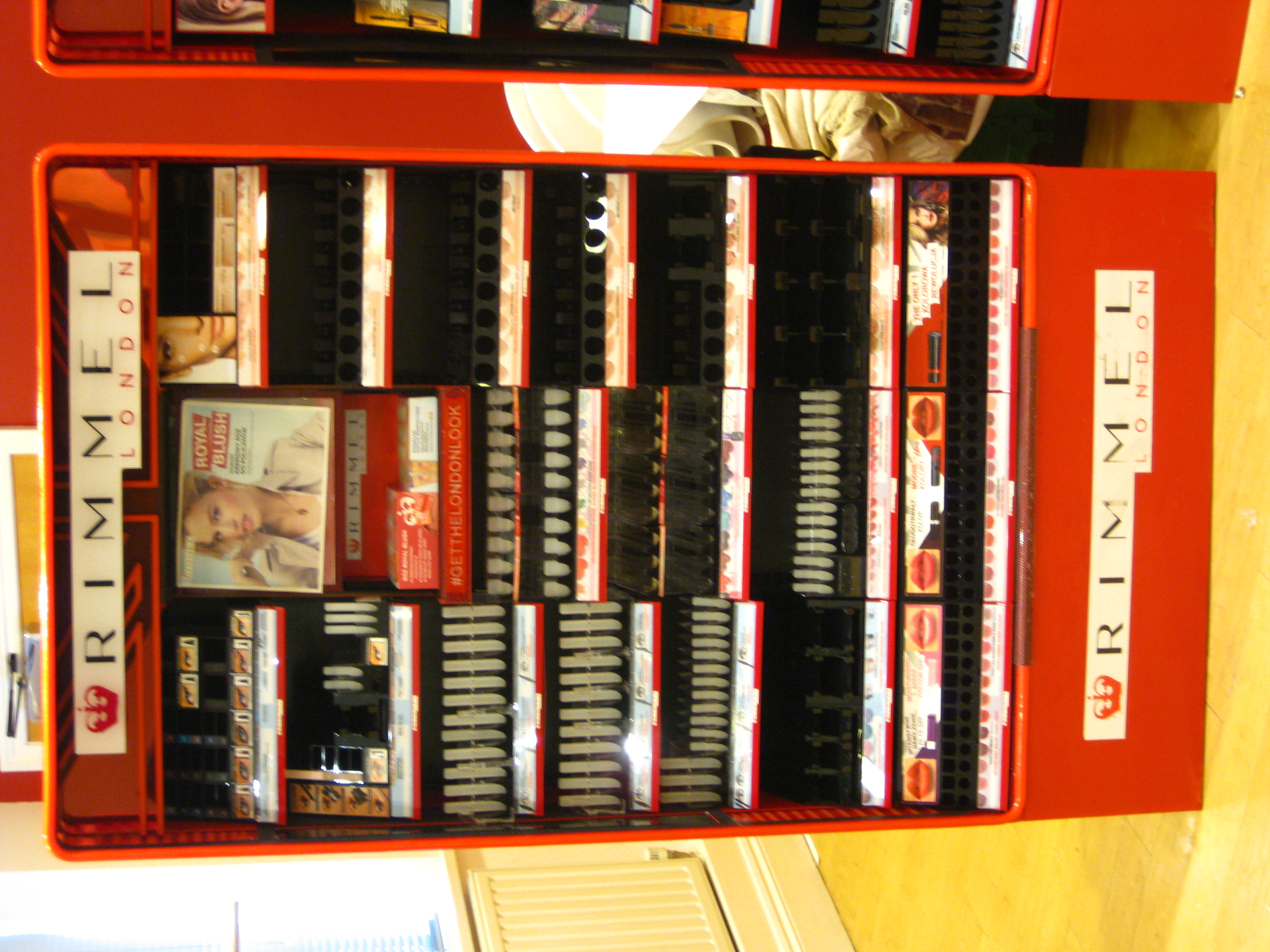
For the final meetings we made a series of full units, from a "gold-spec" 2 meter unit to a counter-top unit. In the end, we didn't win the production tender, but our design is out there in stores.
 |
 |
 |
 |
 |
| Counter Top Unit Carcass | Counter Top Unit | 2M Gold Spec Unit | 1M Value Engineered Unit | Units For The Final Presentation |
Bourjois Next Generation Unit
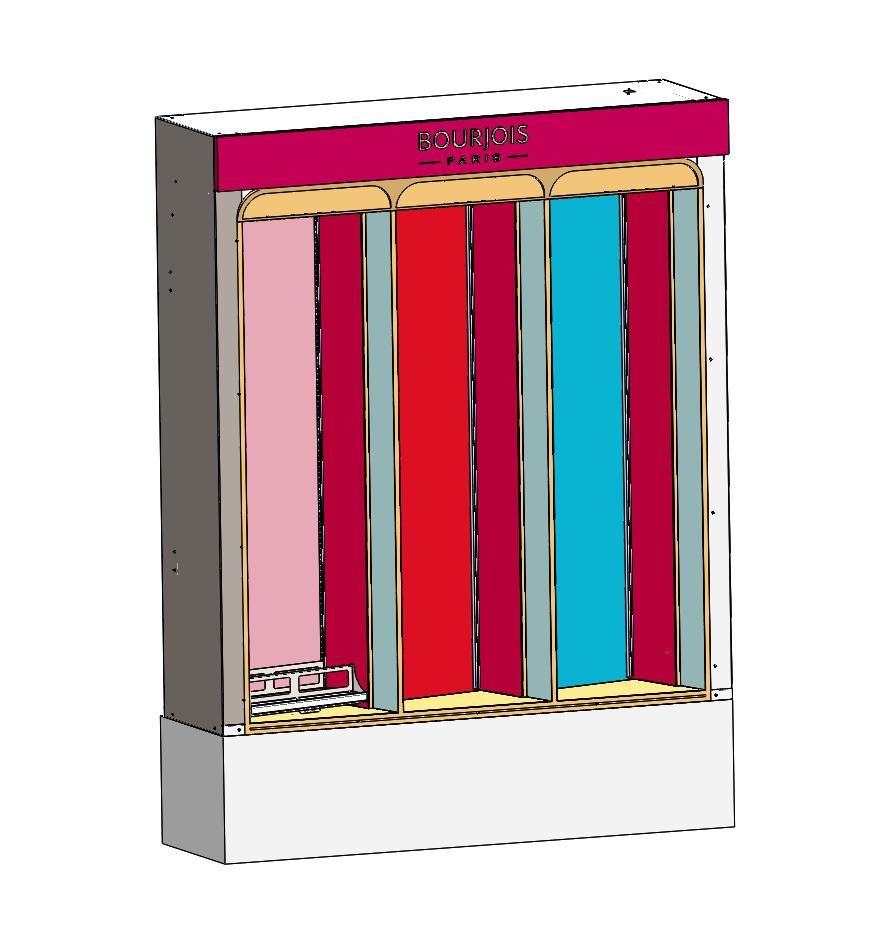
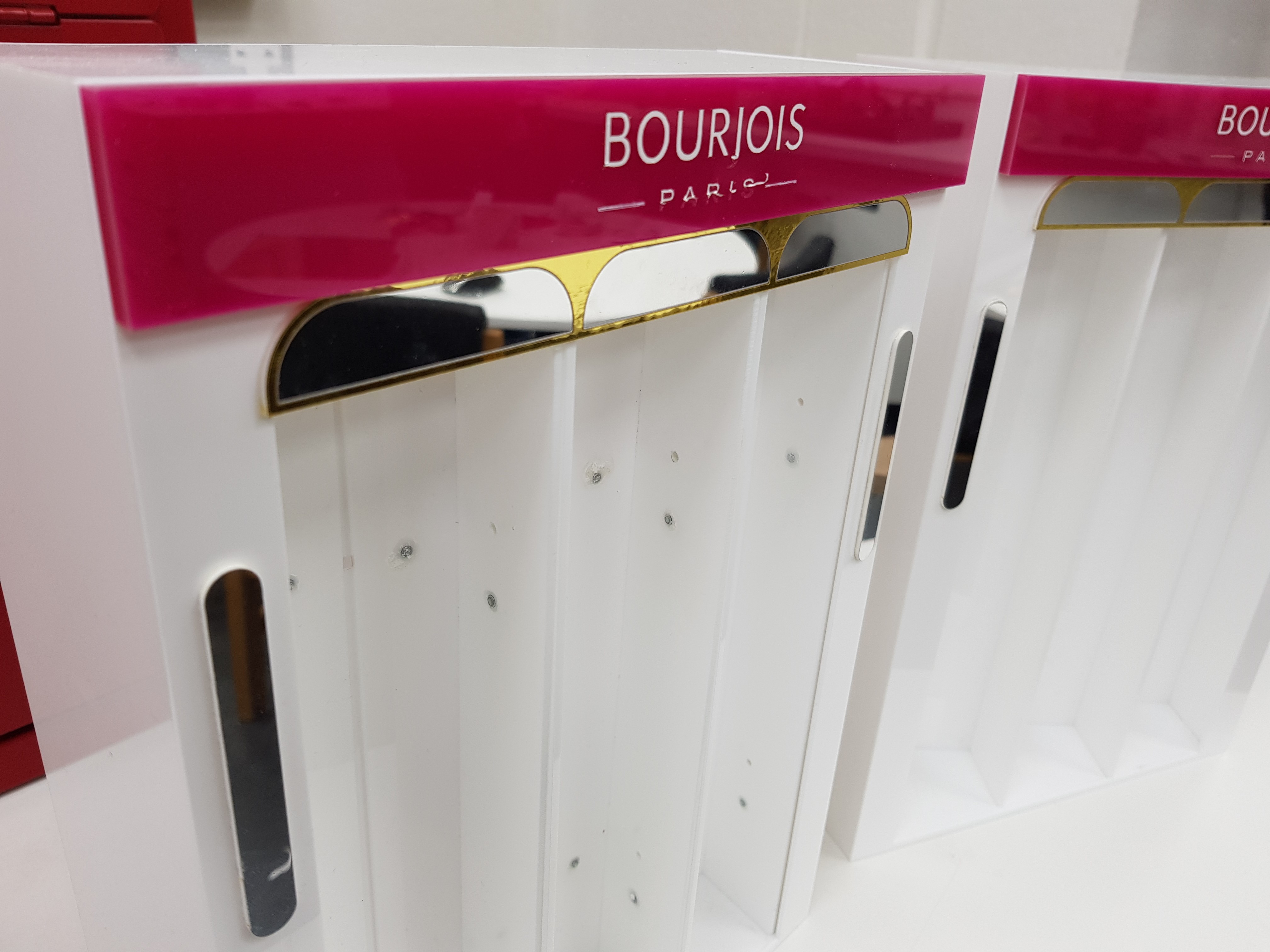
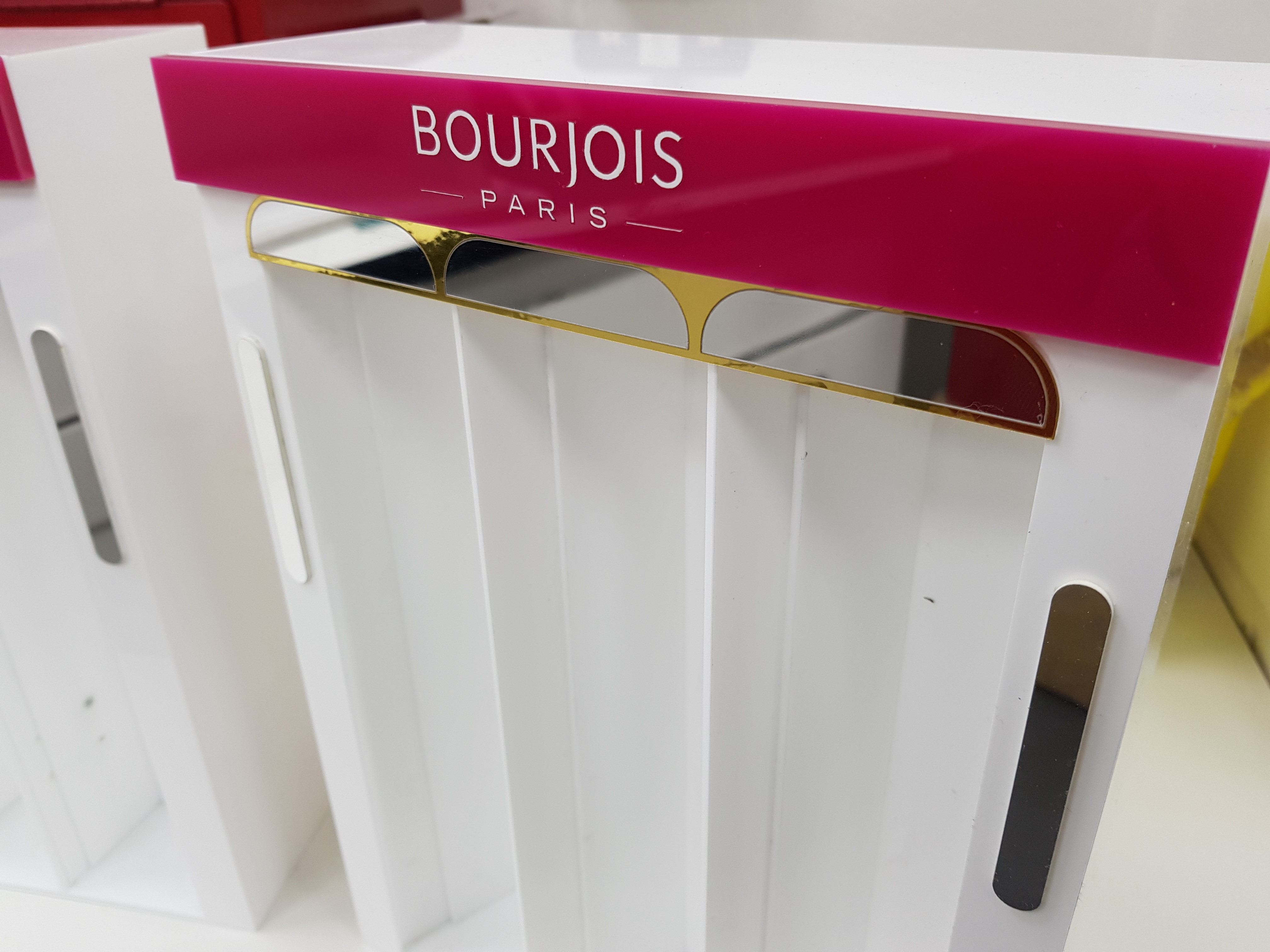
In 2017 we created a series of prototypes for a novel unit for Bourjois. The design called for shelves that were set at an angle from the front; this of course meant that a pair of handed units would be required depending on their location in store. To avoid this unnecessary work at the prototype stage, we designed a unit that could change from one to the other. Before settling on a design, I produced a pair of scale units demonstrating the two ideas currently being debated; columns that rotate, or removable columns that can be flipped upside down.
 |
 |
 |
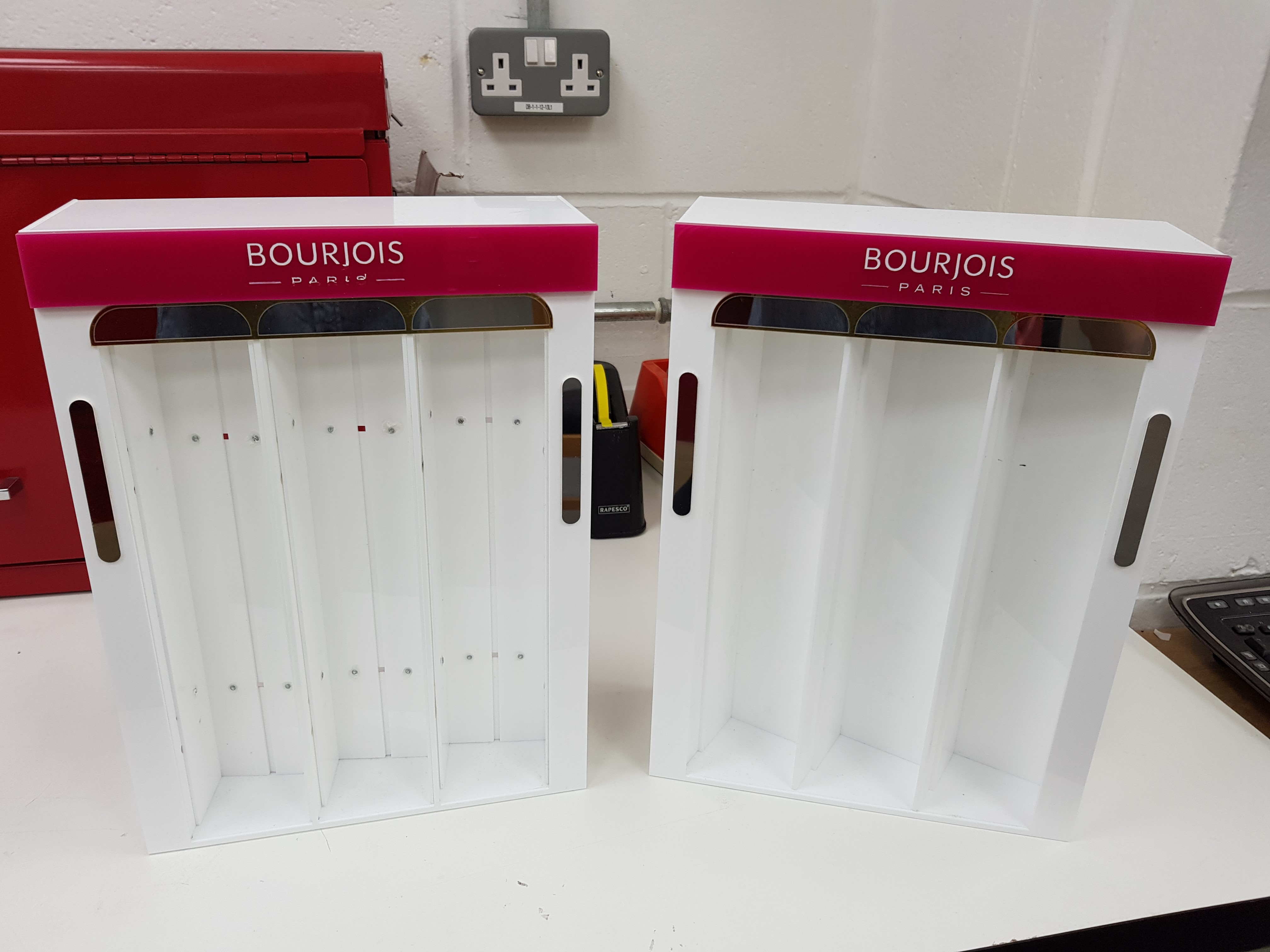 |
| CAD Model | Scale Test Unit | Scale Test Unit | Scale Test Unit |
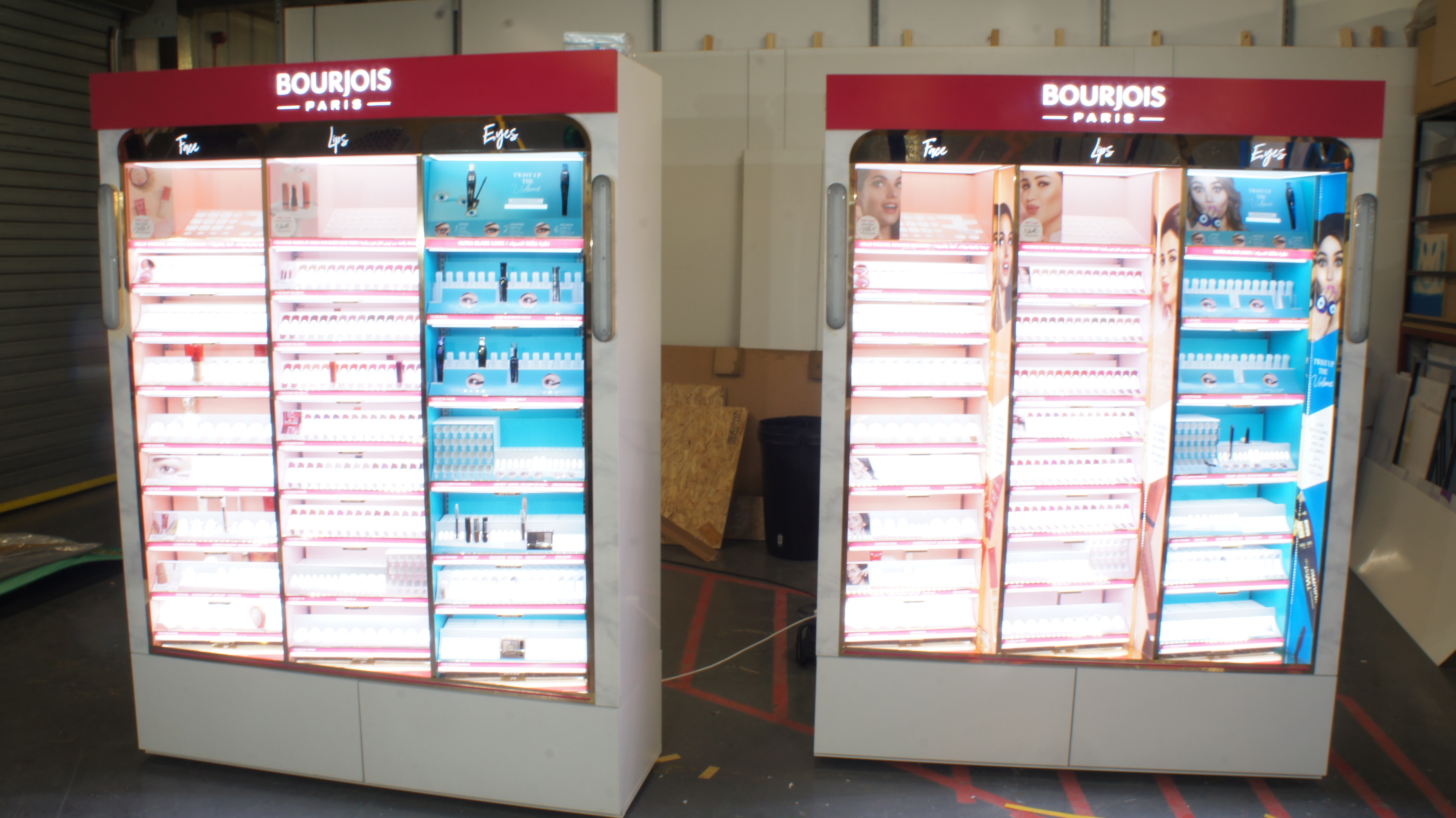
In the end, we decided to go with the more technically challenging, but easier to use rotating columns. In order to achieve this, each column of shelves were sandwiched between thrust bearings and had specialist drawer slides joining them so they stayed parallel to each other. A pair of edge-lit end panels clad the resulting gap; these being made reversible to fit either side. Power was transmitted through three way "pogo pin" style connectors. The shelves ran on drawer runners, allowing access to the product behind the testers; this setup allowed for an extra shelf on each column as the need for space to get your hand in was reduced.
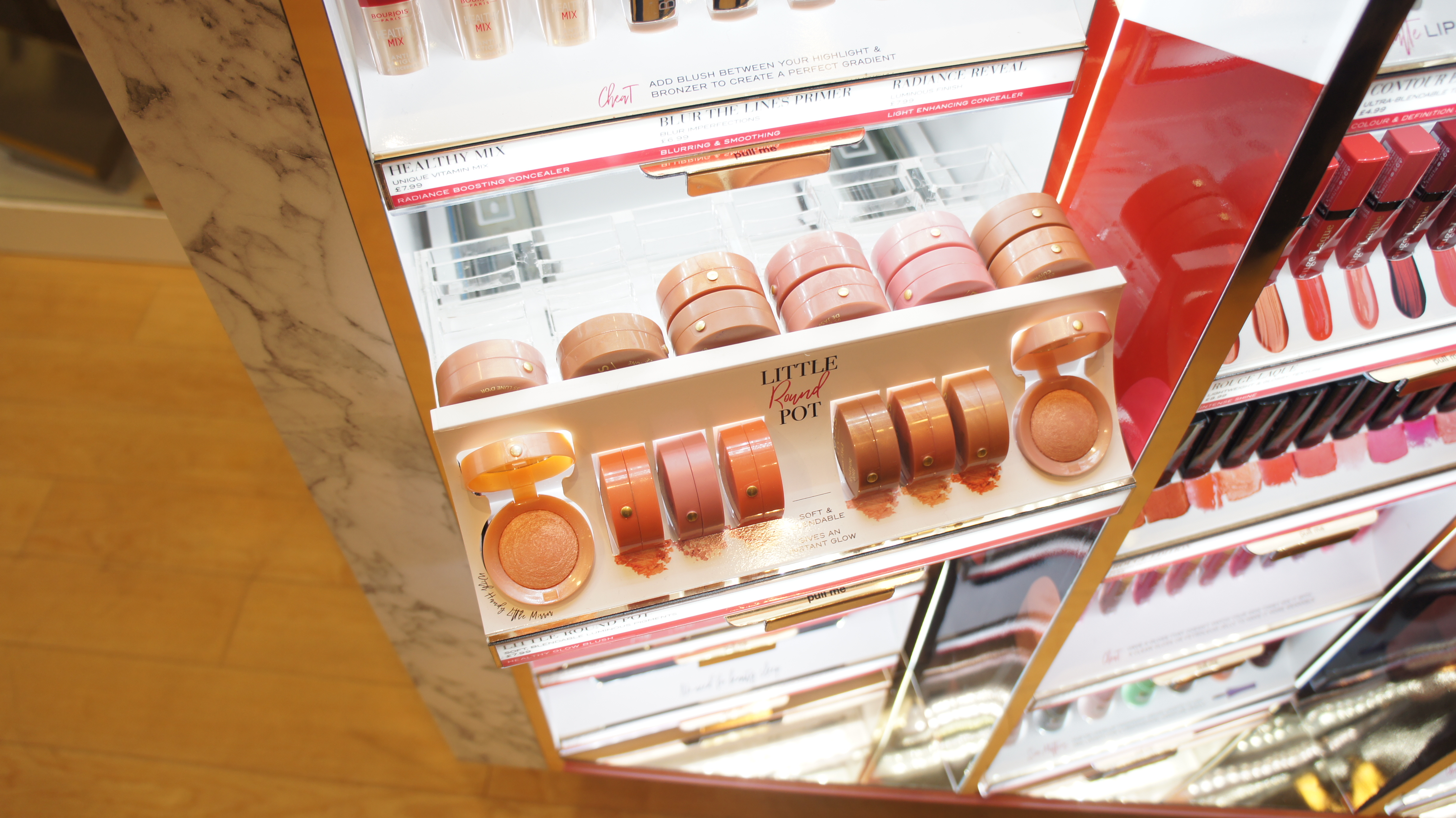 |
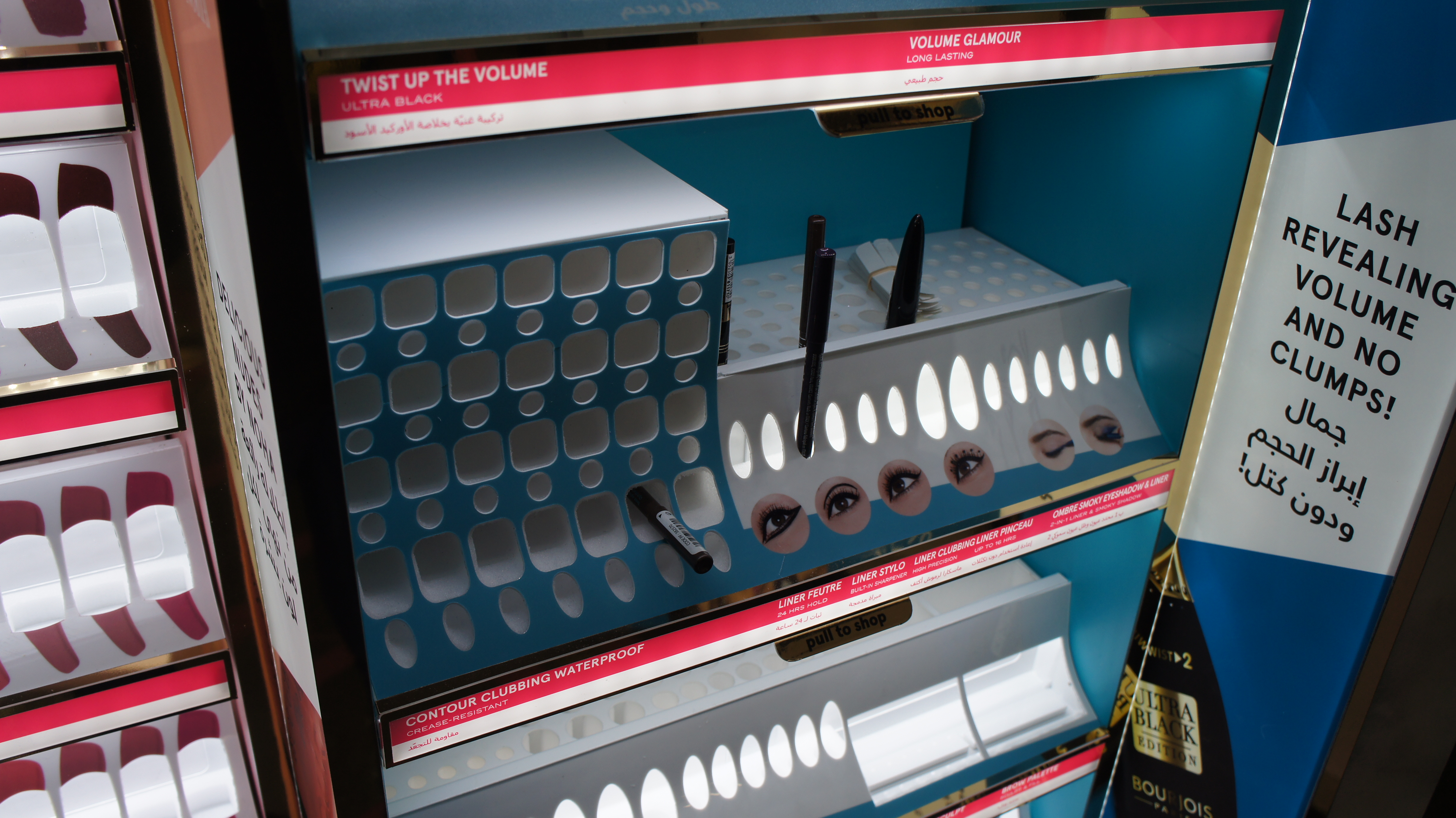 |
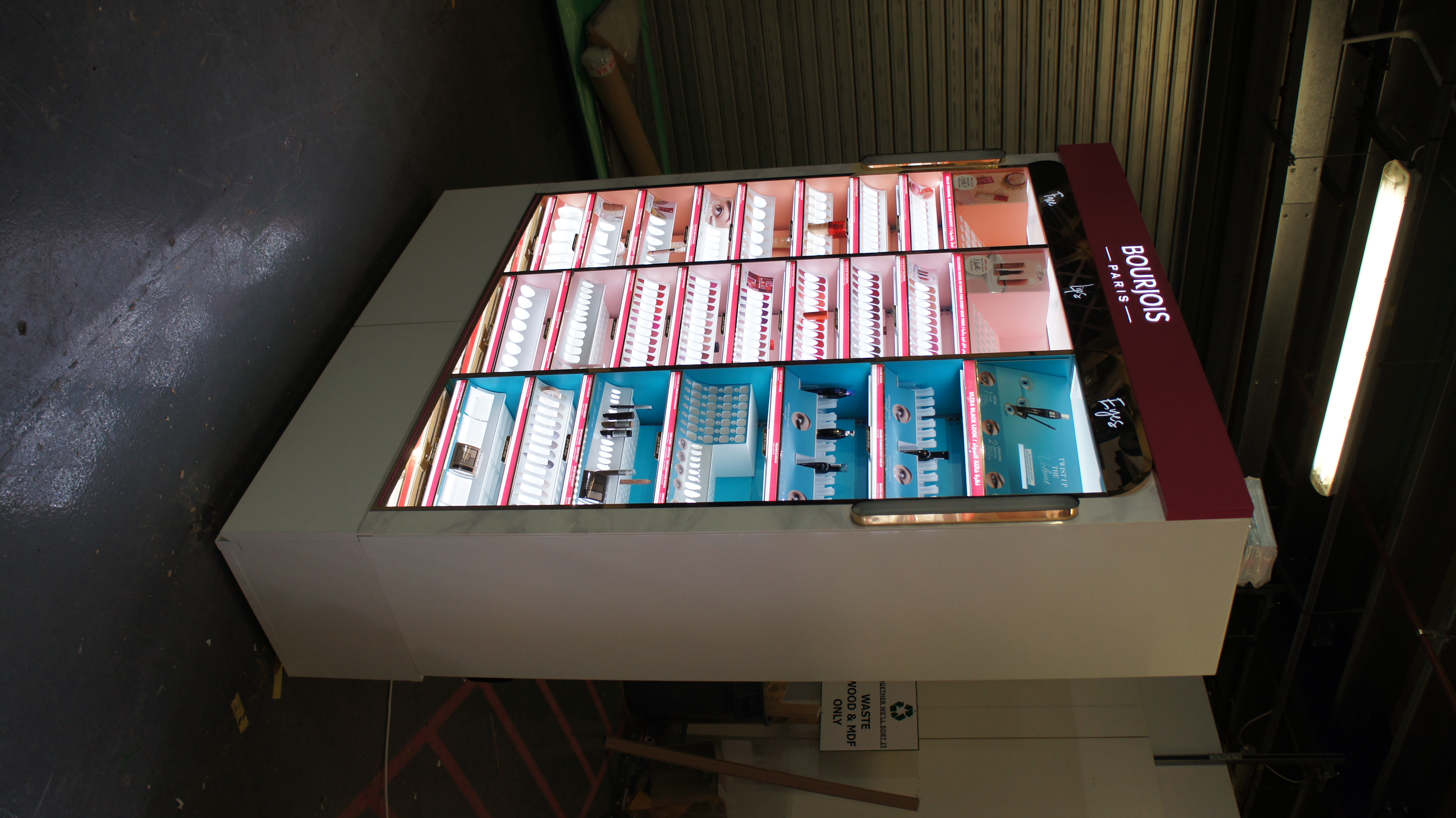 |
 |
| Shelves On Runners | Angled Shelves And Graphics | A Finished Unit | Two Finished Units |
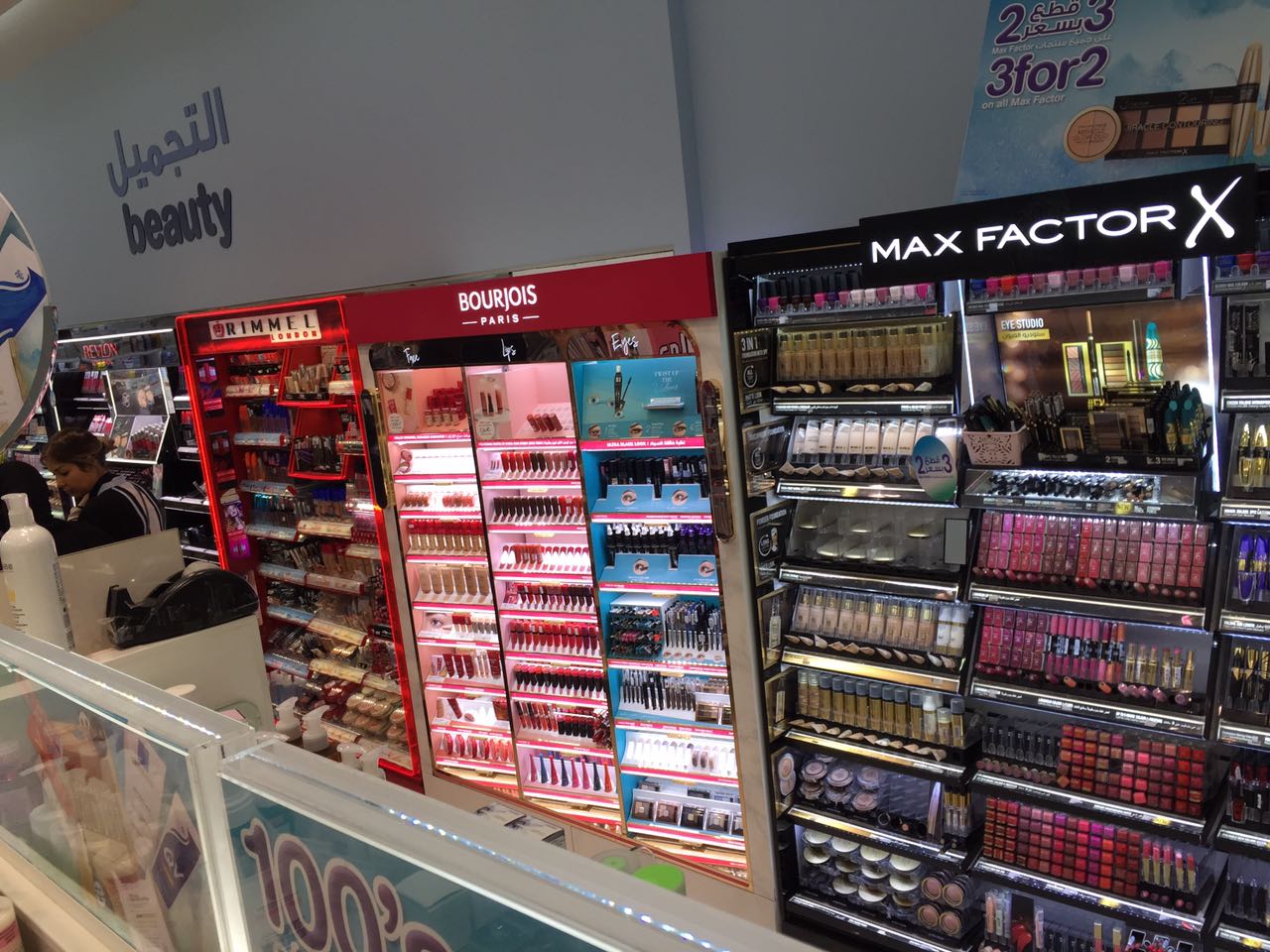
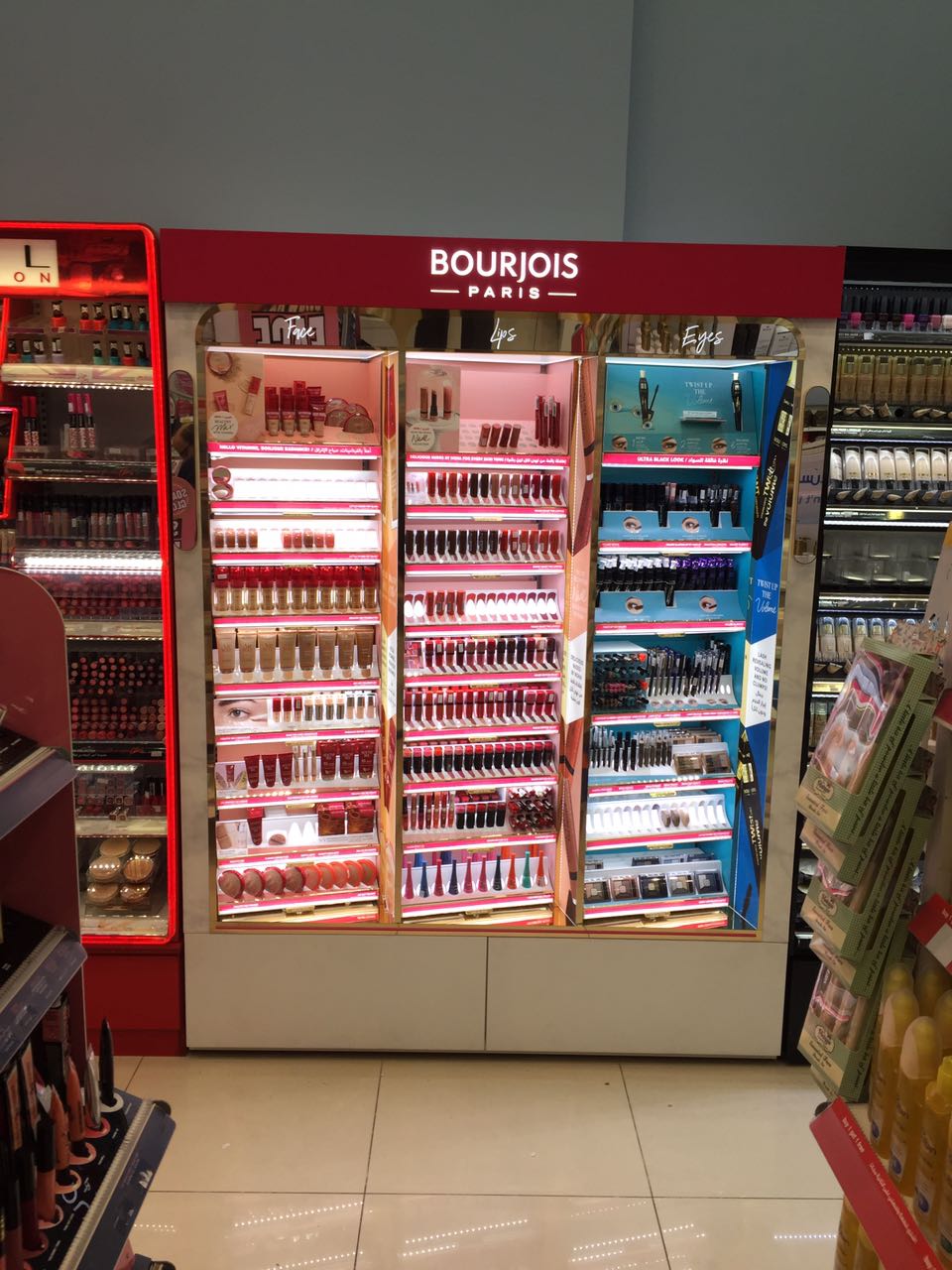
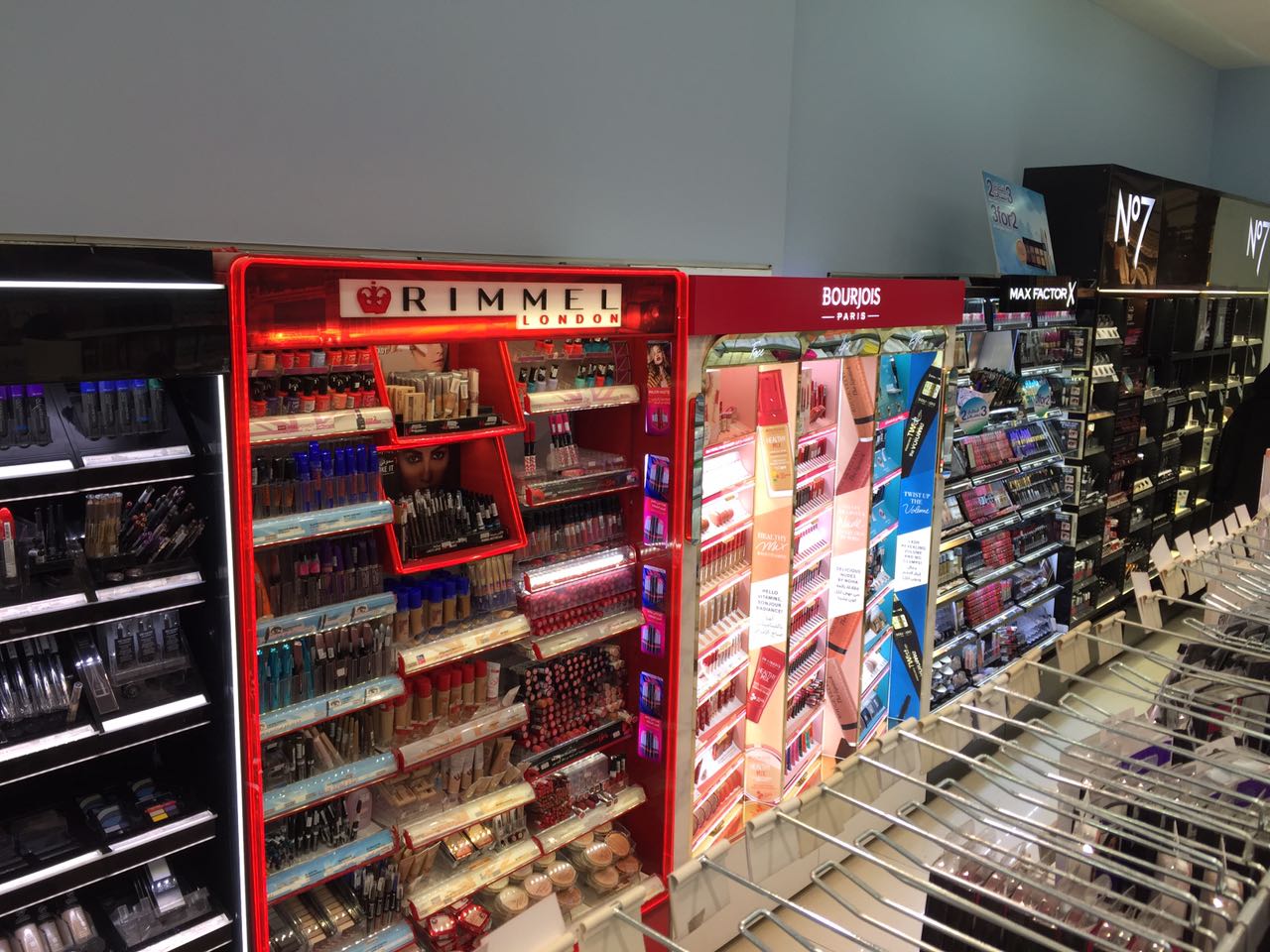
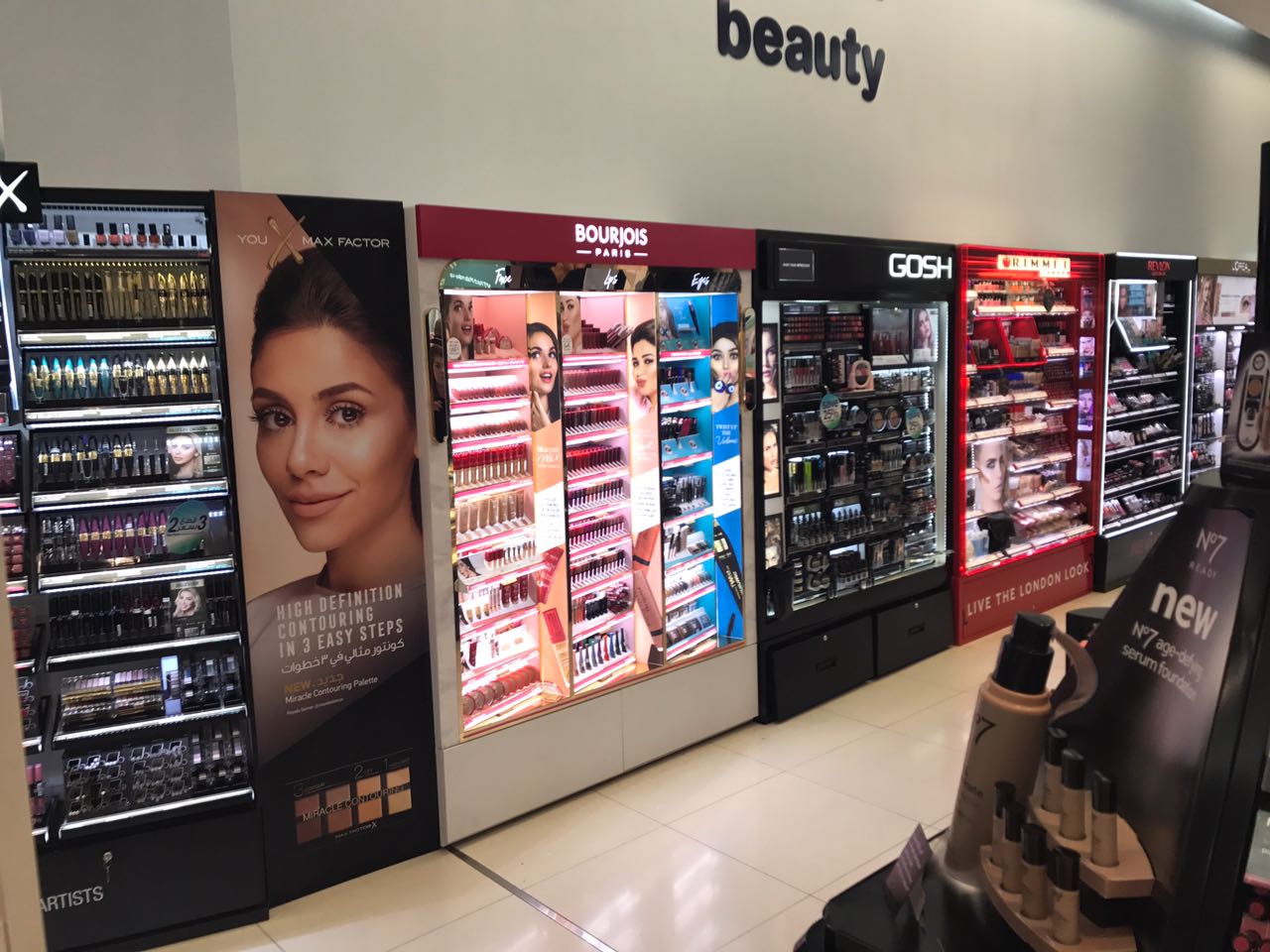
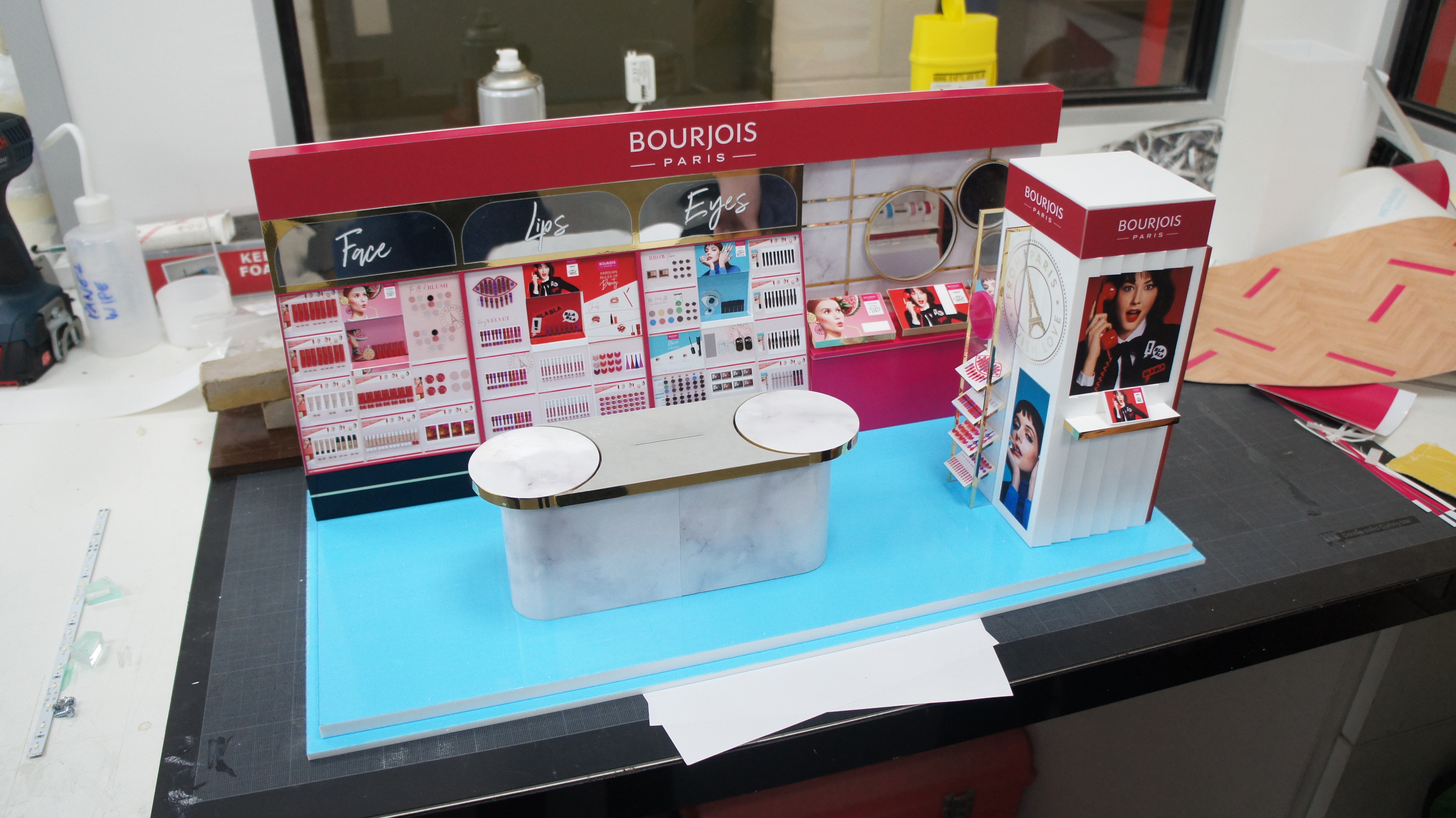
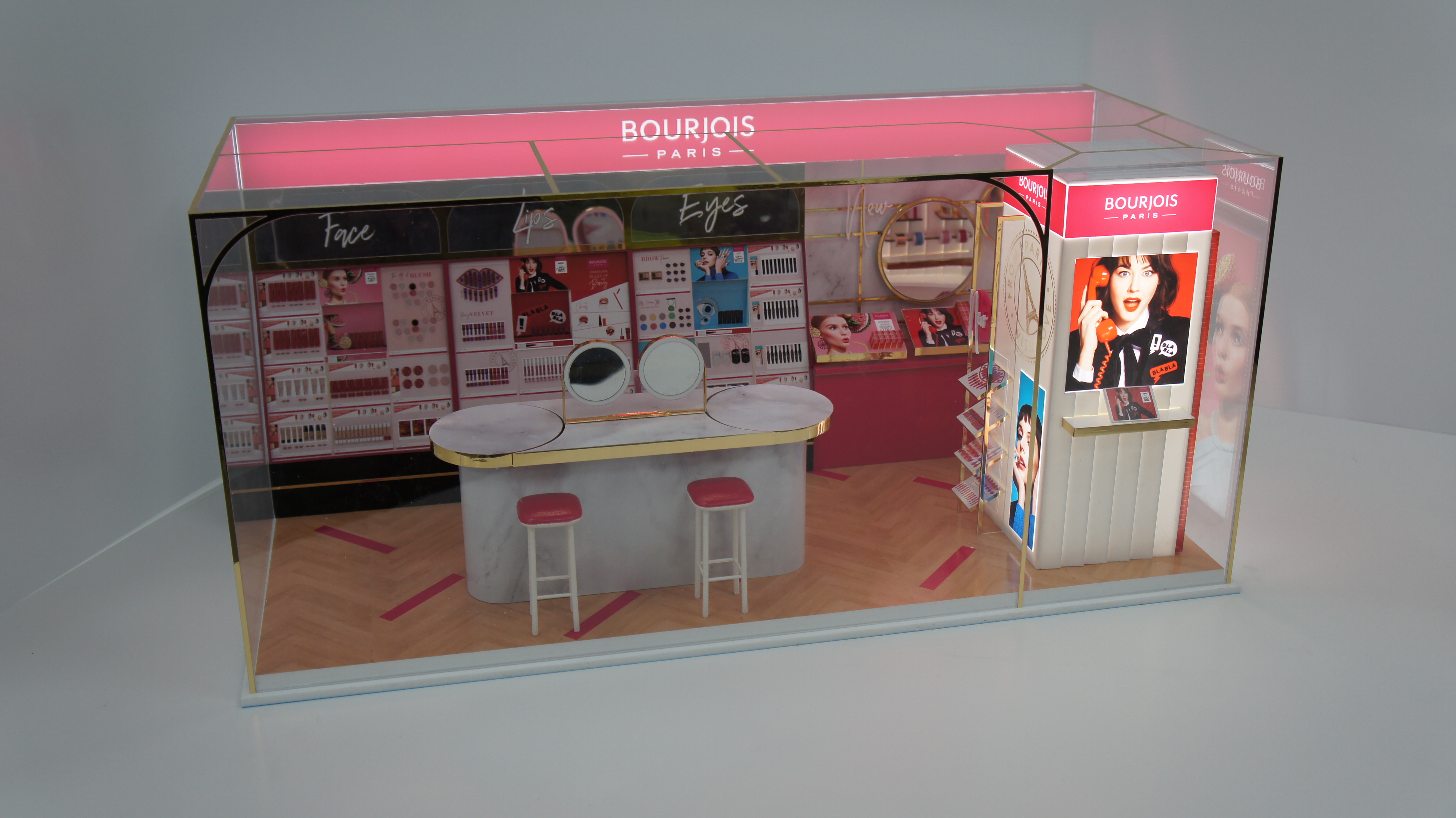
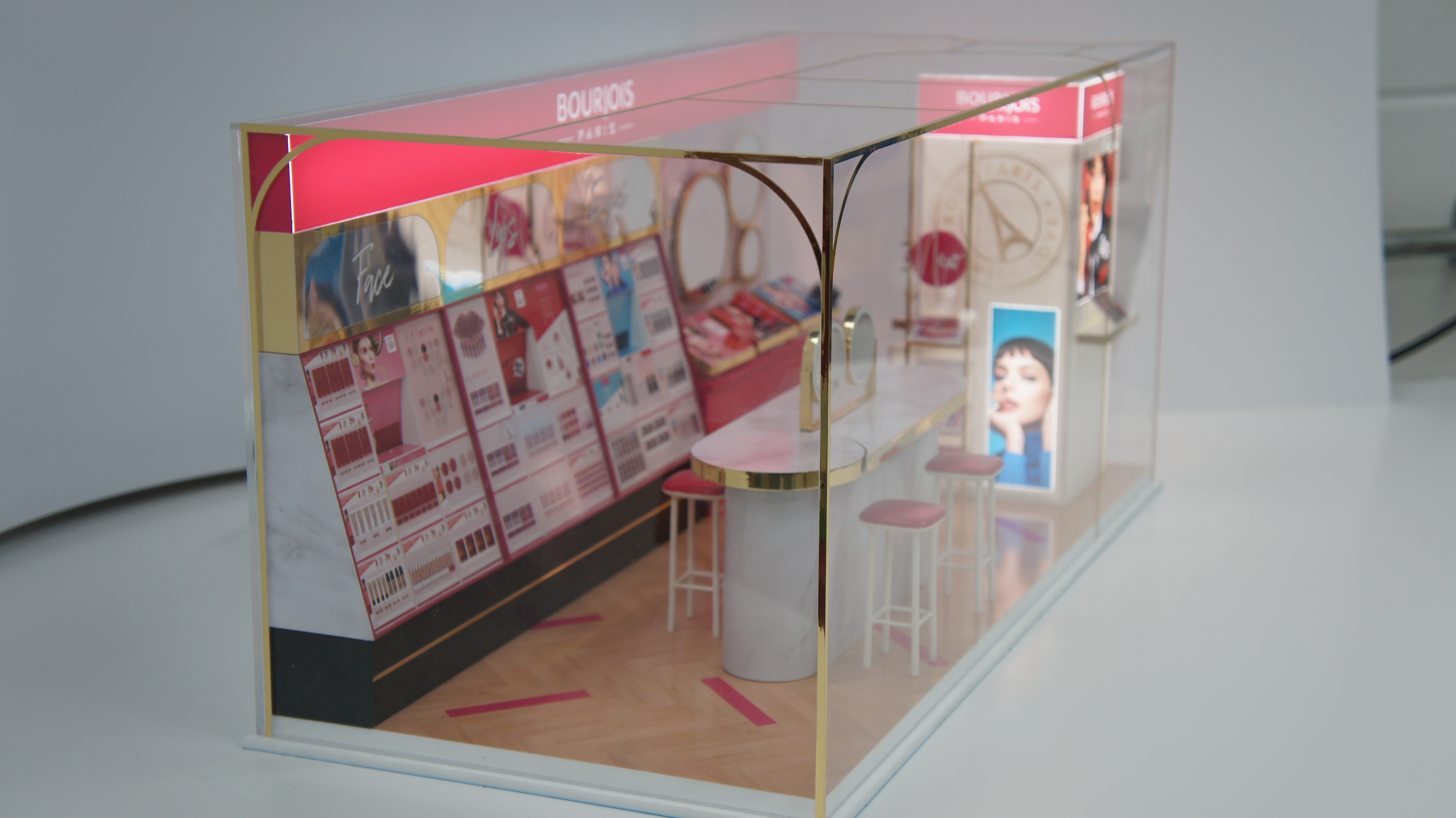
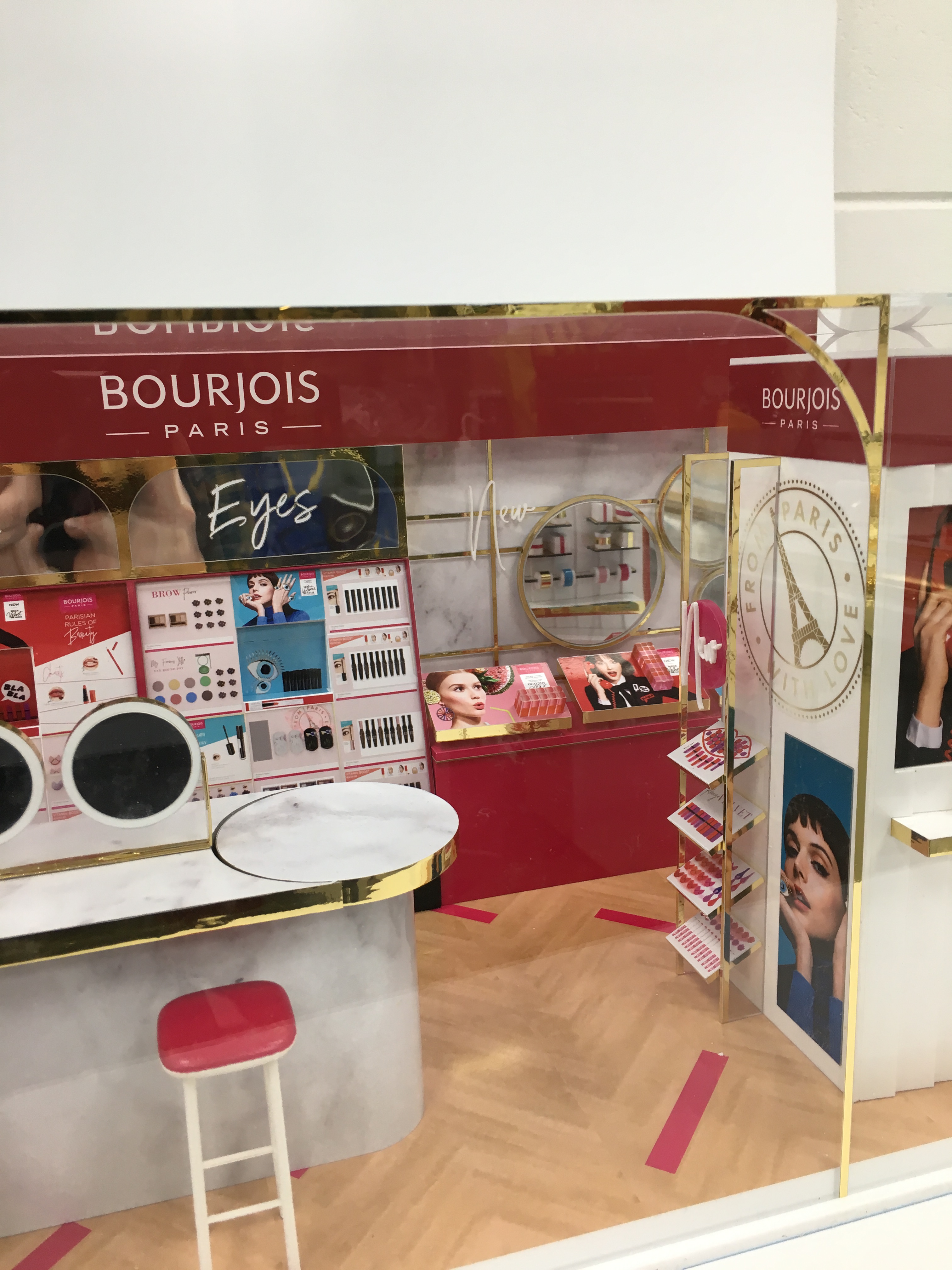
A small batch of store trial units were made, and installed around the world, including Dubai and Poland. A half-height unit, and a scale model of a shop-in-shop were made and sent to America for the tender presentation. I made the scale model from scratch, based off a series of renders produced by our creative team. Everything was created from flat-stock material, except for the stools, which were 3D printed.
 |
 |
 |
 |
| In Store - Dubai | In Store - Dubai | In Store - Dubai | In Store - Poland |
 |
 |
 |
 |
| Part Build Scale Shop | Finished Scale Shop | Finished Scale Shop | Scale Shop Details |
Boots No.7 Unit
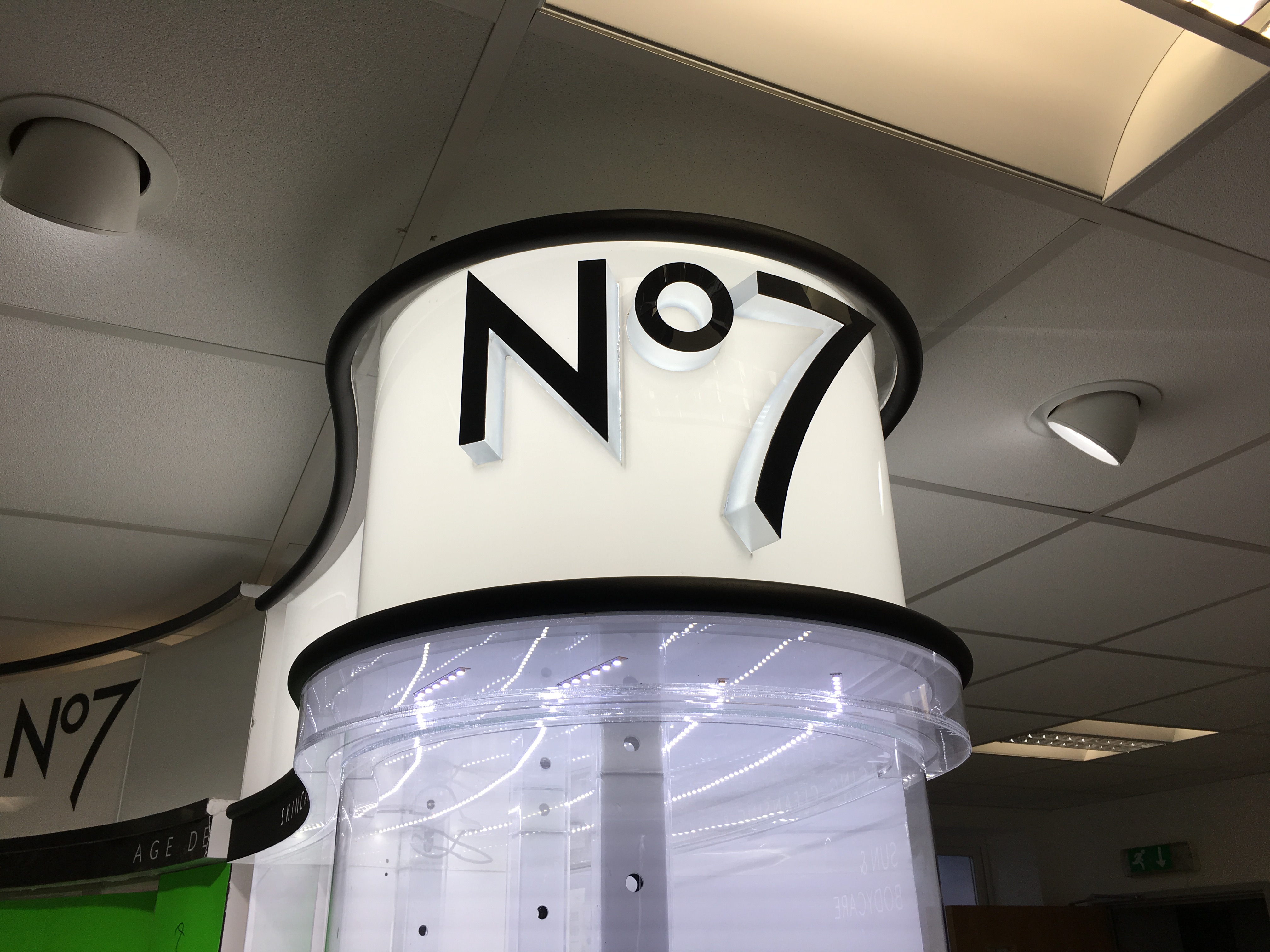
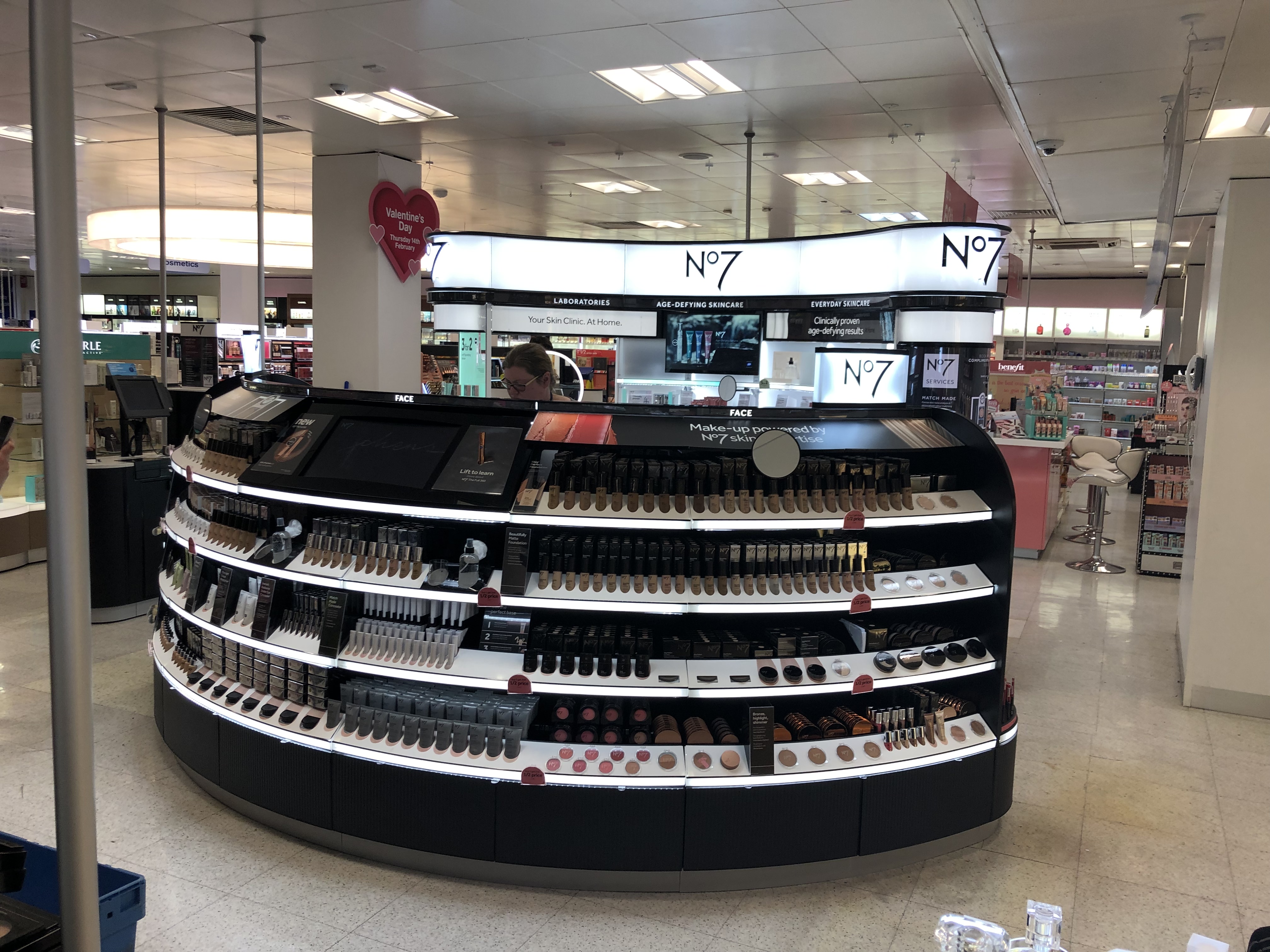
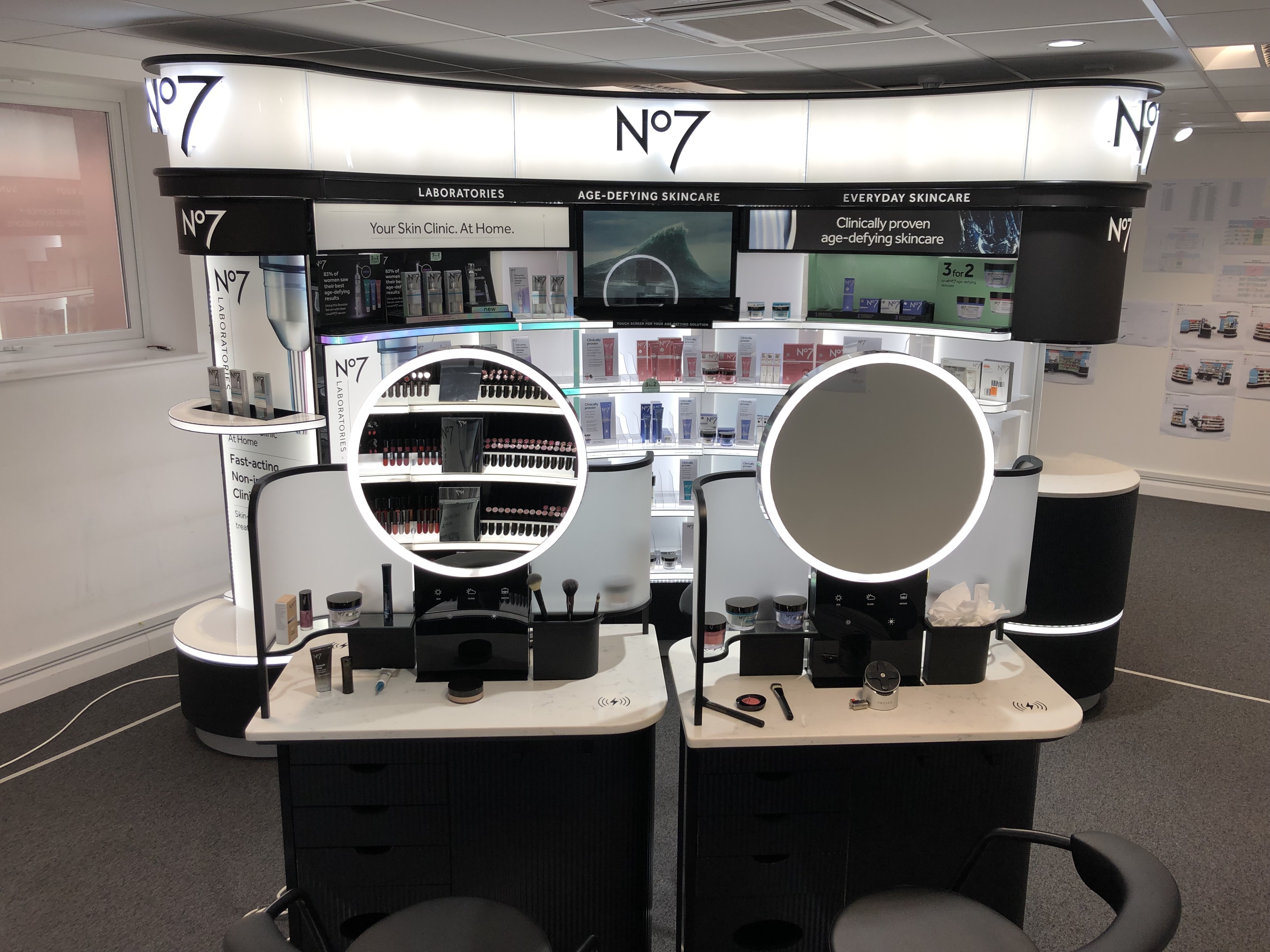
In 2018 we were asked to tender a design for a new furniture suite for Boots' No.7 brand. It was to be a big push to show their brand over competitors in the stores. the design comprised of two curved units complementing each other like the Yin and Yang symbol; one for Cosmetics and one for Skincare.
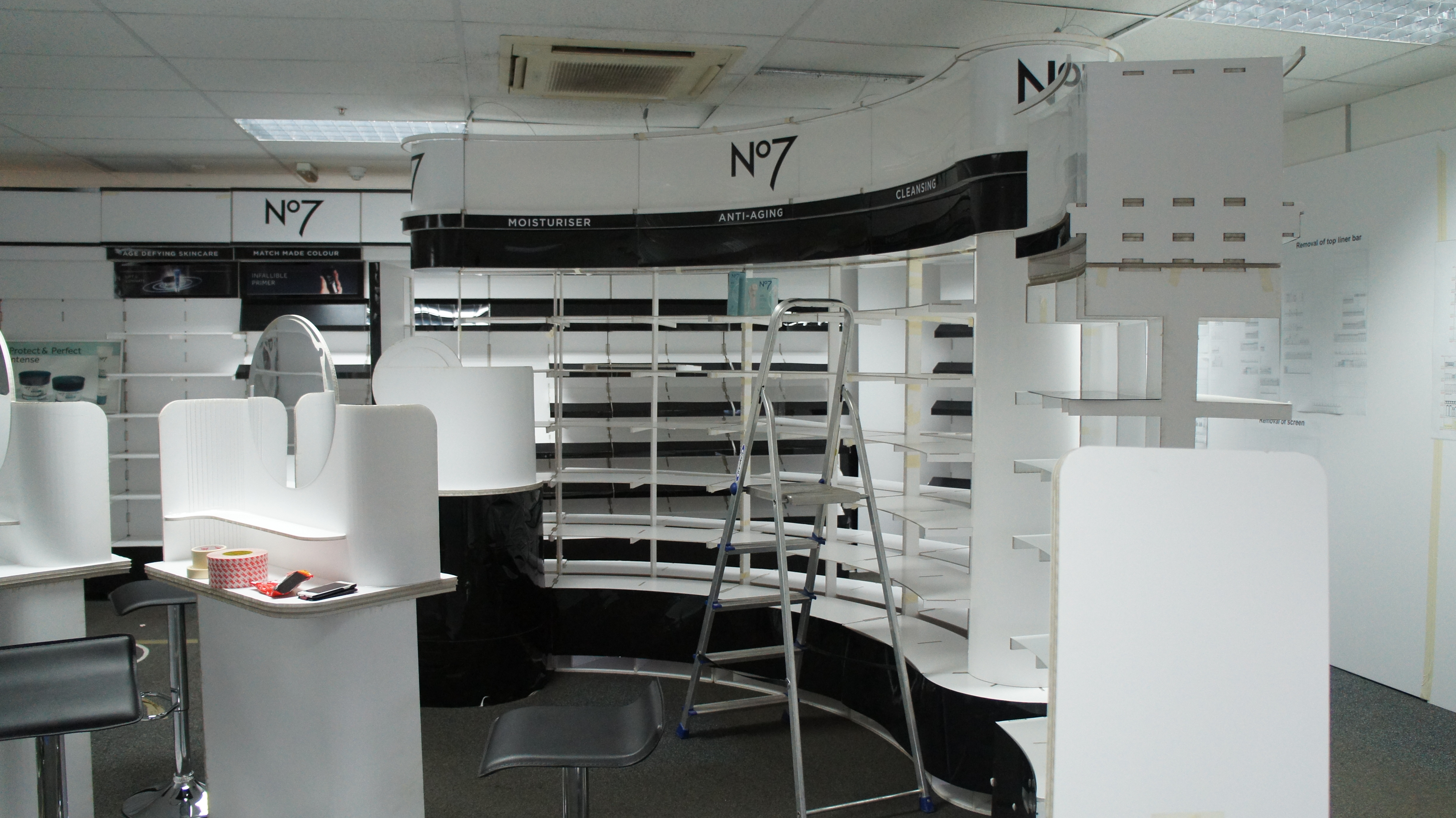
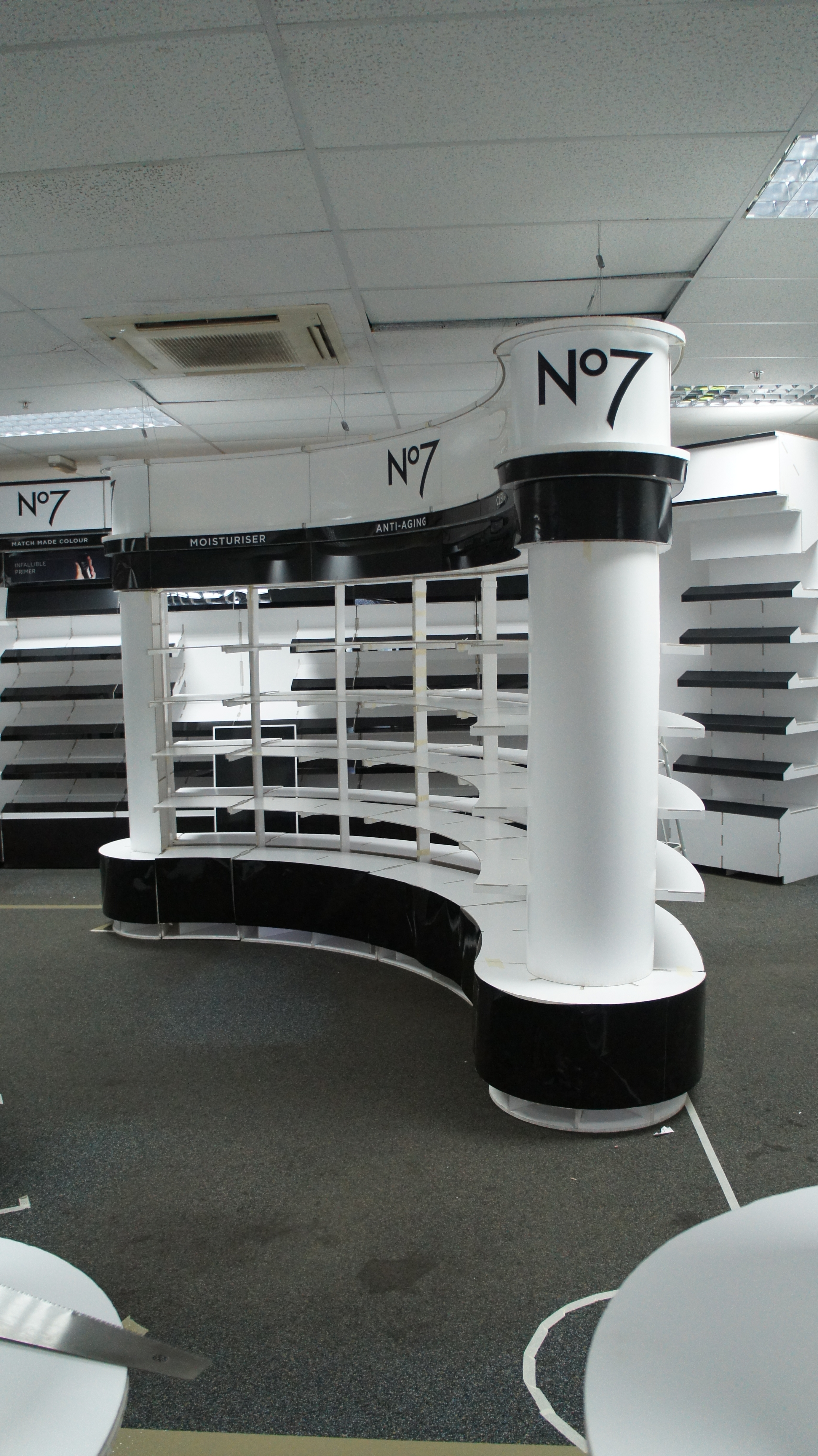
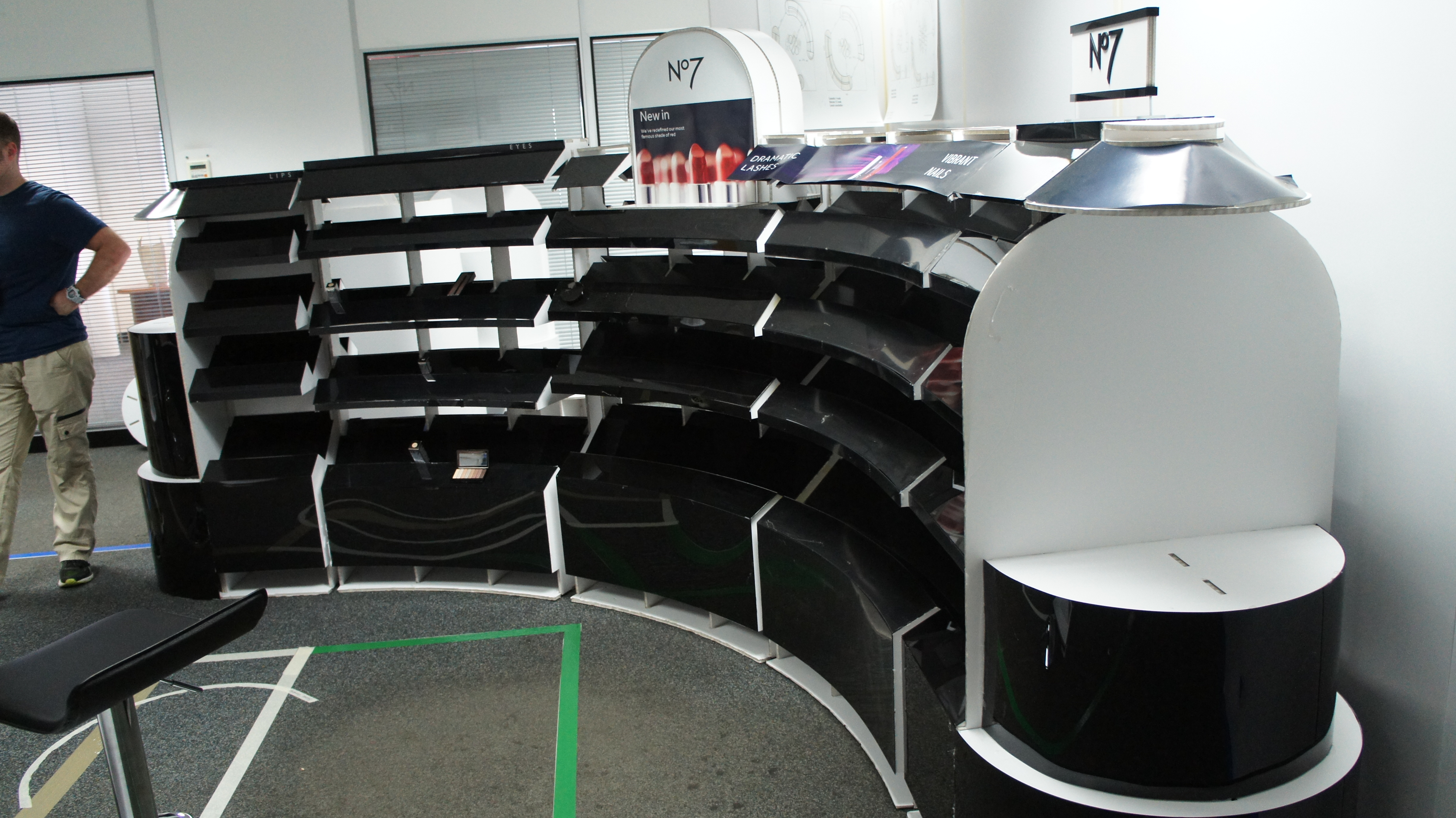
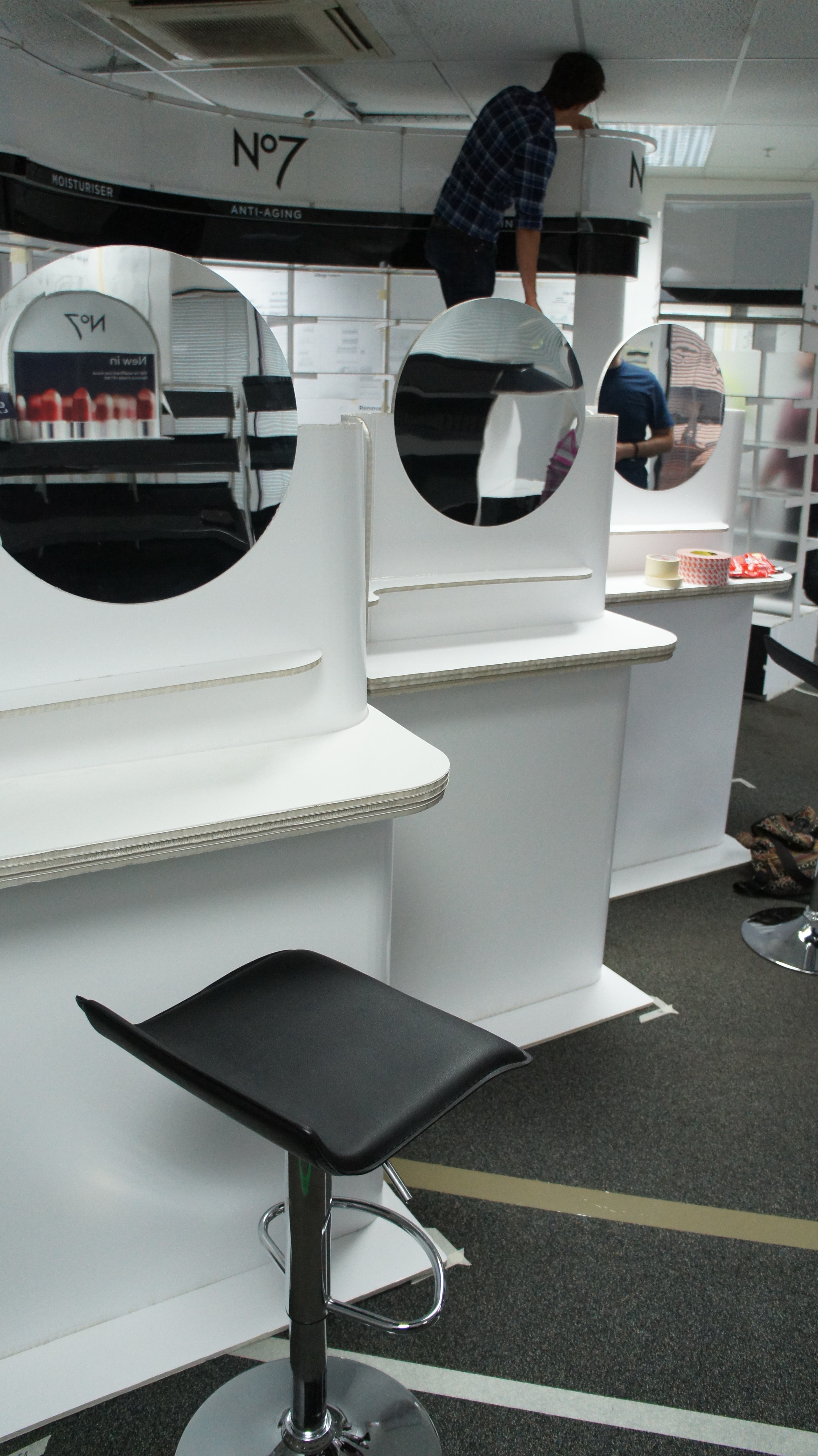
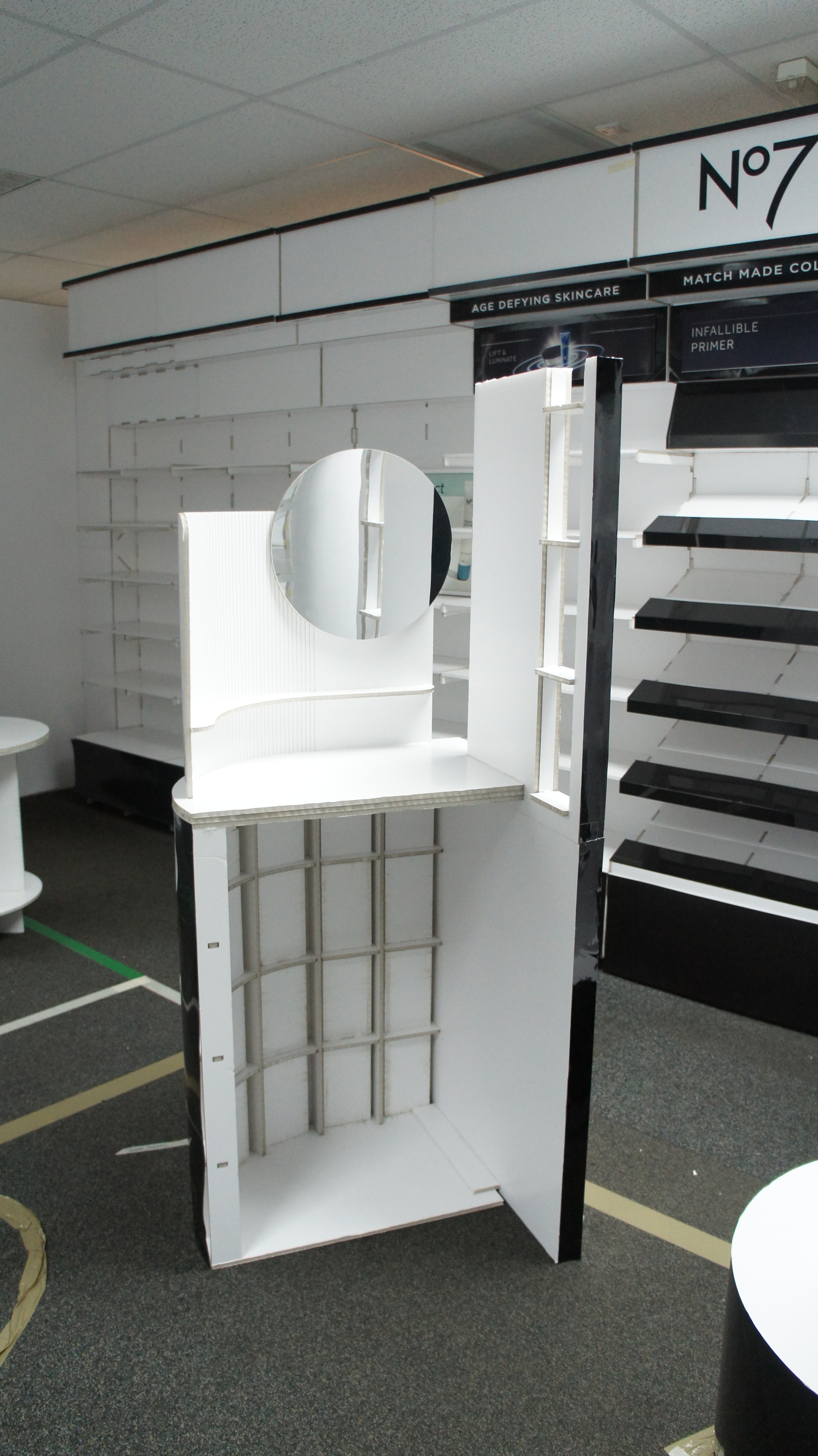
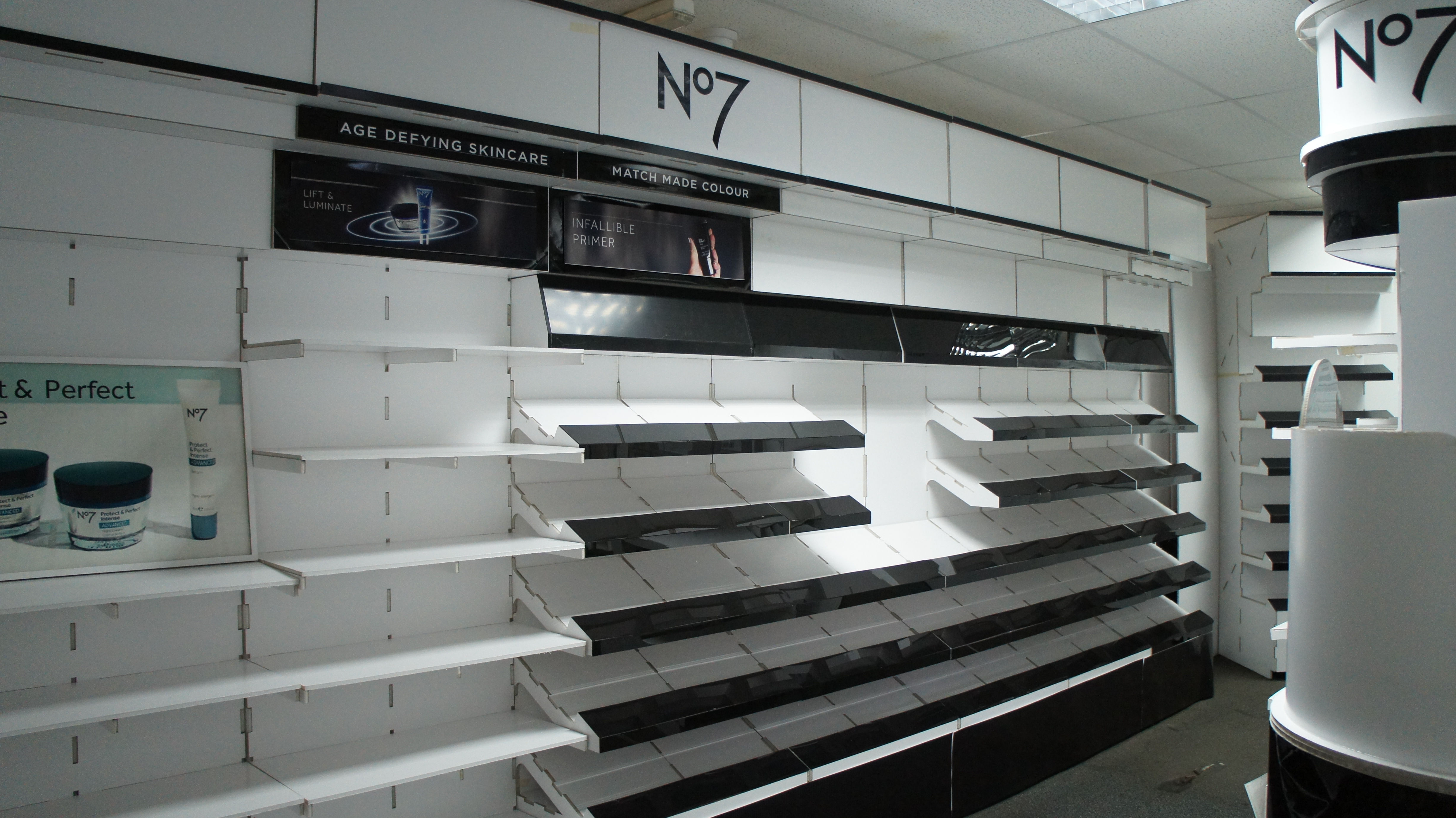
We started by creating a "Foamcore" mockup, to show the shape and size of the units. Using foamcore, we were able to quickly build up sections of the units, and move them around with relative ease. These were used to help show graphic space and general stock load-up options.
 |
 |
 |
 |
 |
 |
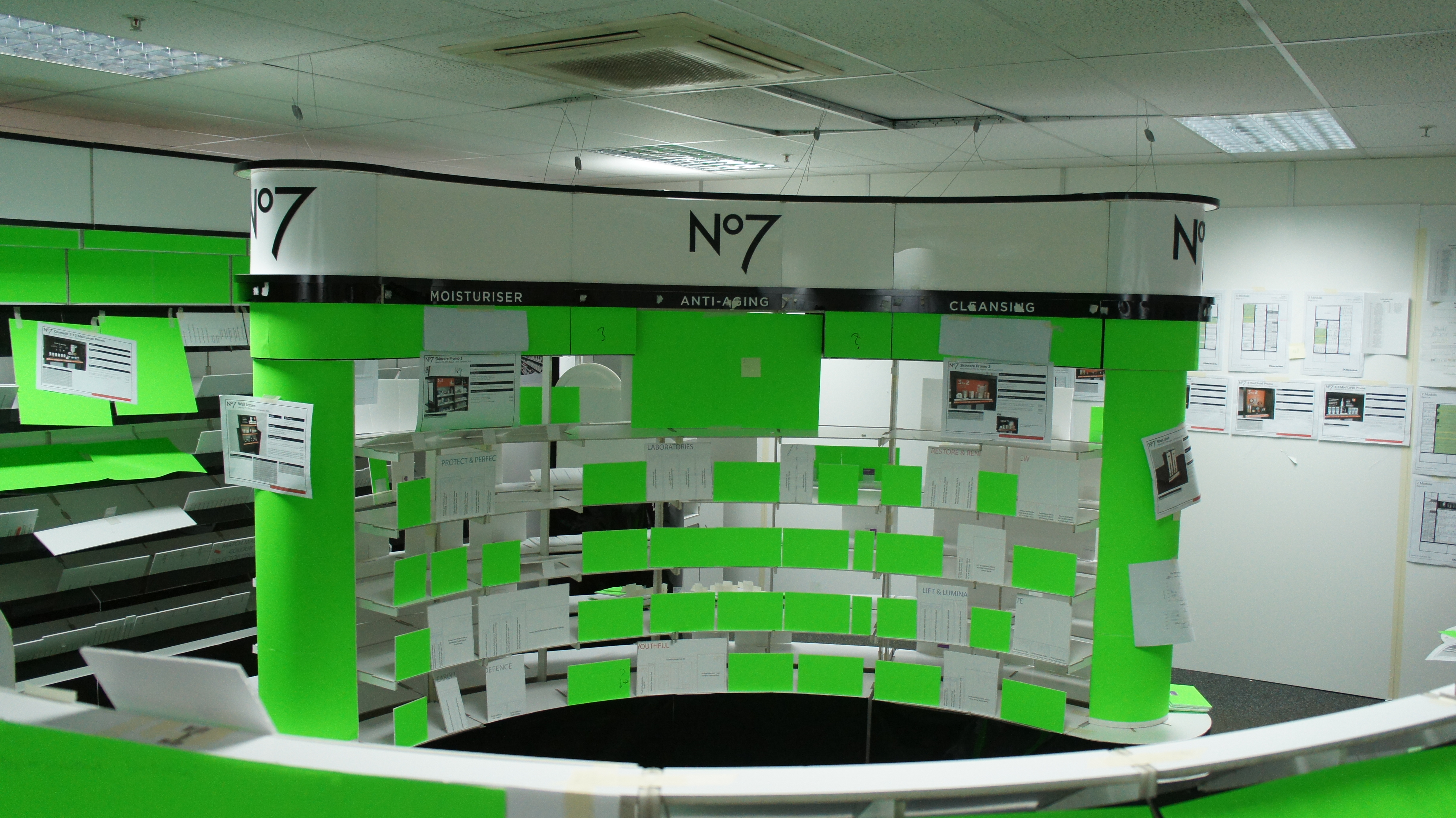 |
| Skincare Unit | Skincare Unit | Cosmetics Unit | Consultation Tables | Consultation Table | Wall Unit | Graphic Locations |
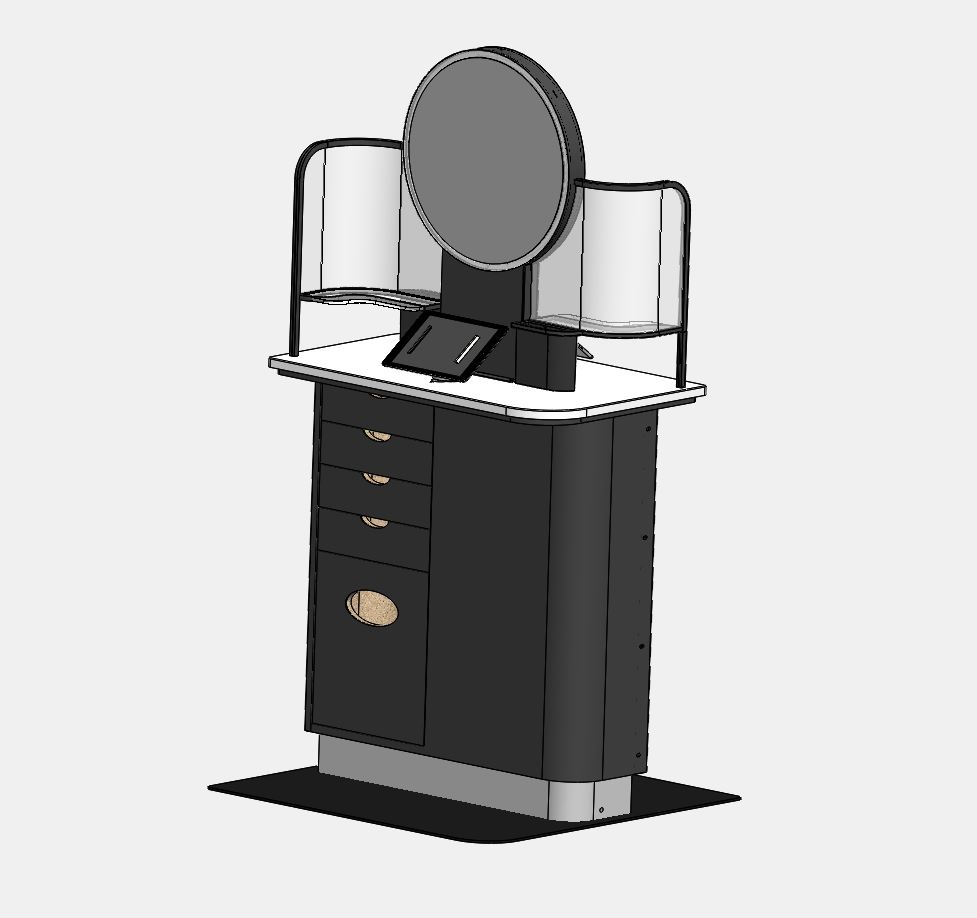
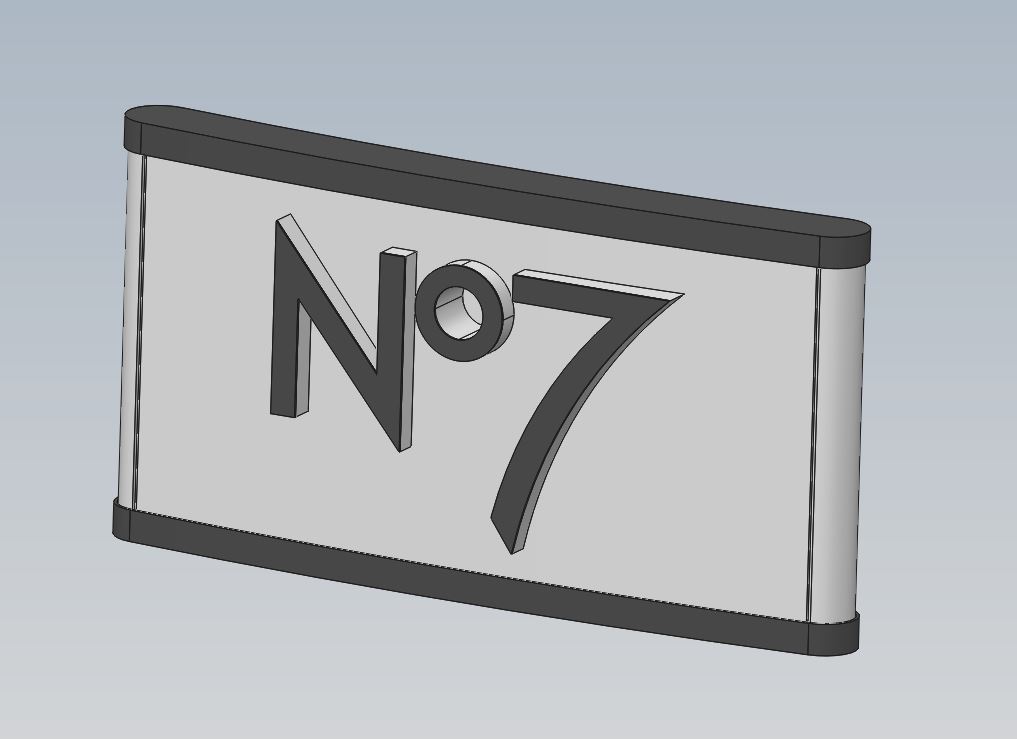
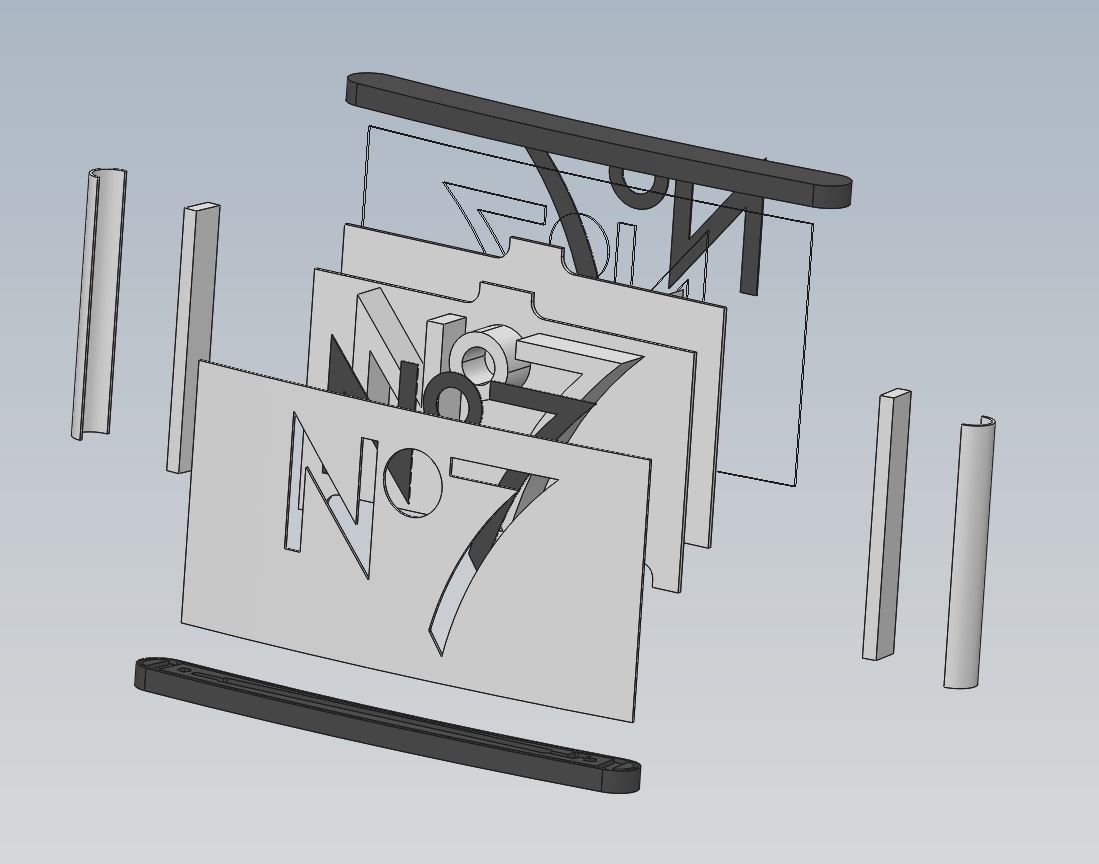
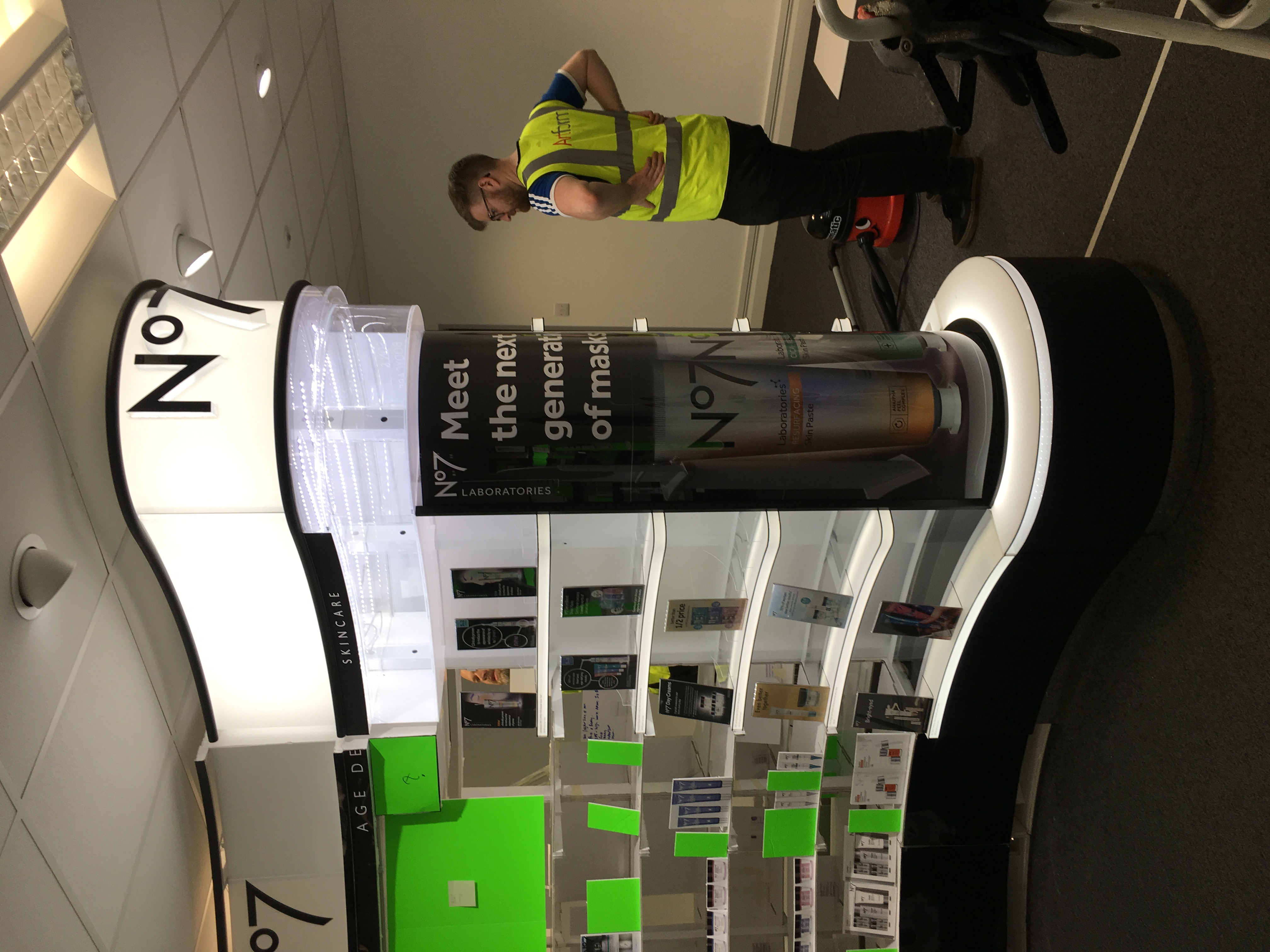
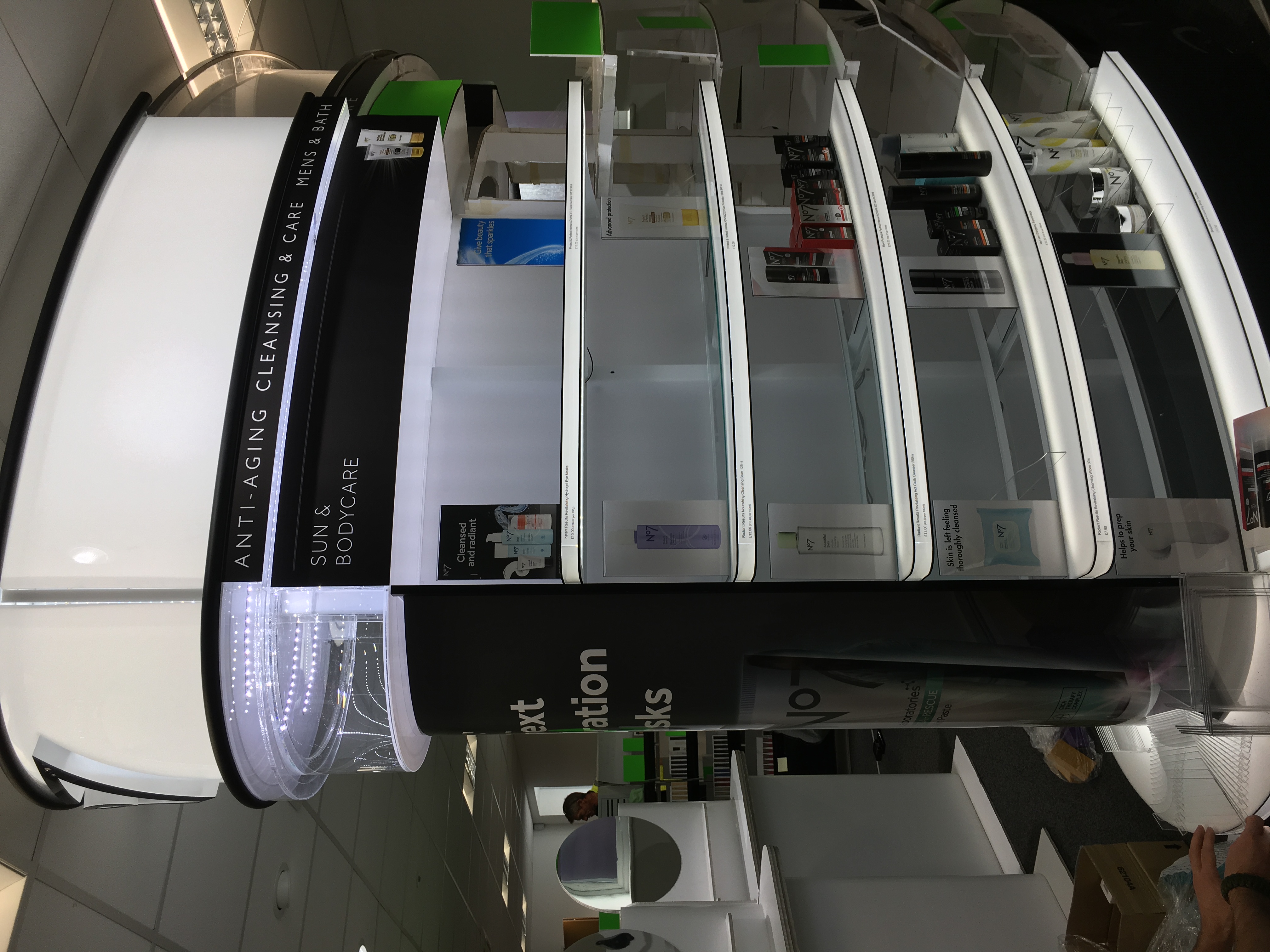
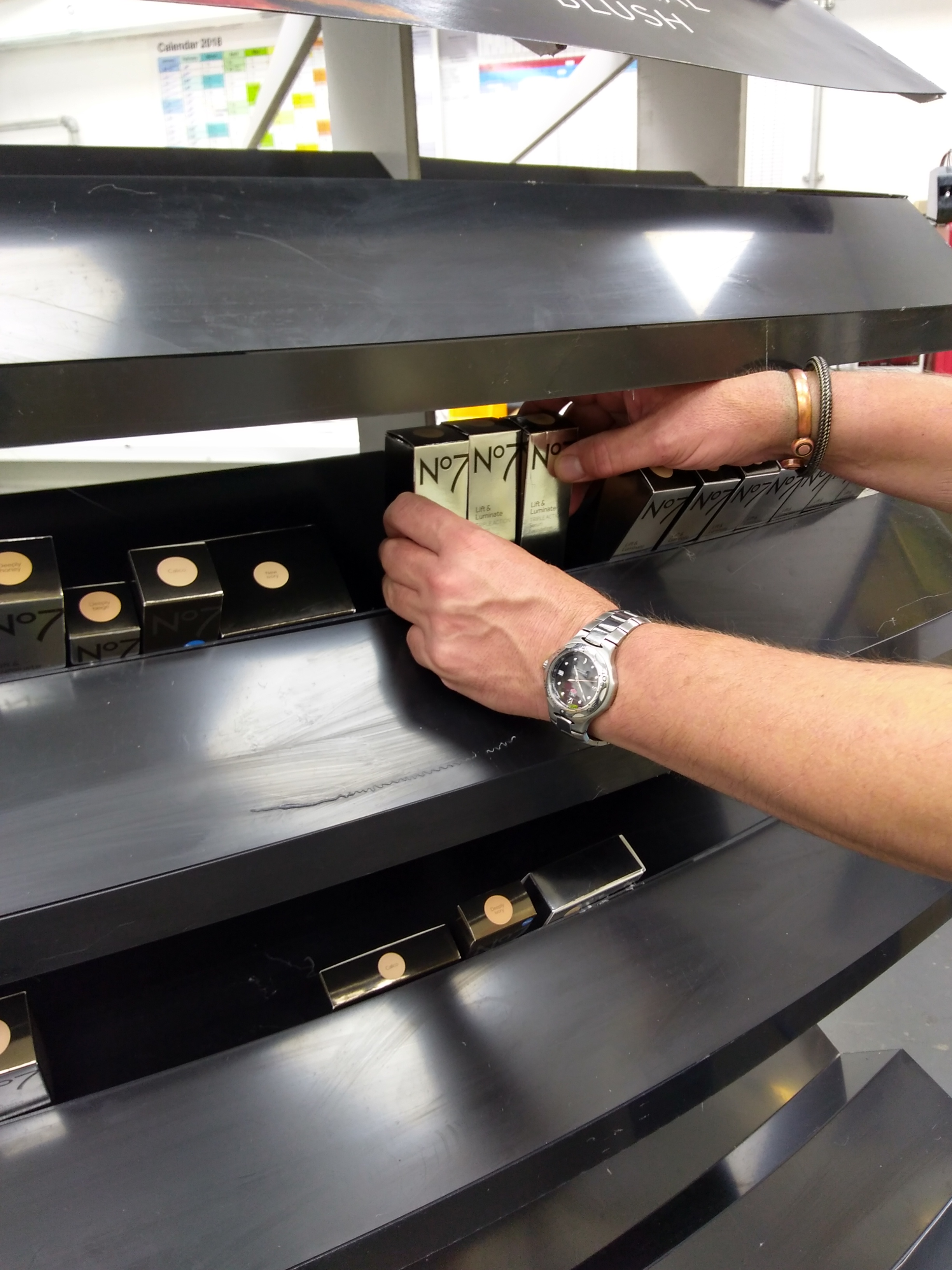
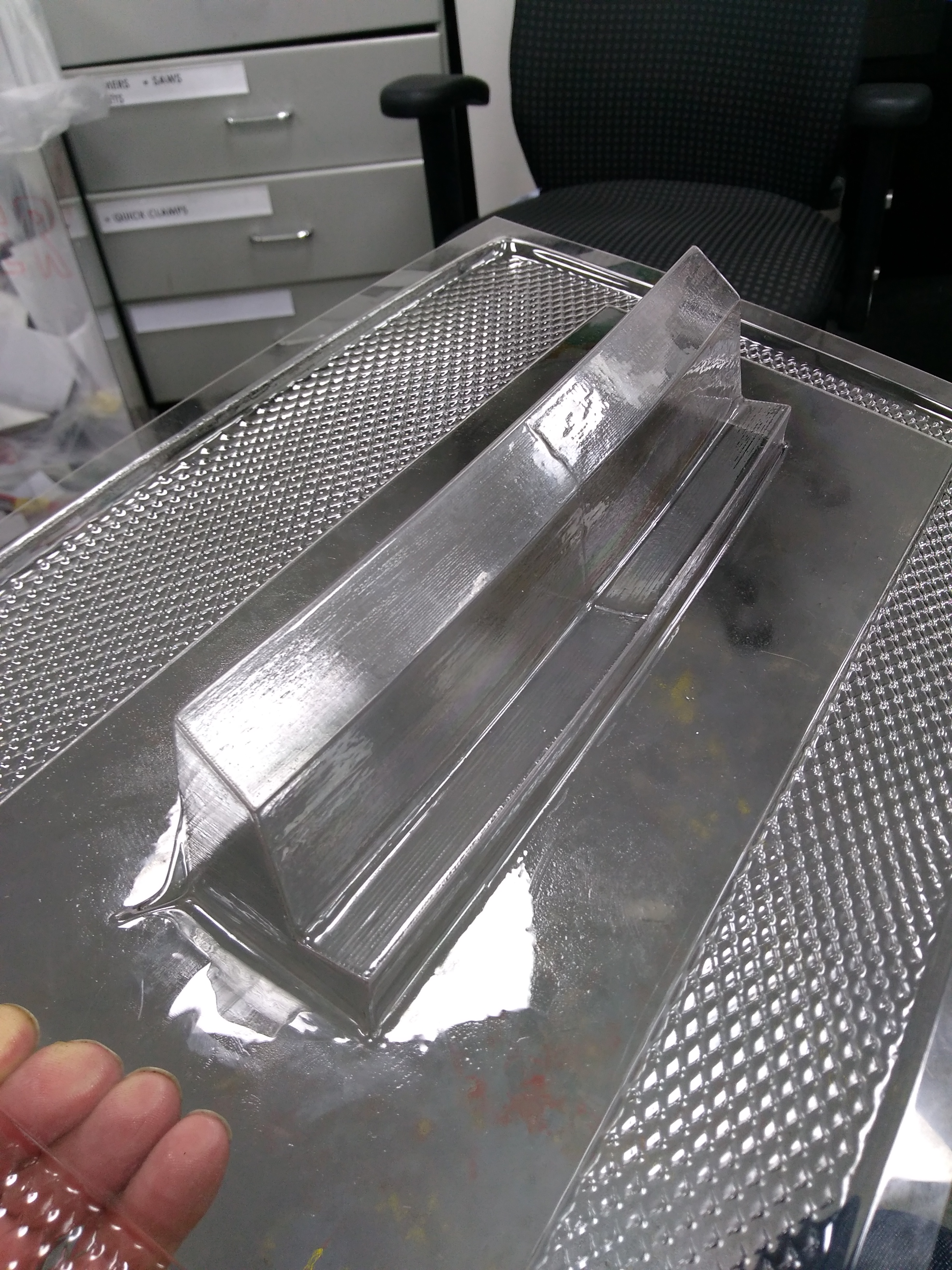
After this, we created a full prototype based on a metal skeleton, with fabricated shelves and headers complete with lighting and product cassettes. After designing and getting metalwork ordered, we had less than a week to fabricate and assemble everything for a meeting - a group of 12 designers and prototypers worked over 120Hrs each that week.
 |
 |
 |
 |
 |
 |
 |
 |
 |
 |
 |
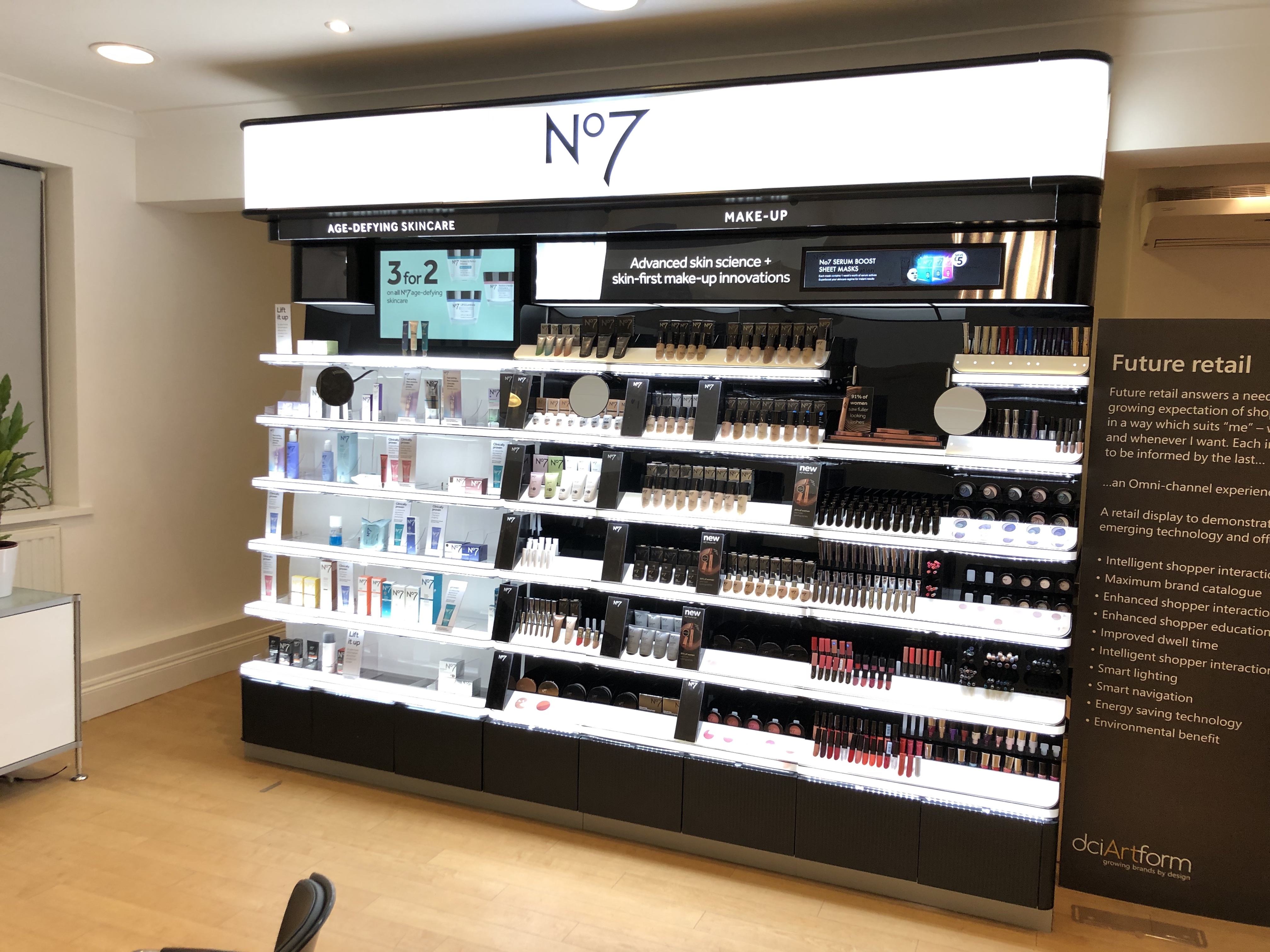 |
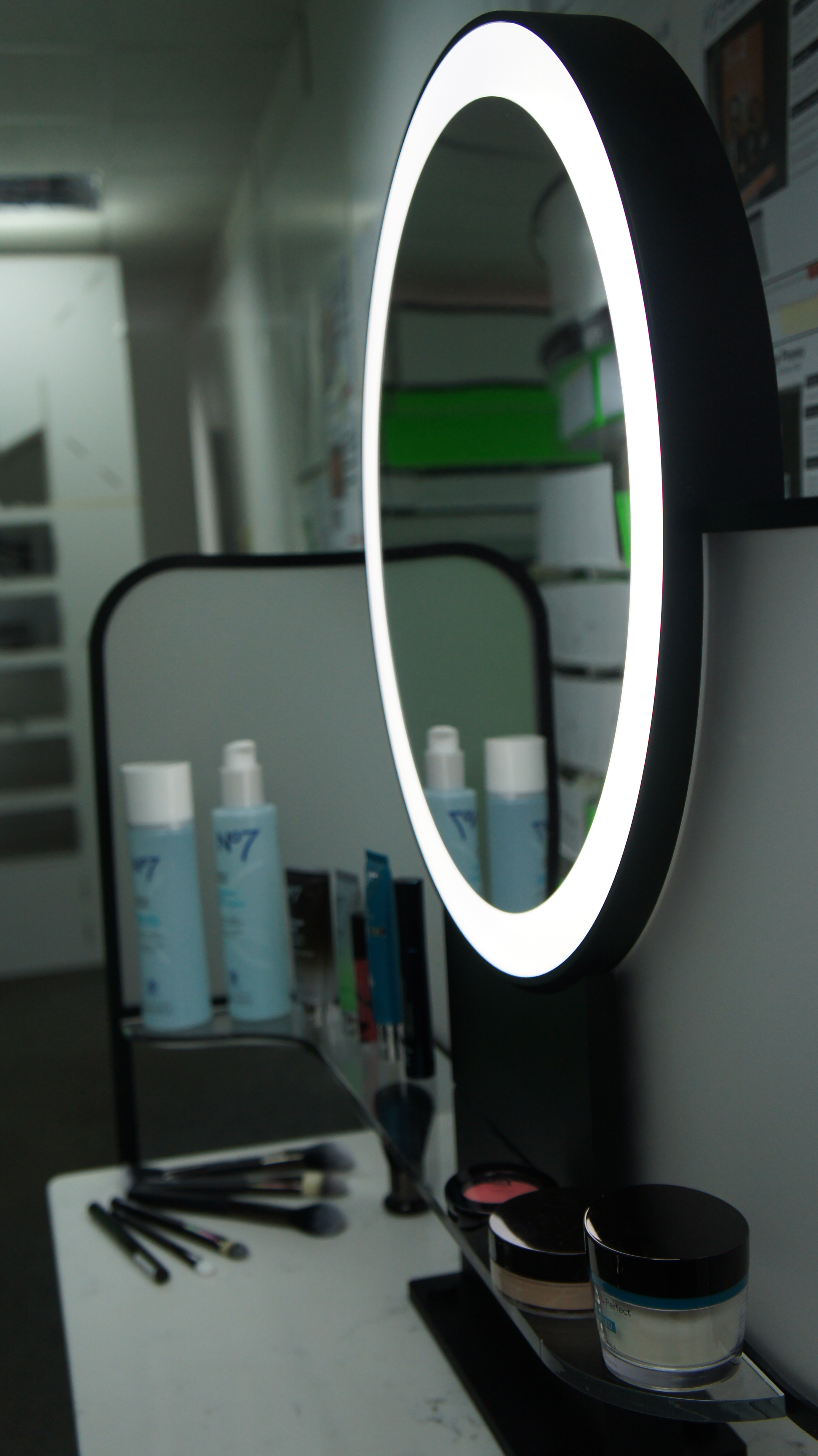
| Consultation Table CAD | Flag Header CAD | Exploded Flag Header | First Prototype Section | Header Lighting | First Prototype Section | Test Fit Issues | 3D Printed Tool Vac-formed | Finished Consultation Table | Cosmetics Unit In Store | Finished Skincare Unit | Finished Wall Unit |
Touch Controlled LED Lighting
As an exercise in value engineering, I created a touch panel controlled, colour temperature shifting demo. This tech was fitted to a consultation table and mirror, but was controlled by a dedicated PC. Using an Arduino and a MOSFET control board, I replicated the functionality at a fraction of the cost. I then designed a pair of PCBs, the first through-hole for prototyping, and the second surface mount for production.
Perfume Tester Unit
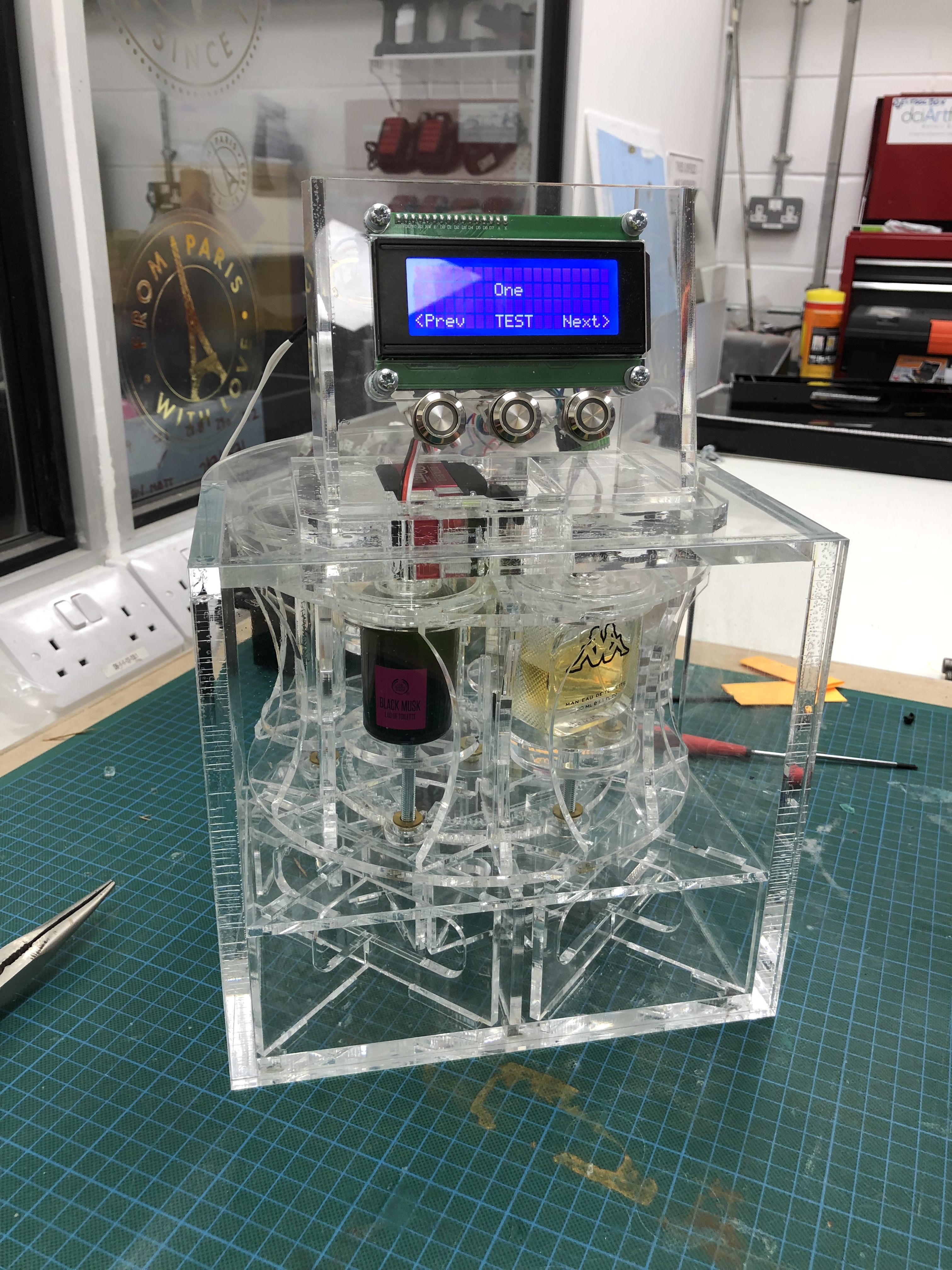
We were tasked with creating a unit for simply testing perfumes, as it was felt that there was too much reliance on busy store staff to allow freedom of roaming and browsing for the customer. This was a very open brief, and after sketching some simple ideas, we settled on a rotating carousel and a 'spritzing' arm.
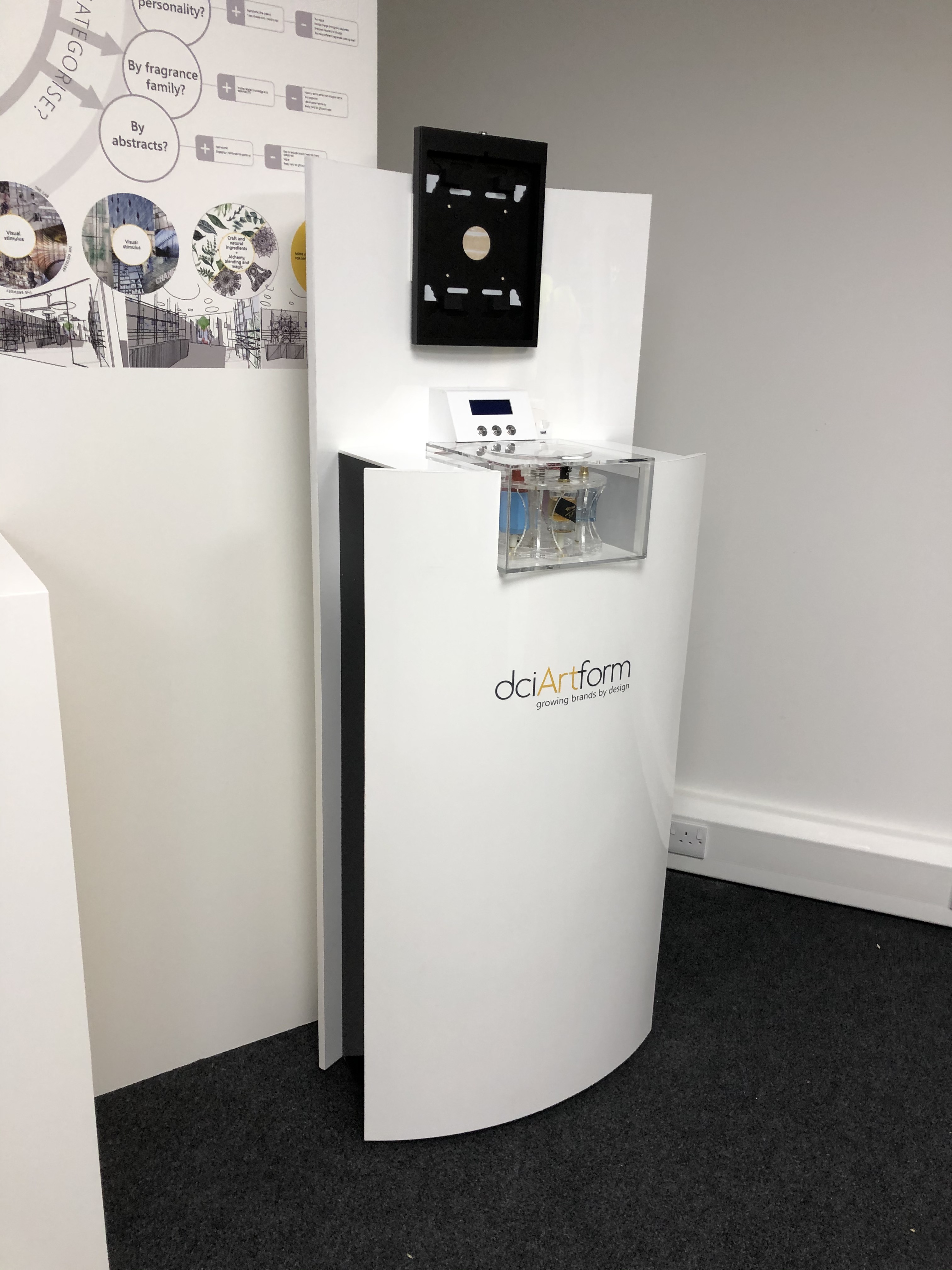
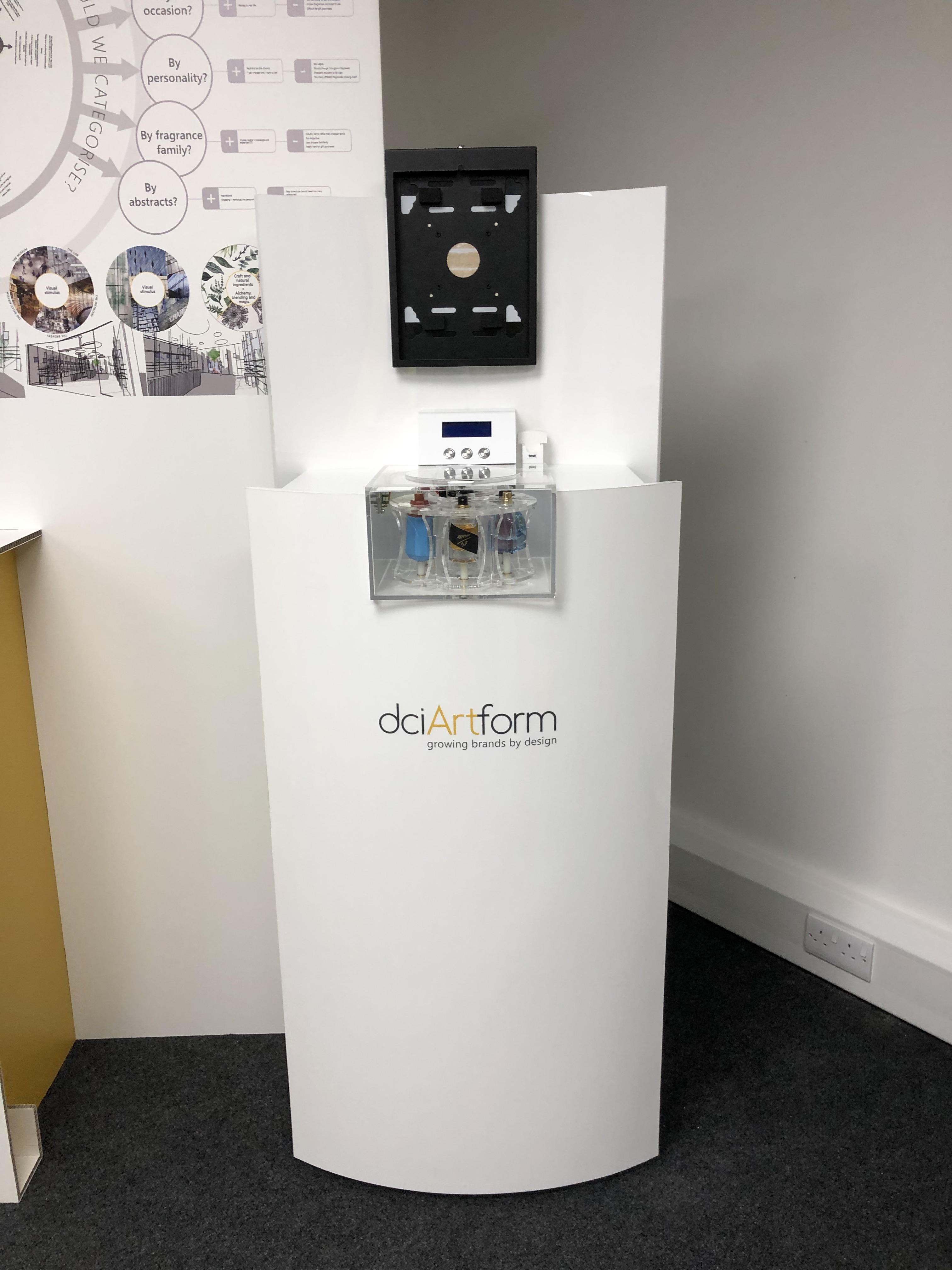
The carousel was designed and drawn entirely in AutoCAD, and cut from various thicknesses of clear acrylic. The brain of the unit is an Arduino Mega, driving an LCD display, three buttons, a stepper motor and a servo. I created the code from scratch, making use of several libraries to include niceties, such as acceleration of the stepper motor for a smooth carousel rotation. From start to completion, this took three days. The unit was a big hit, and it was decided to make another to take on the company roadshow.
 |
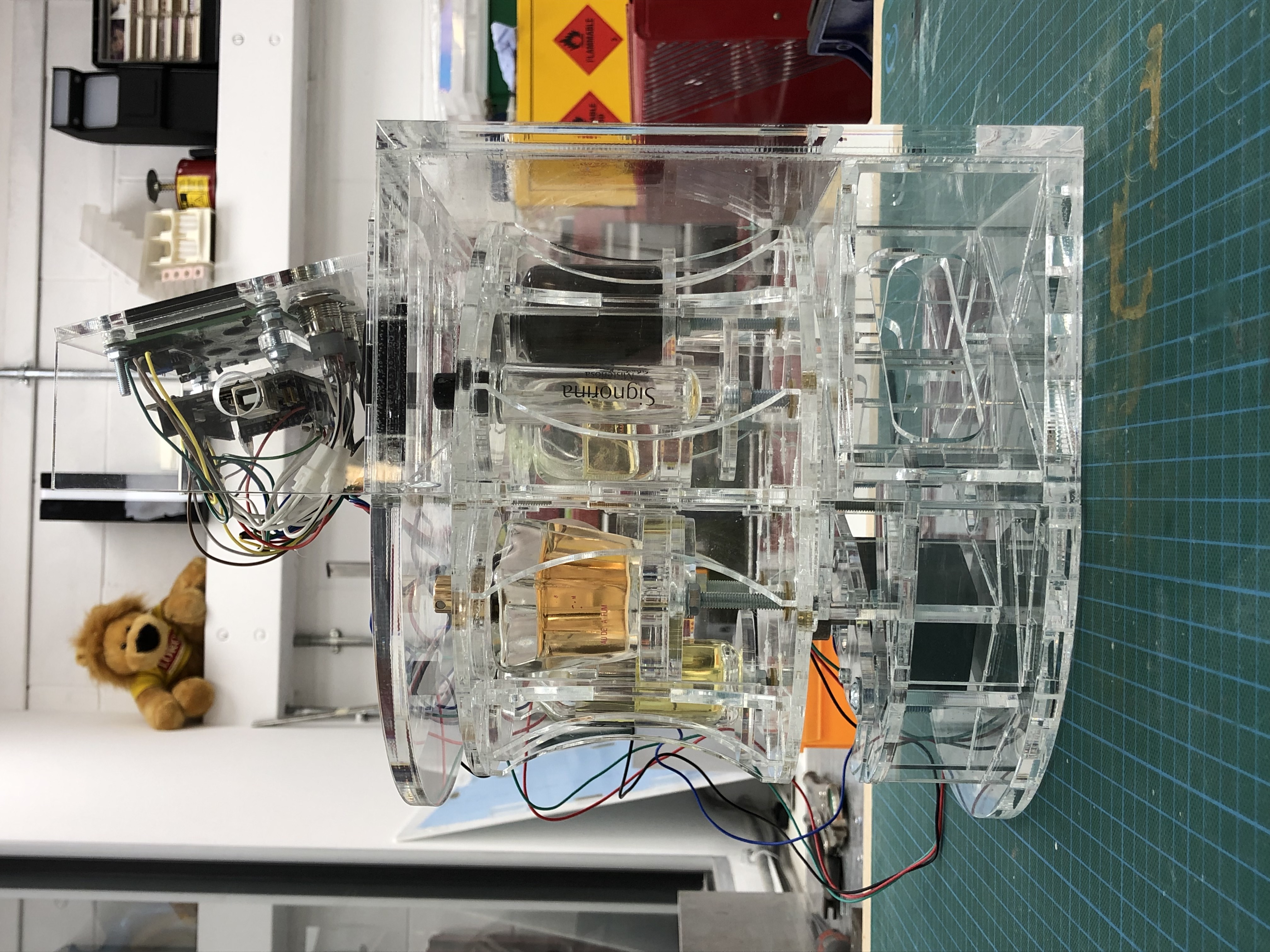 |
| First Prototype Fragrance Unit | Stepper Motor Visible At Bottom |
For version 2 we made a few improvements, such as a carousel homing sensor, and a test card sensor. The code was also improved to allow easier updating of the fragrances displayed on the screen. The hardware was also improved; the bottle mounting solution changed to make swapping perfumes easier, as well as making the whole mechanism more compact.
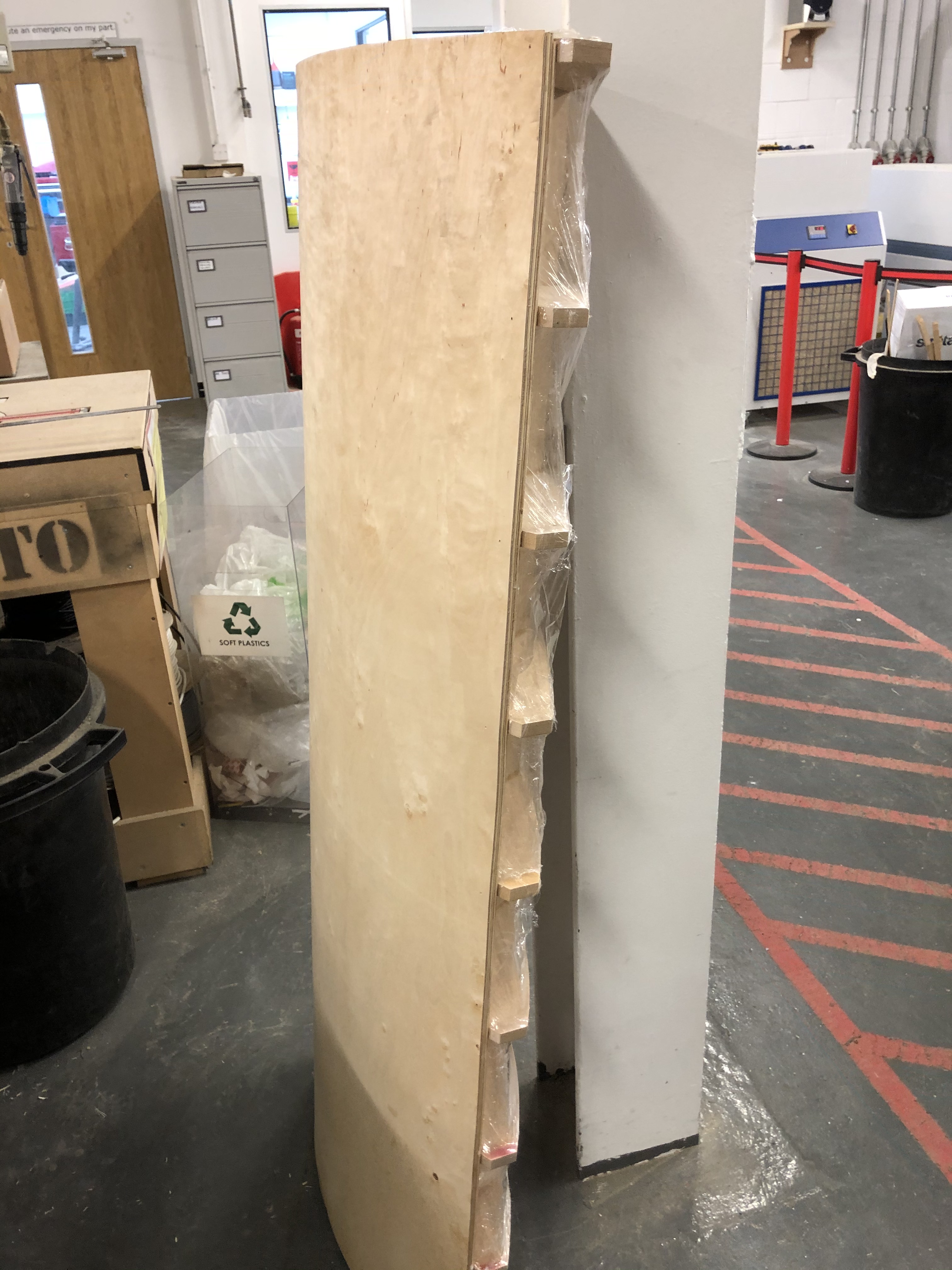
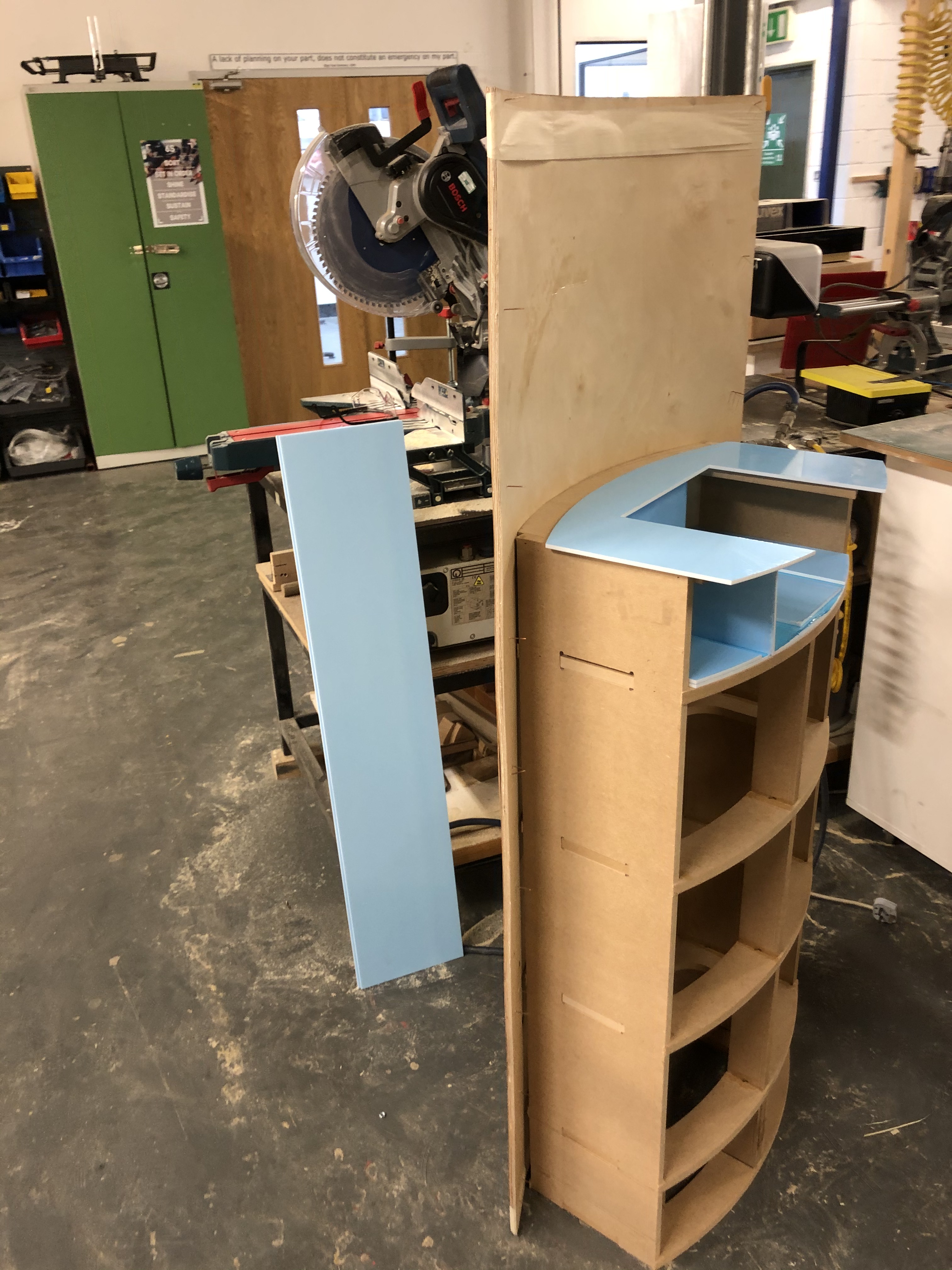
A simple stand was made from an MDF spine and two curved laminations. The resulting free-standing-unit resembles a perfume bottle, and has a small screen for displaying attractor graphics. The plan for future iterations is to have the carousel controlled by the touchscreen, rather than discrete buttons. As with its predecessor, it was a big hit with the clients, prompting much positive feedback.
 |
 |
 |
 |
| Laminated Aeroply On Form | Unit Build In Process | Fragrance Unit | Fragrance Unit |
L'Oreal Make Up Designer
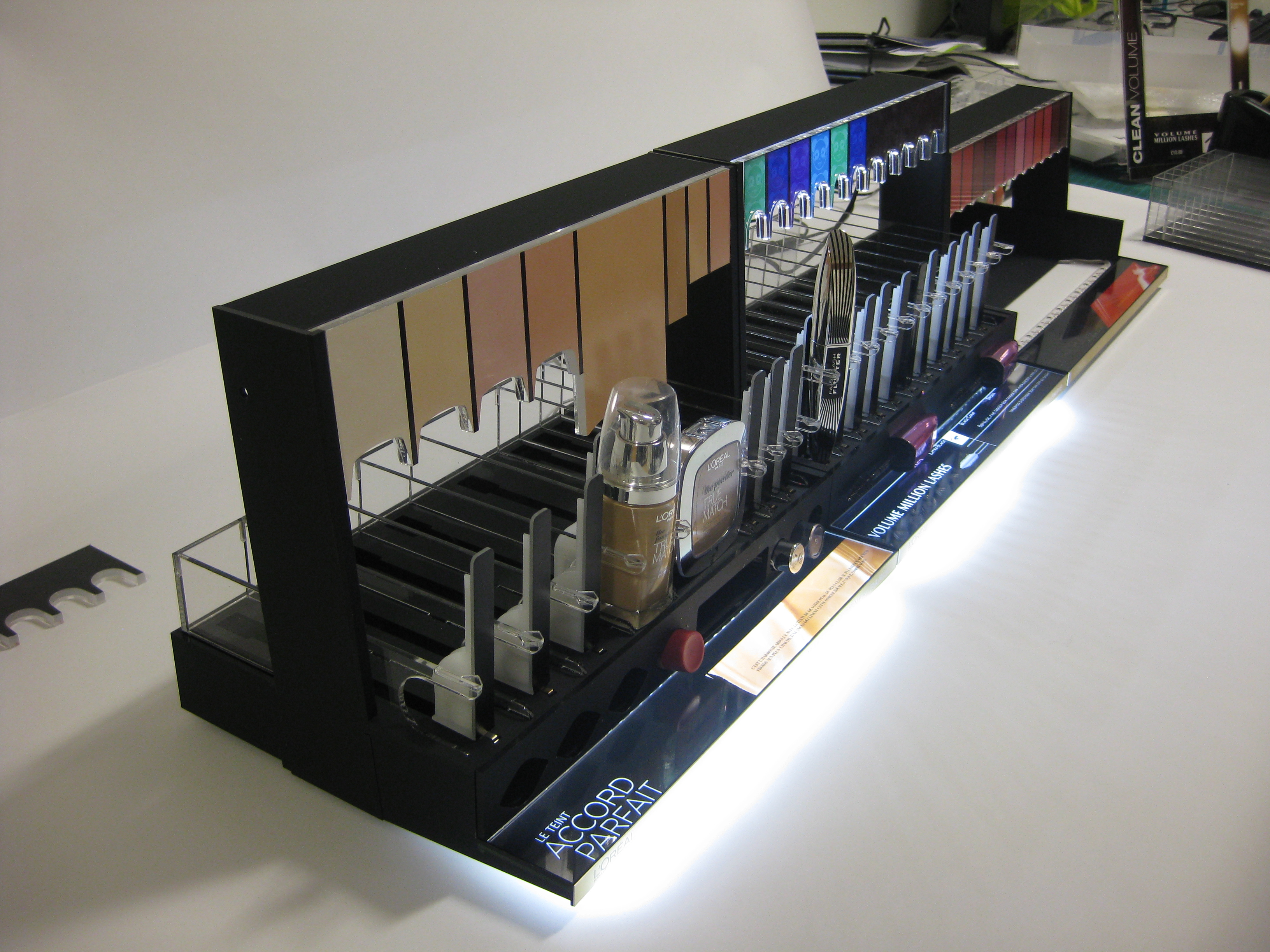
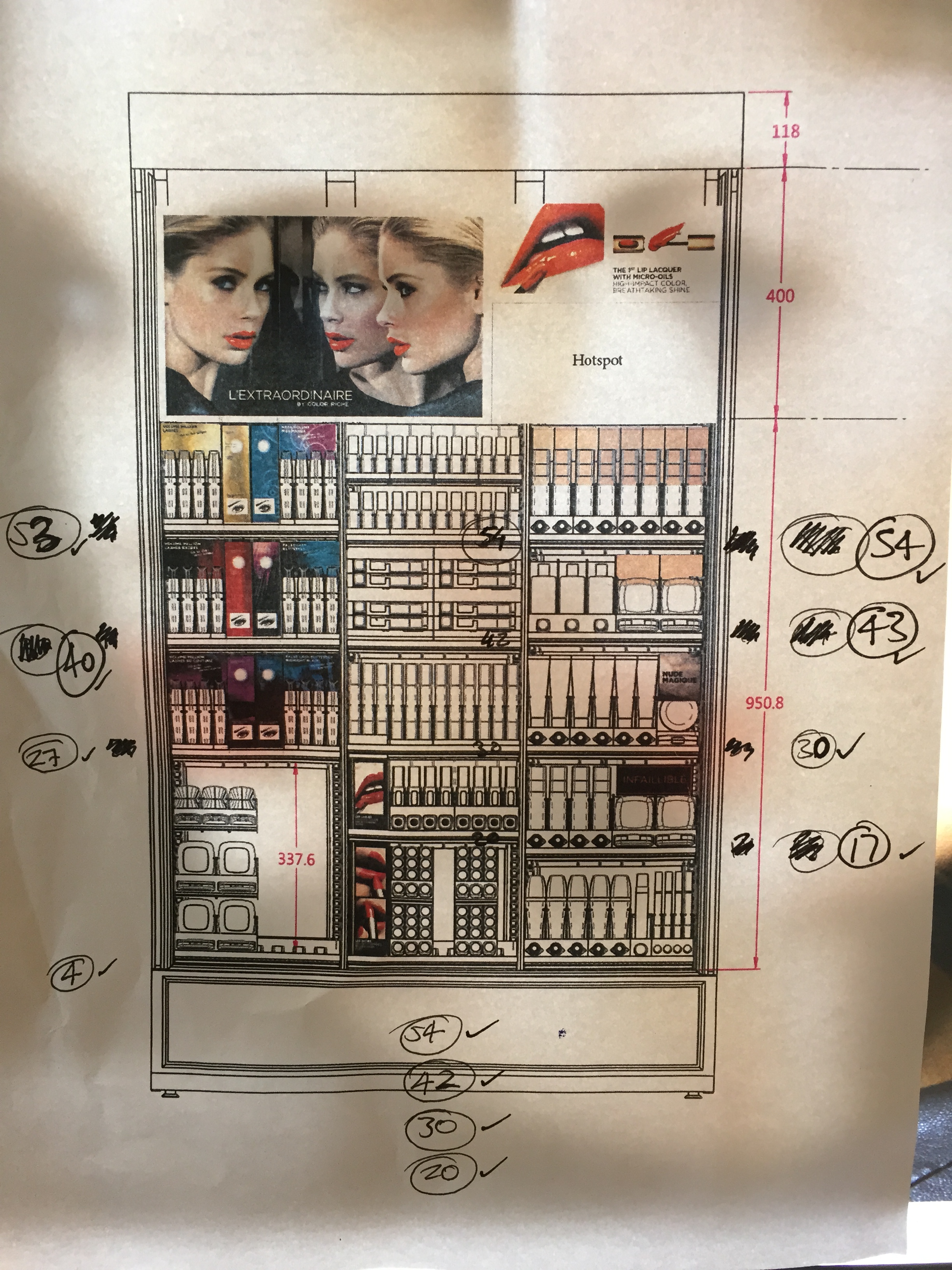
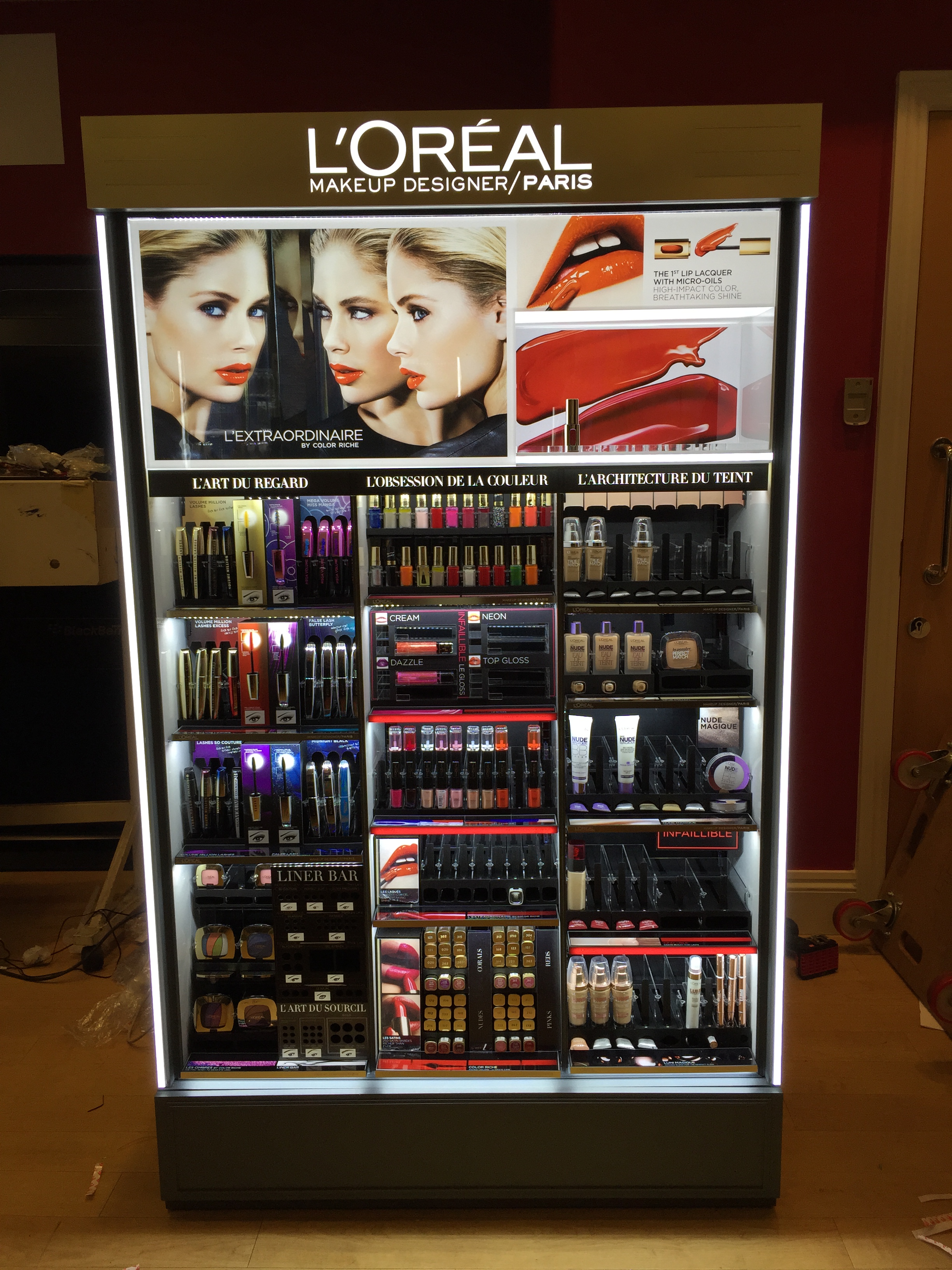
Circa 2015 L'Oreal put out to tender their new system, to replace the old "Sparkle" units. Make Up Designer (MUD) was born of this, including a new logo for L'Oreal. We entered, and won the manufacturing stage of the tender and have shipped out thousands of units over the following years. We started by prototyping the new style shelf in its entirety, and then making a number of units to take to meetings and store trials.
 |
 |
 |
| Completely Fabricated Shelves | Planogram Brief | Finished Prototype Unit |
L'Oreal Make Up Genius FSU
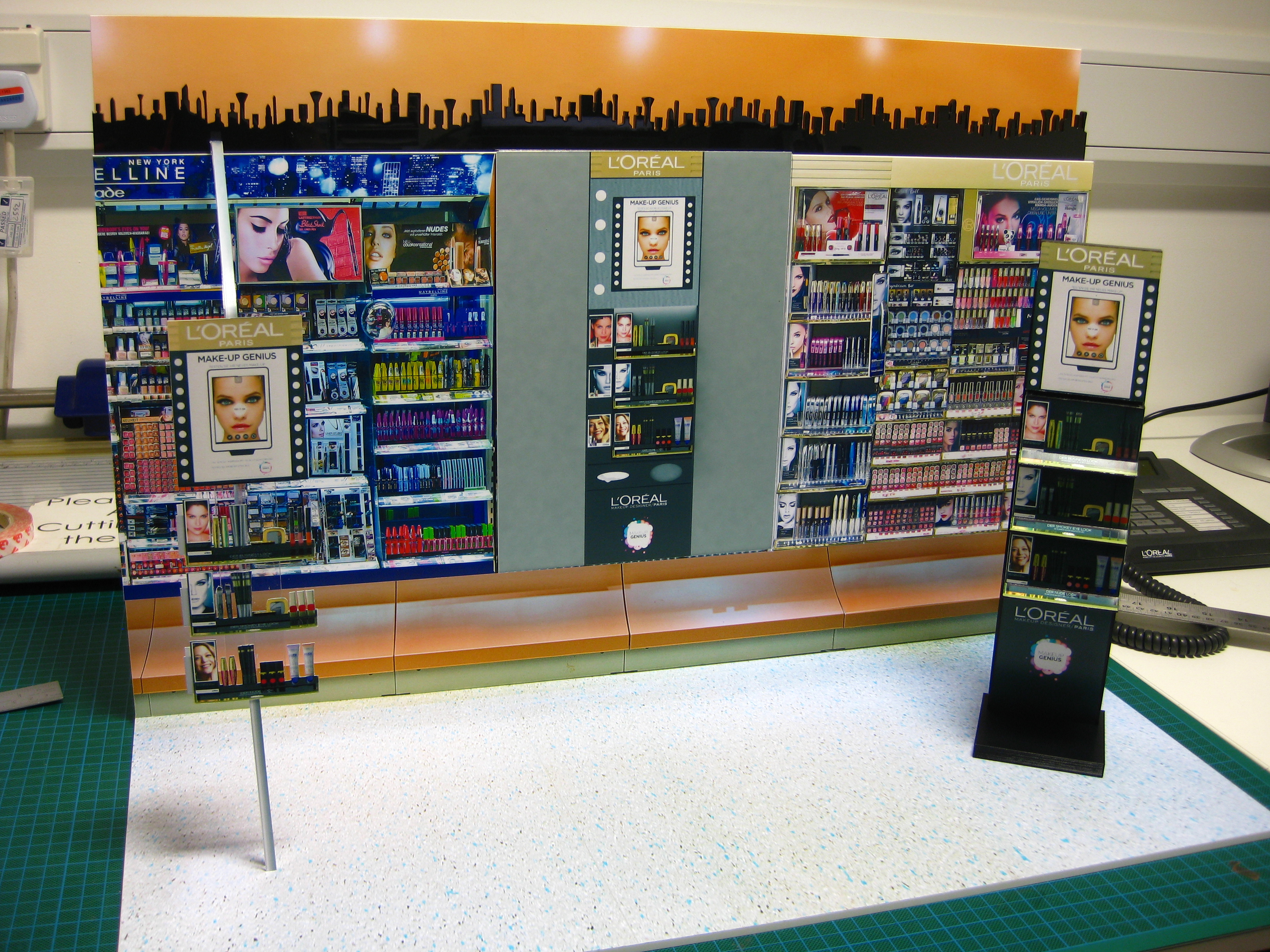
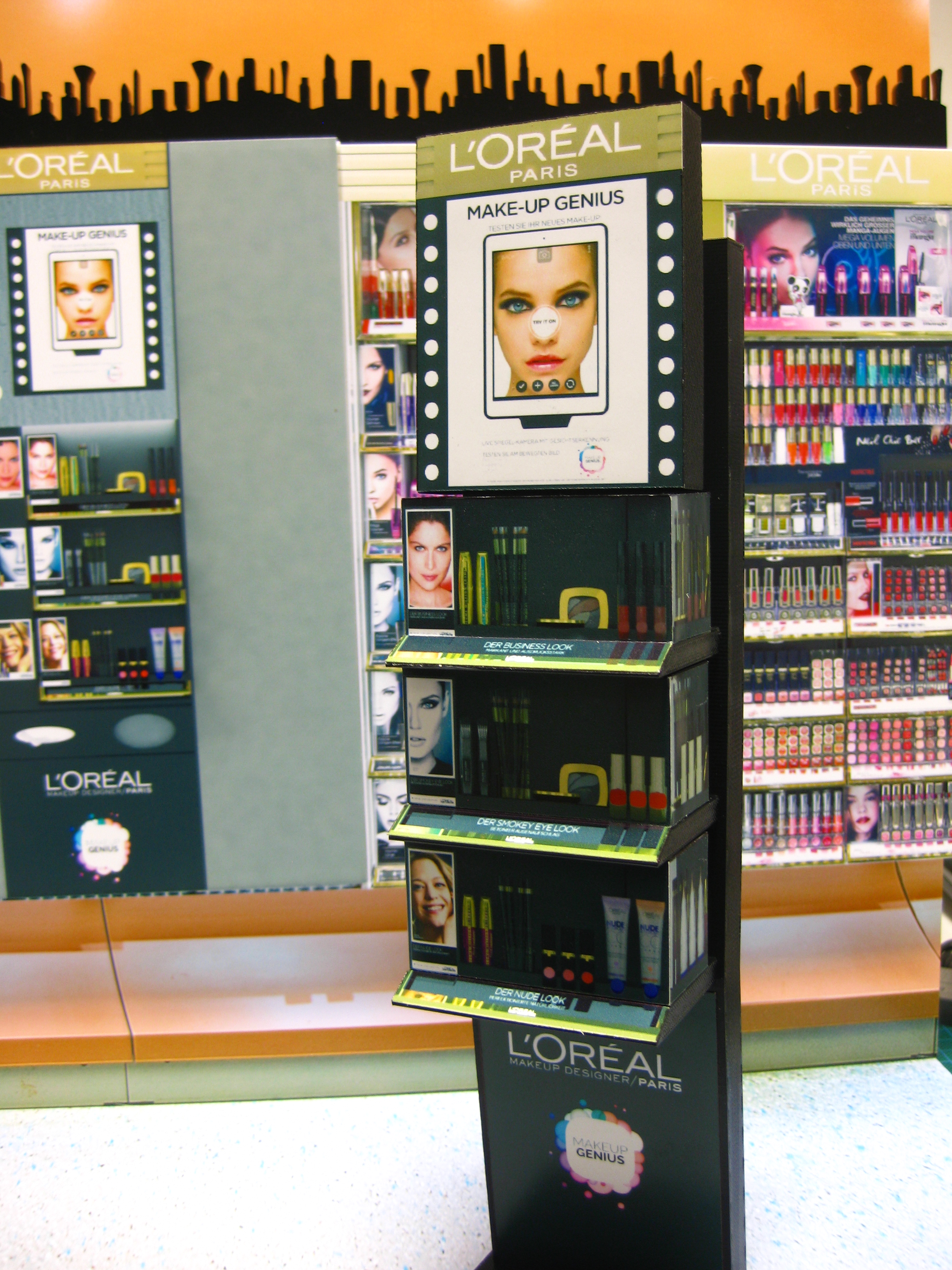
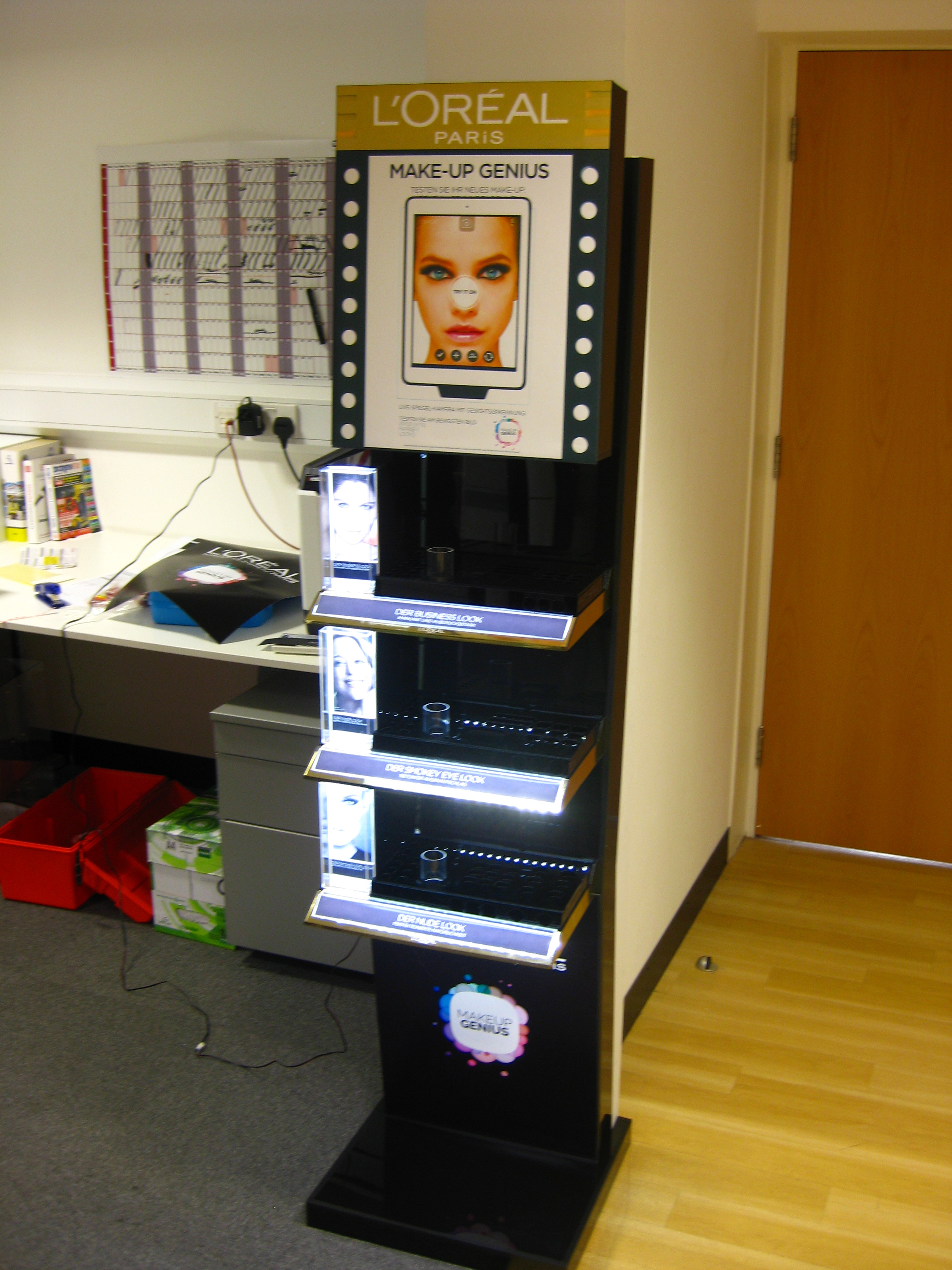
With the launch of their Make Up Genius app, L'Oreal requested a Free-Standing Unit that would hold an iPad running the app. We started with a simple scale model to get an idea of the look and feel, followed by building the unit itself, based on their older "Sparkle" shelves.
 |
 |
 |
| Scale Shop-In-Shop | Scale FSU | Prototype FSU Without iPad |
L'Oreal MUD Tile System
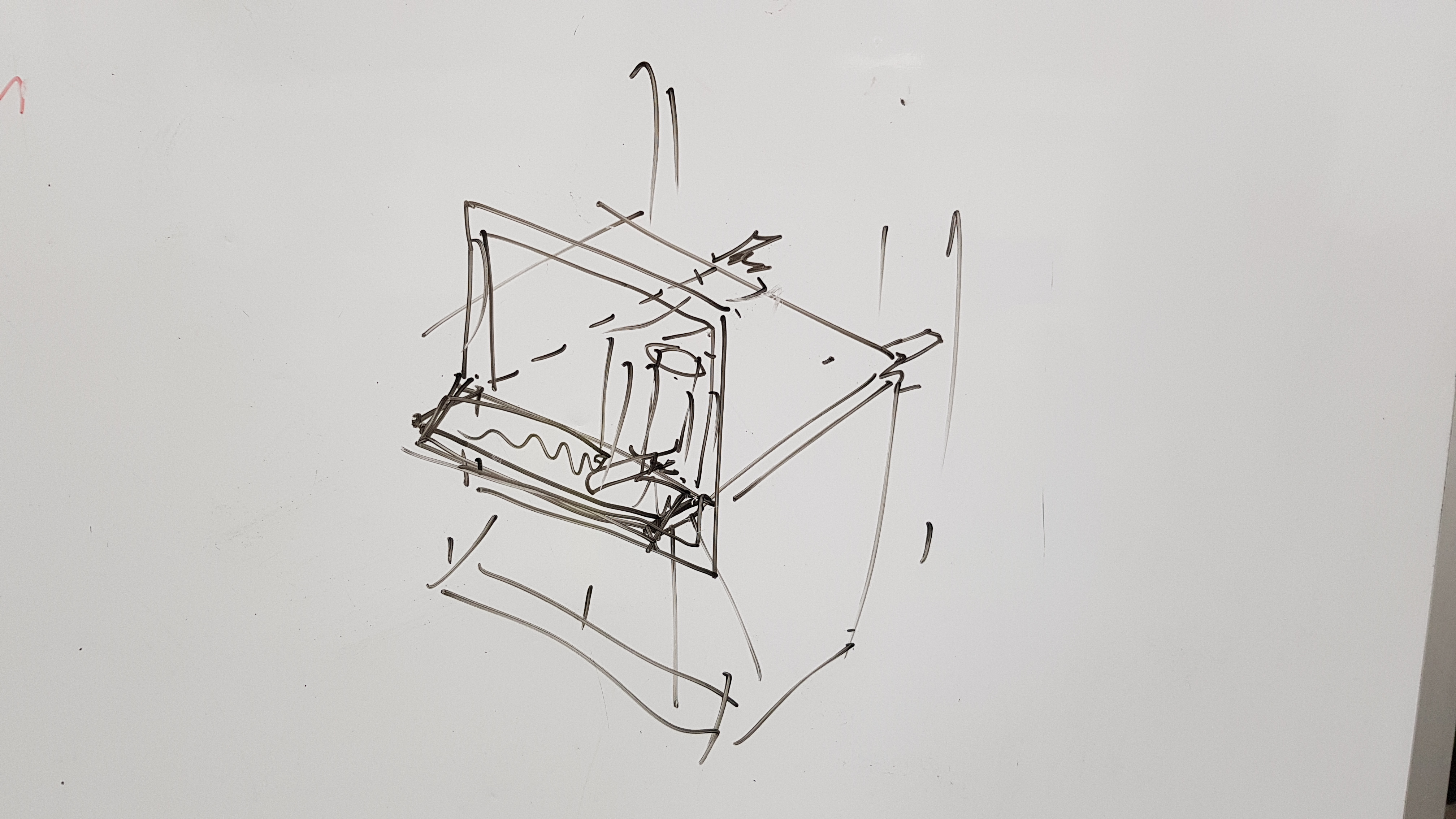
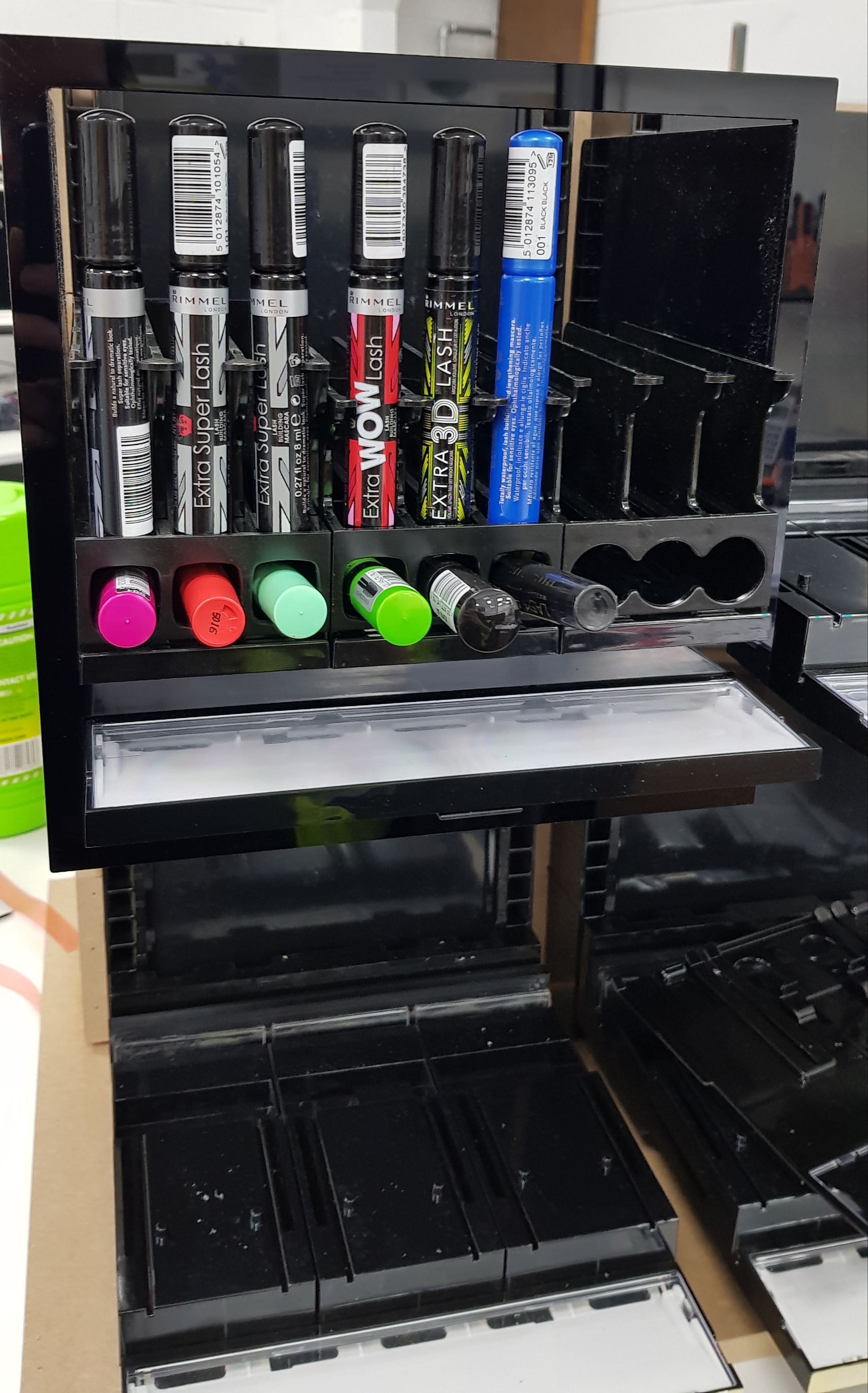
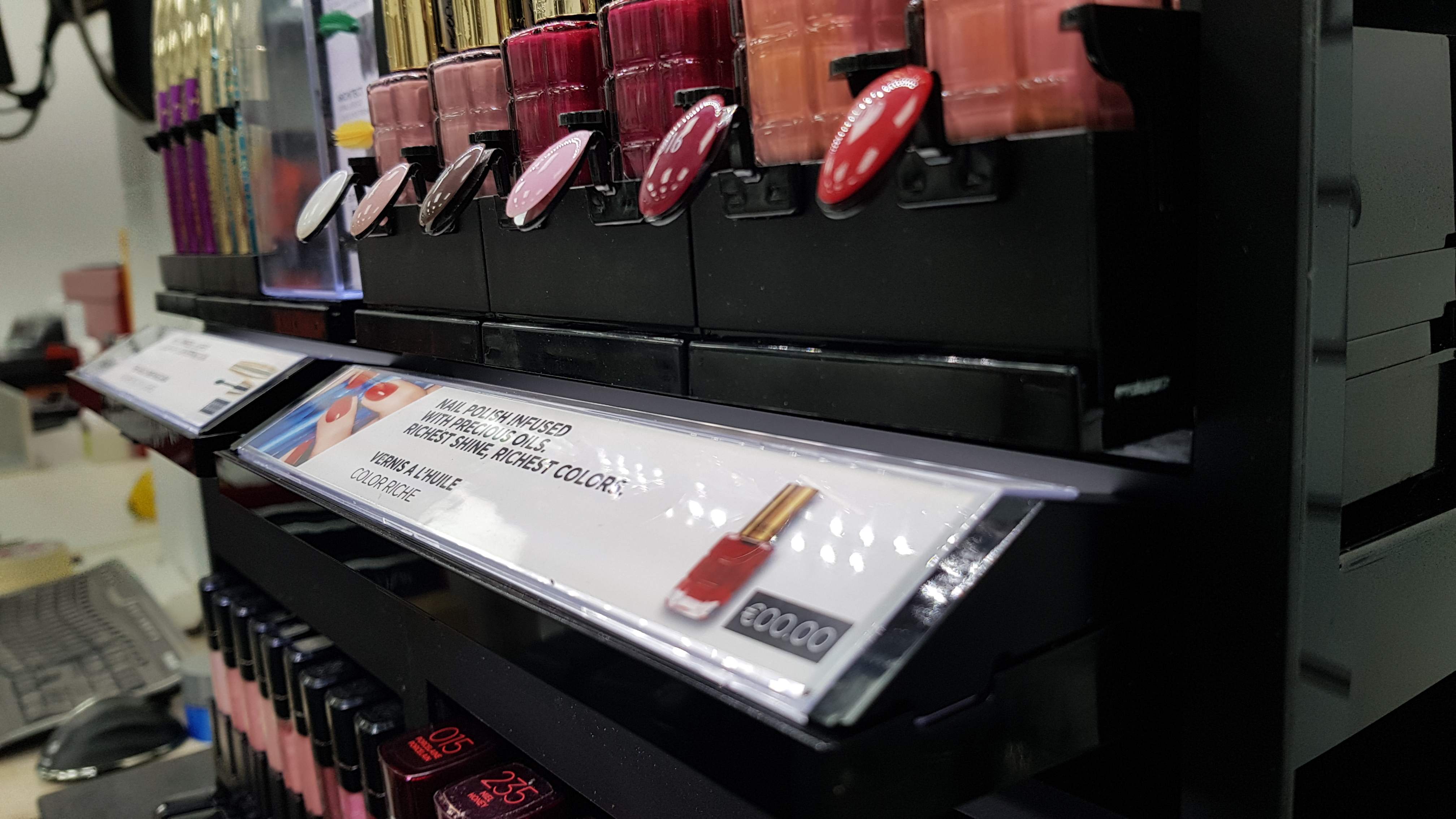
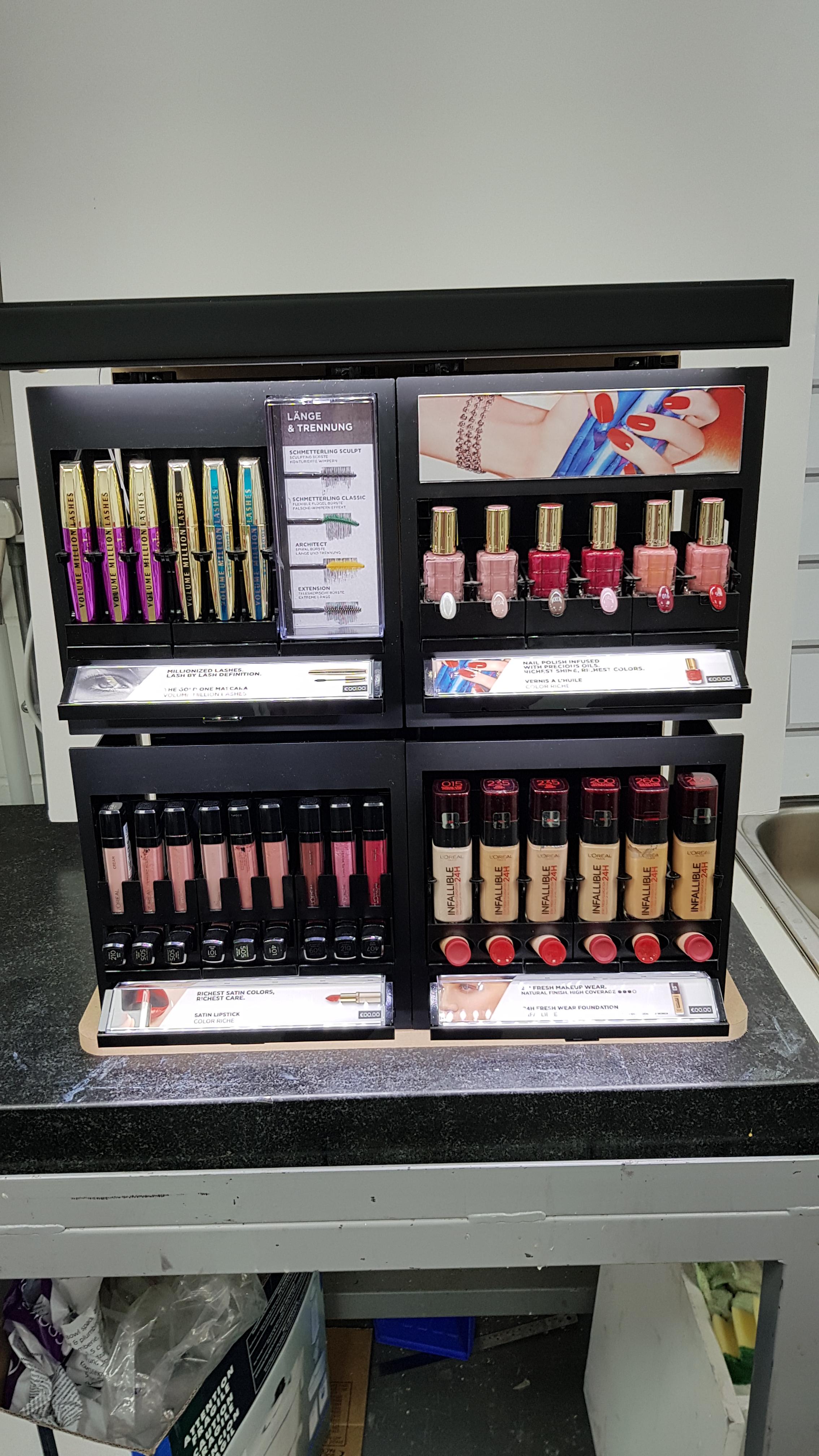
As the retail environment has evolved, there has been a trend towards tile-based displays. We put together a proposal for L'Oreal to create a tile system, based on their existing MUD shelf system. This allowed the use of their current suite of shelves and cassettes which would greatly reduce the overall cost, compared to a ground-up approach. The tile fascia attaches securely to the shelf, and is customised to the product being displayed; with graphics and close fitting cutouts that double-up as a anti-pilfer system. We changed the flat shelf fronts to angles to better suit the style of unit; being more vertical as opposed to the tiered effect of MUD.
 |
 |
 |
 |
| The Brief For The Project | Testing Front Panel Sizes | Modified Shelf Fronts | Finished Tile Rig |
L'Oreal Nail Bar
One of my first proper projects, the design entailed a set of floating shelves which held individual nail polish bottles. These shelves comprised of a 5mm clear base, to which a piece of lasercut 15mm acrylic was bonded. A CNC routed 'L' shape was bonded to the back, allowing the shelf to cantilever off the back panel. This project taught me a lot about quality control on larger quantities, as well as managing time efficiently.
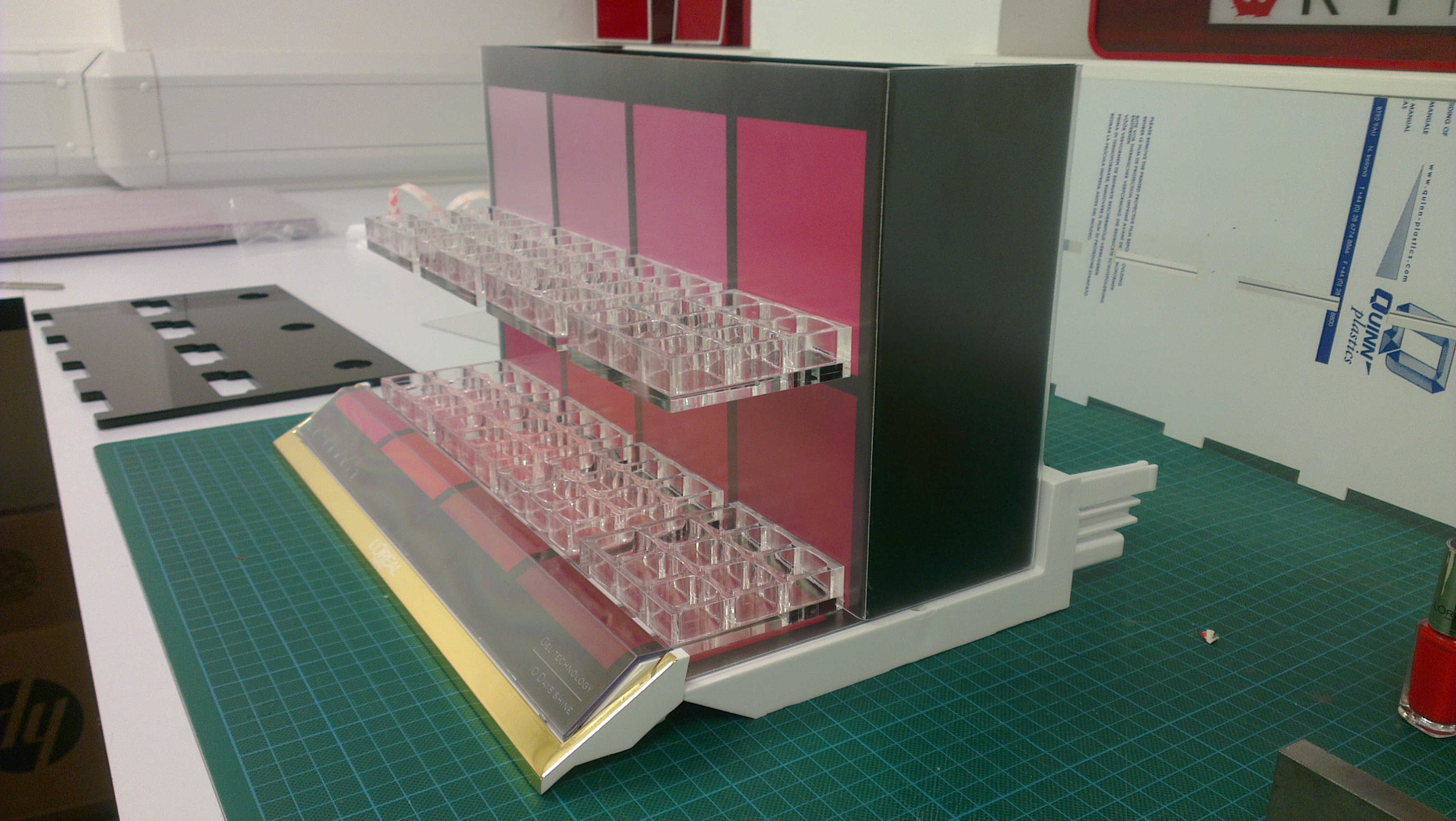 |
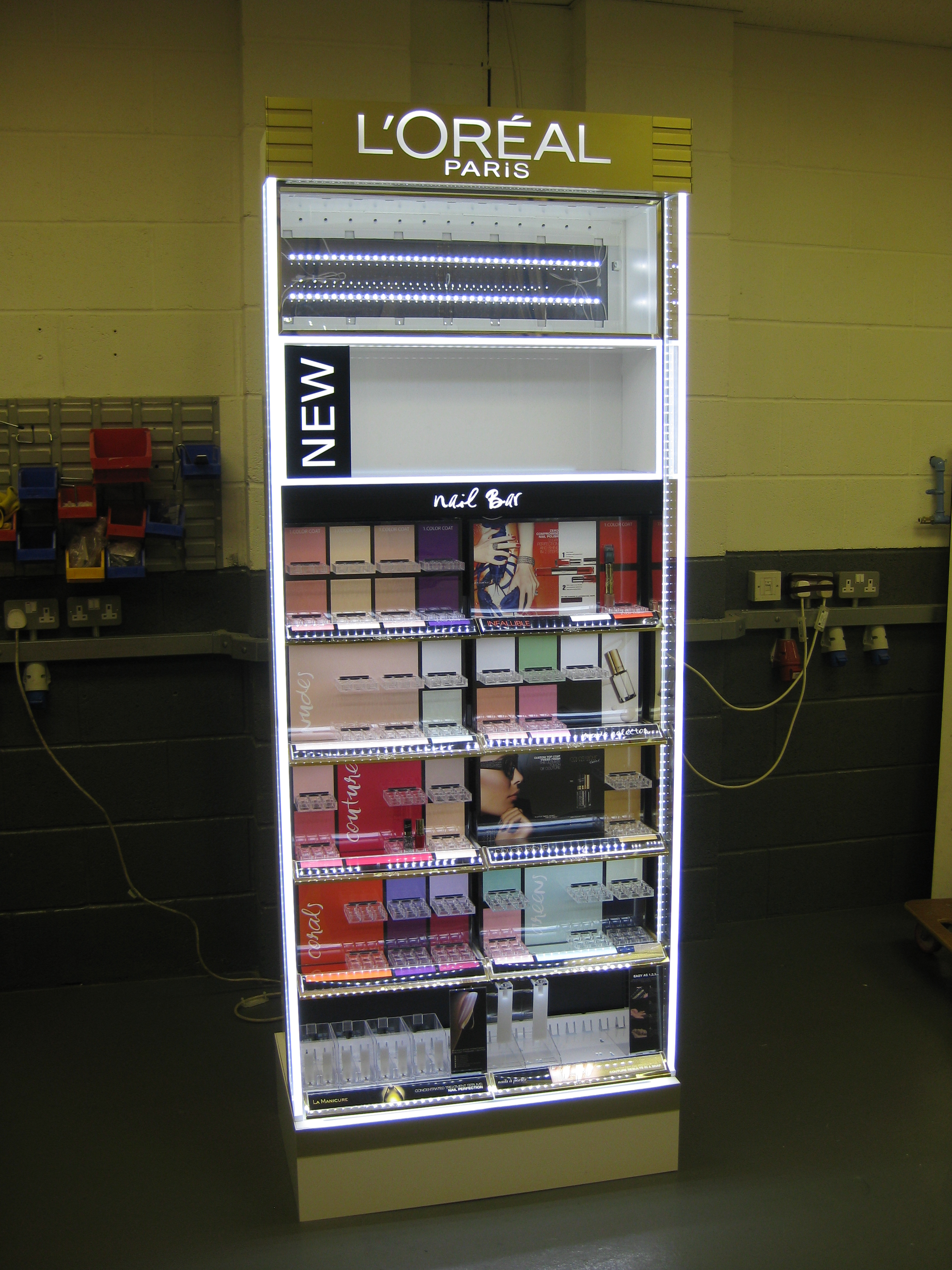 |
| A Complete Shelf | The Finished Nail Bar |
Liz Earle
As part of Boots' reinvention scheme, they opened their new store furniture to smaller brands. We produced a suite of units for Liz Earle. As it was a small run, certain parts were made in-house in prototype; while primarily a production job, we were also required to produce shortages, and develop solutions to issues found in store. As part of this, we were required to visit the units in stores to apply the updates and repairs.
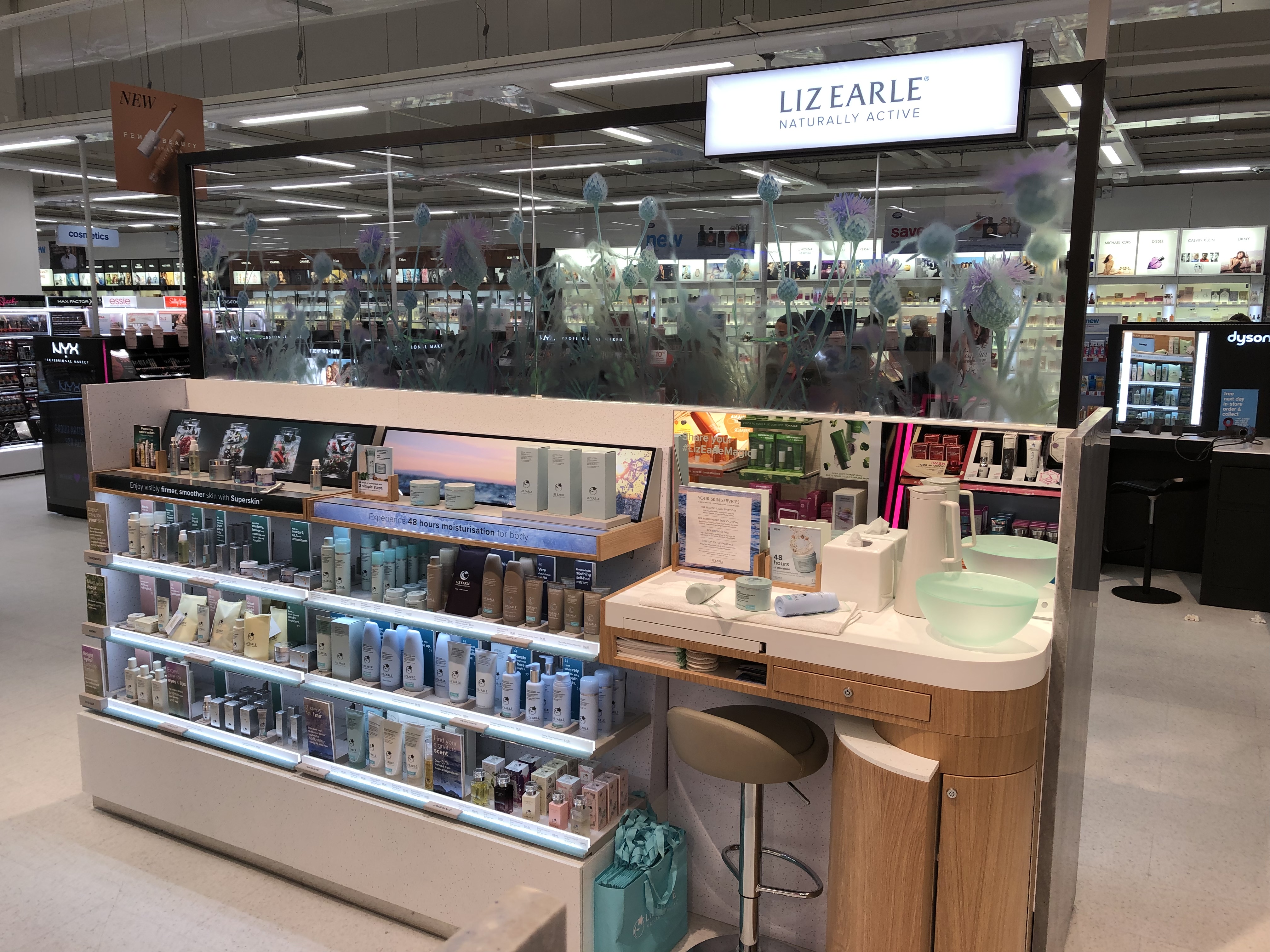 |
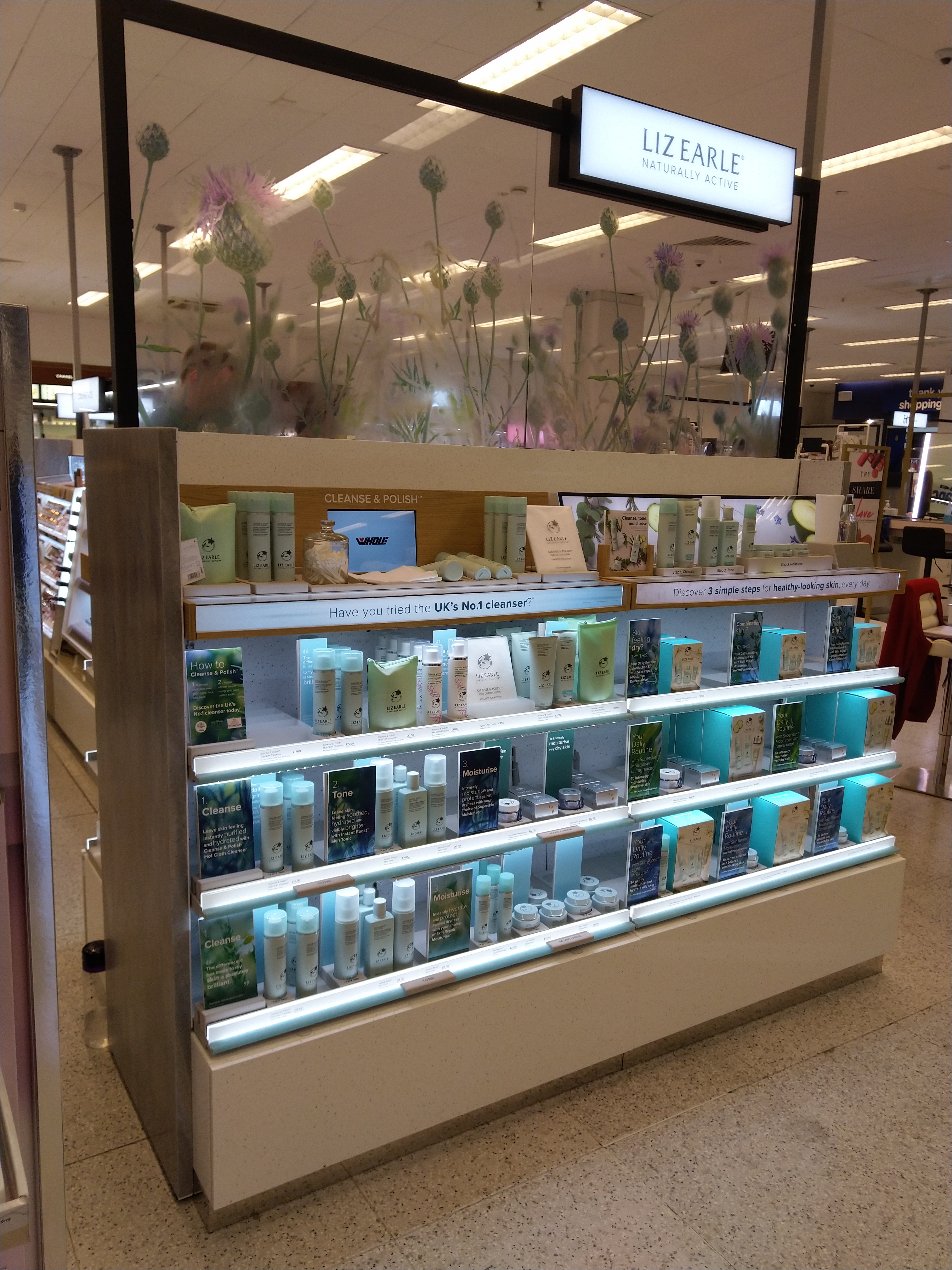 |
| Consultation Side In Store | Opposite Side In Store |
Mark Jacobs Daisies
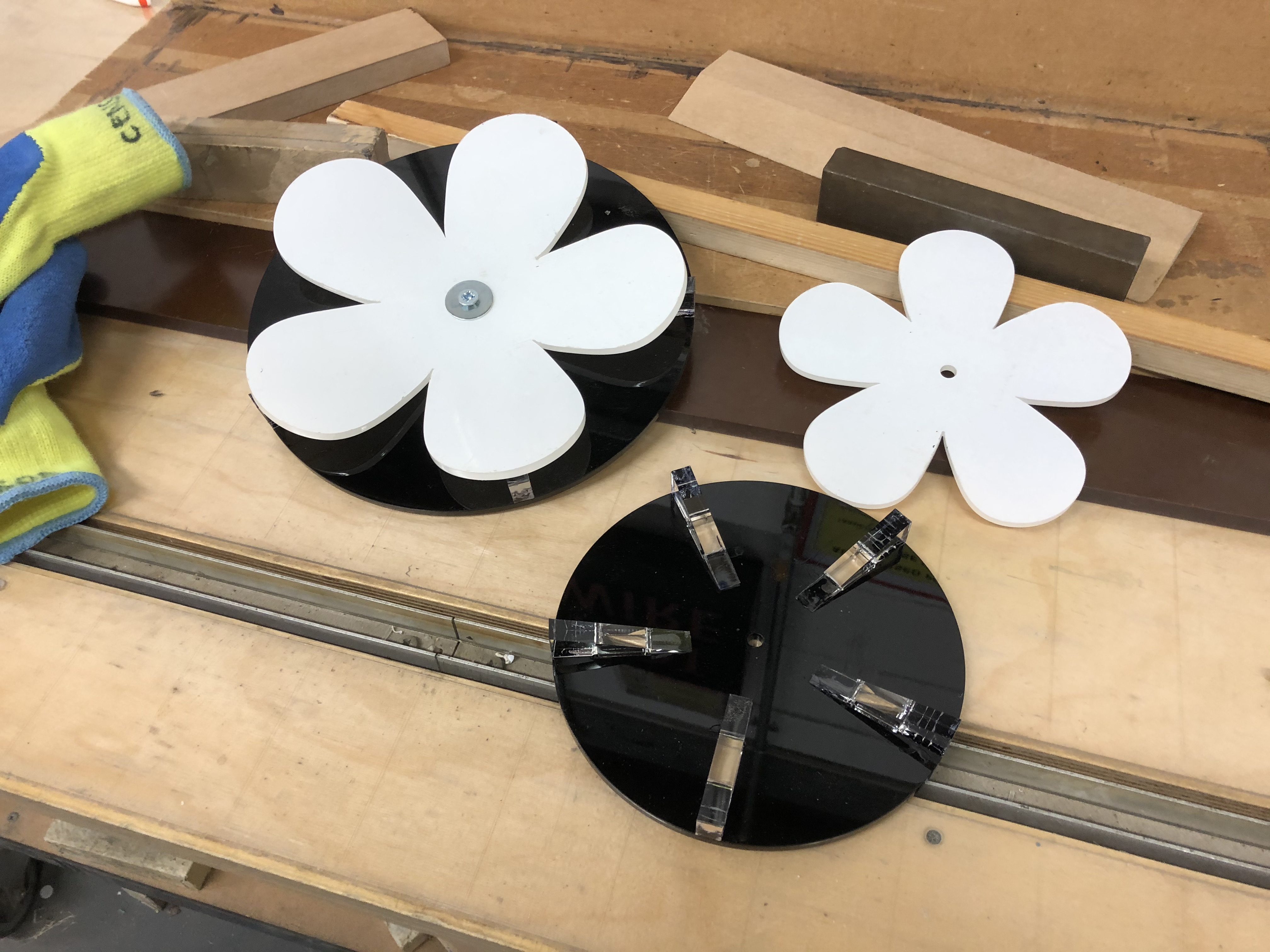
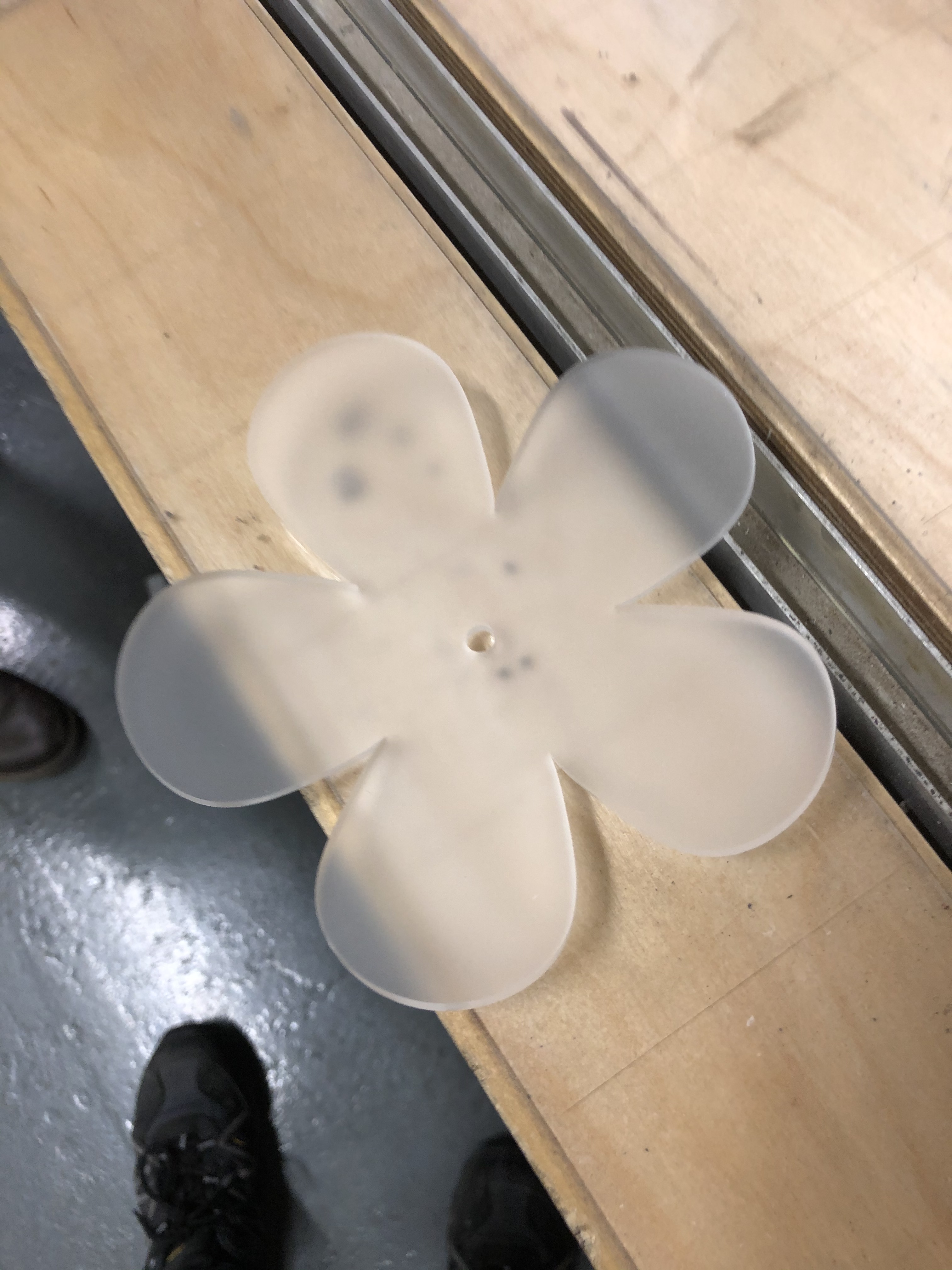
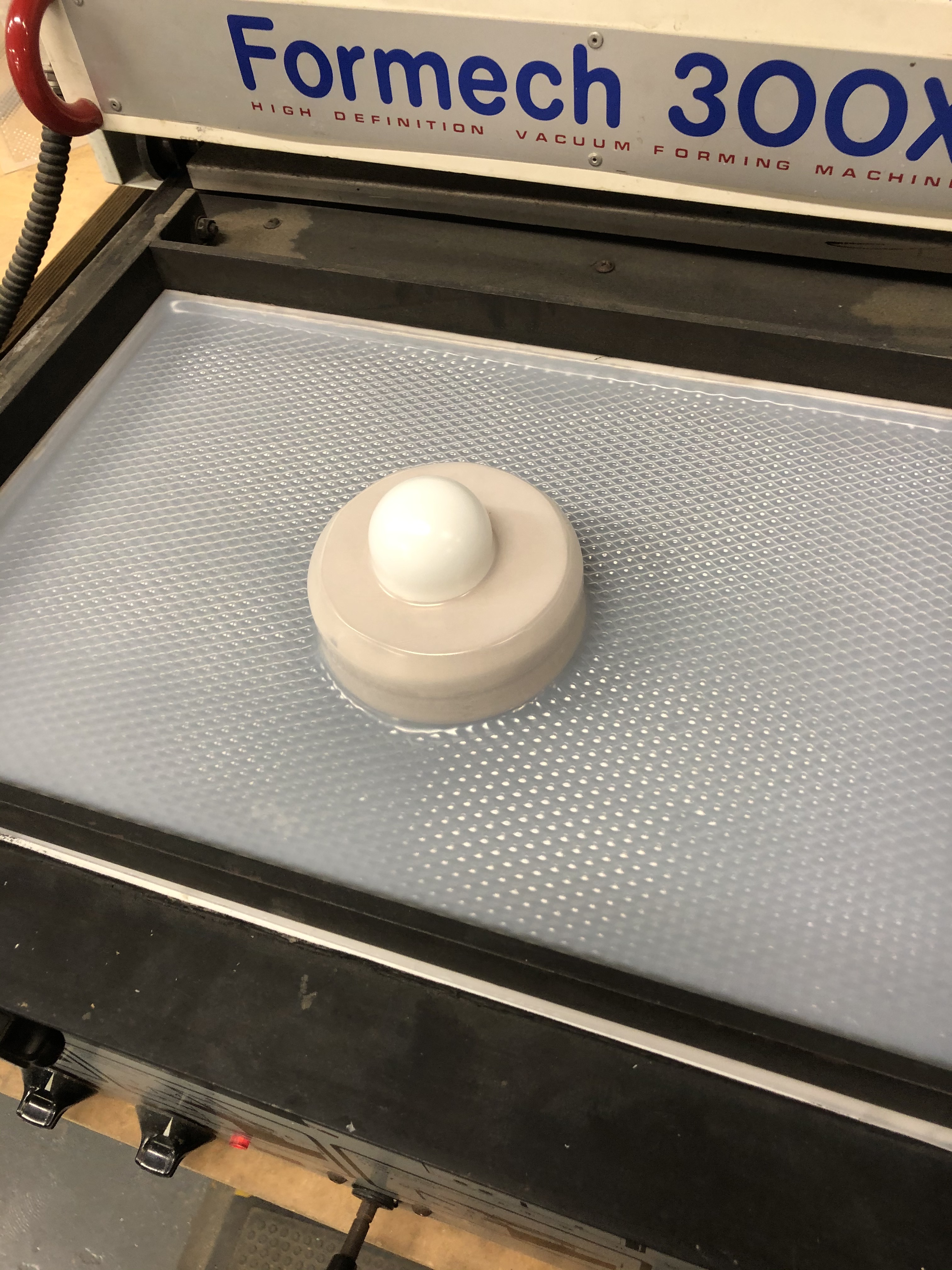
As part of a fairly straightforward prototype for a Mark Jacobs branded FSU, we needed to create some large daisies to decorate the unit; we achieved this by applying various novel approaches. The petals ware laser cut from acrylic, before being softened in the vacuum-forming oven and attached to a jig to cool in a slightly dished shape. The centre of the daisy is a hemisphere, which was created by vac-forming over a 3D printed tool. We chose this approach as it allowed us to paint the inside of the vac-form, making it scratch-proof.
 |
 |
 |
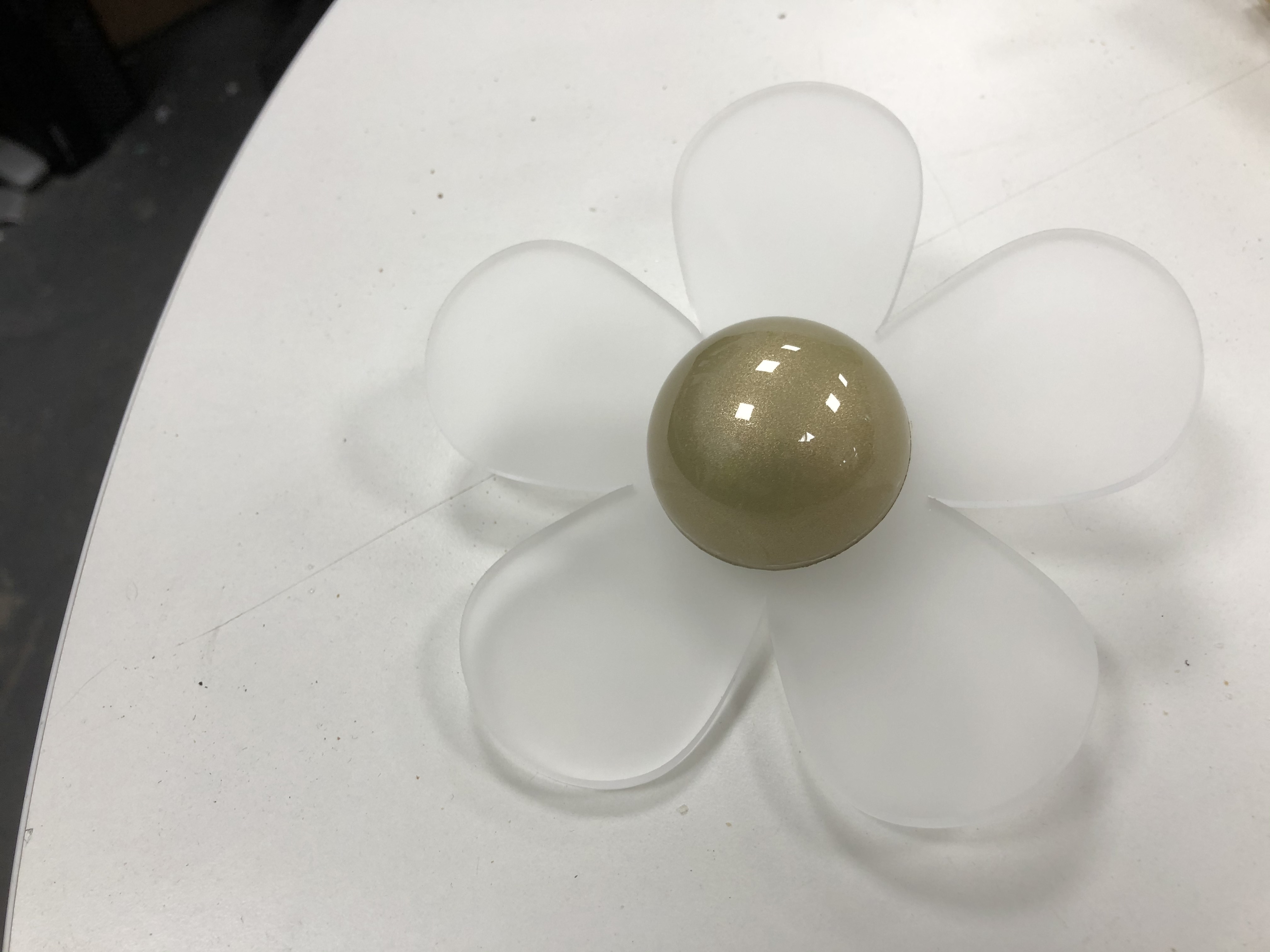 |
| Forming The Petals | 5mm Dual Frost Acrylic | Vac-Forming The Centres | A Finished Daisy |
Superdrug Tile System - L'Oreal
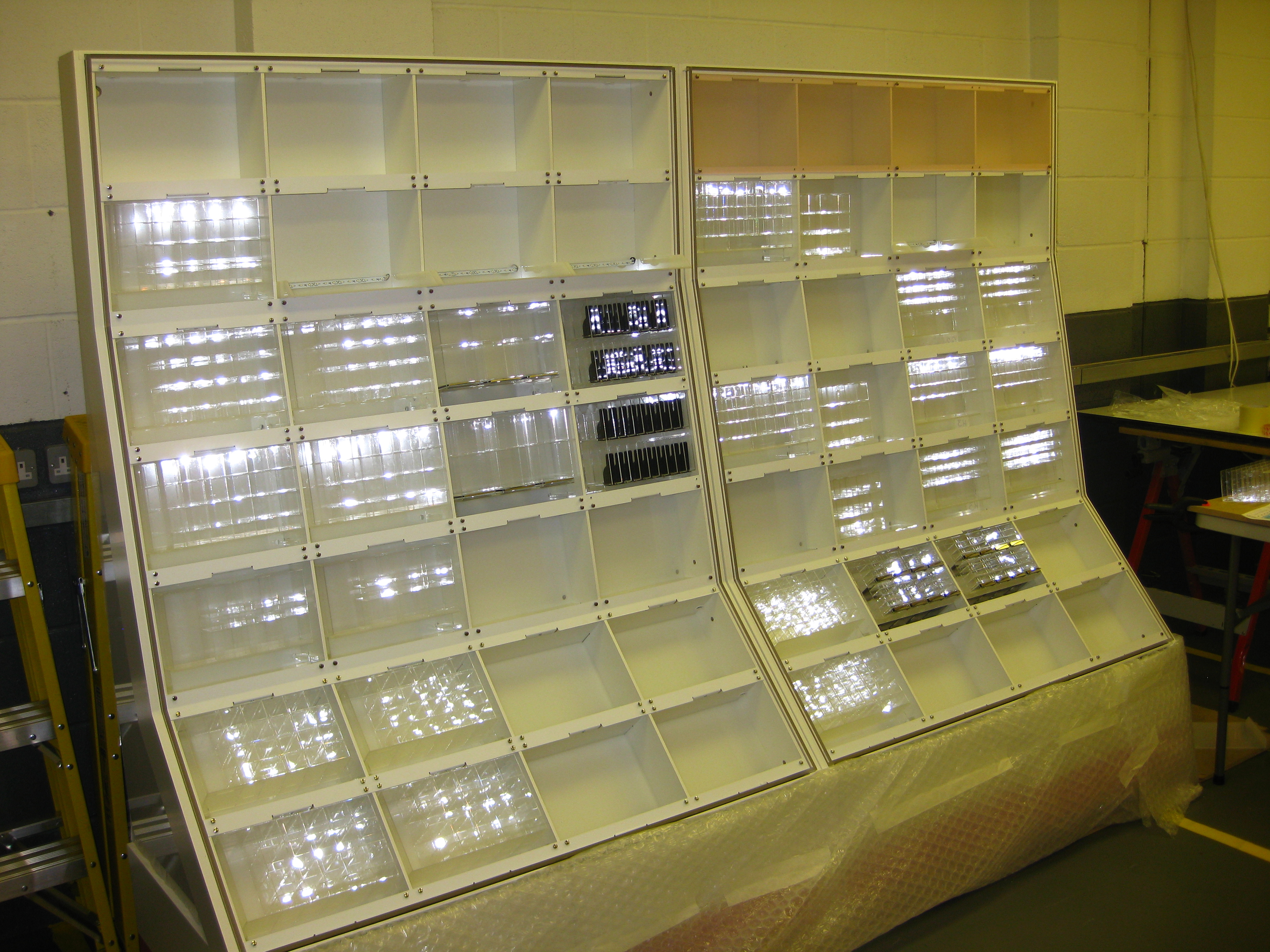
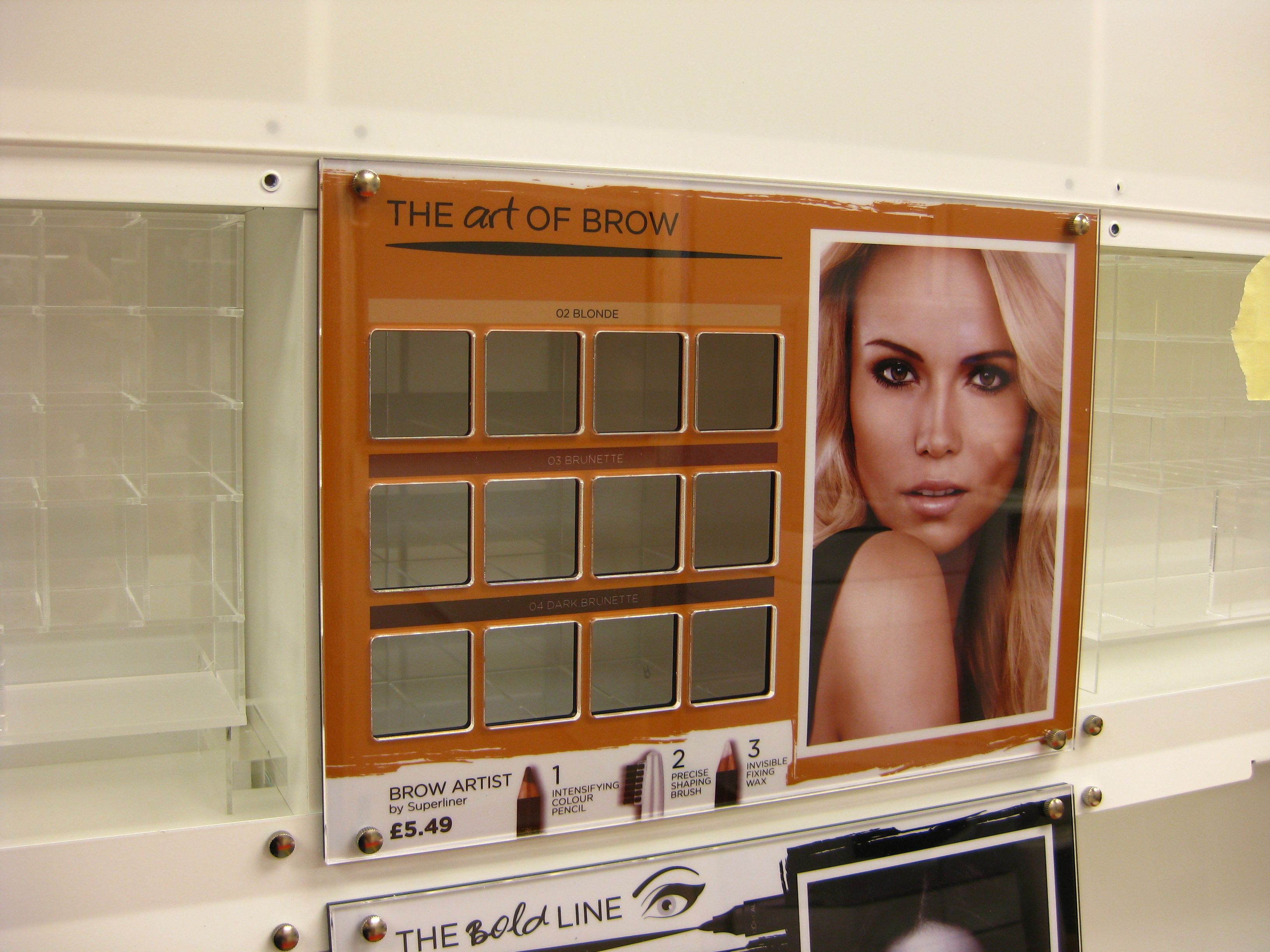
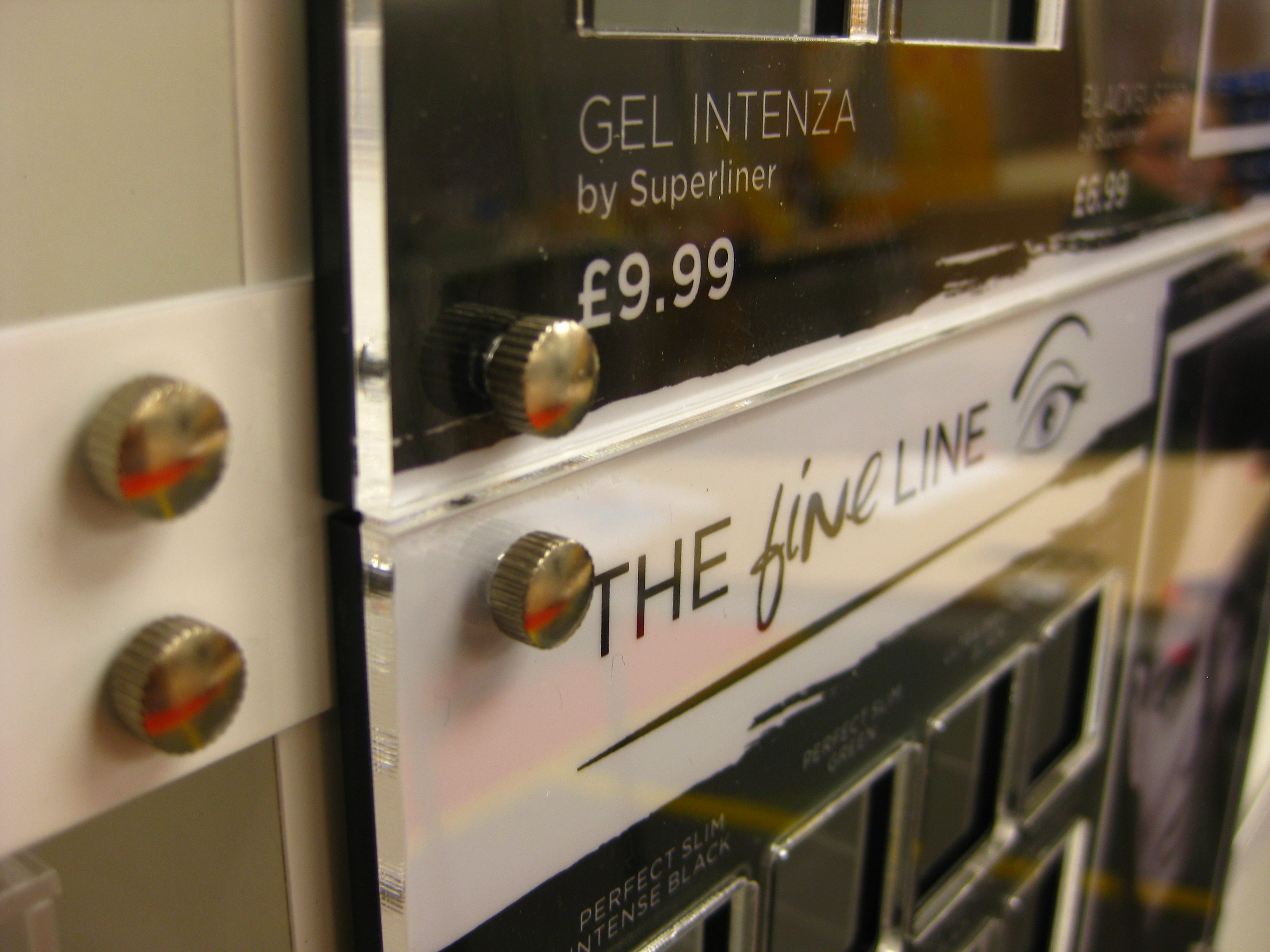
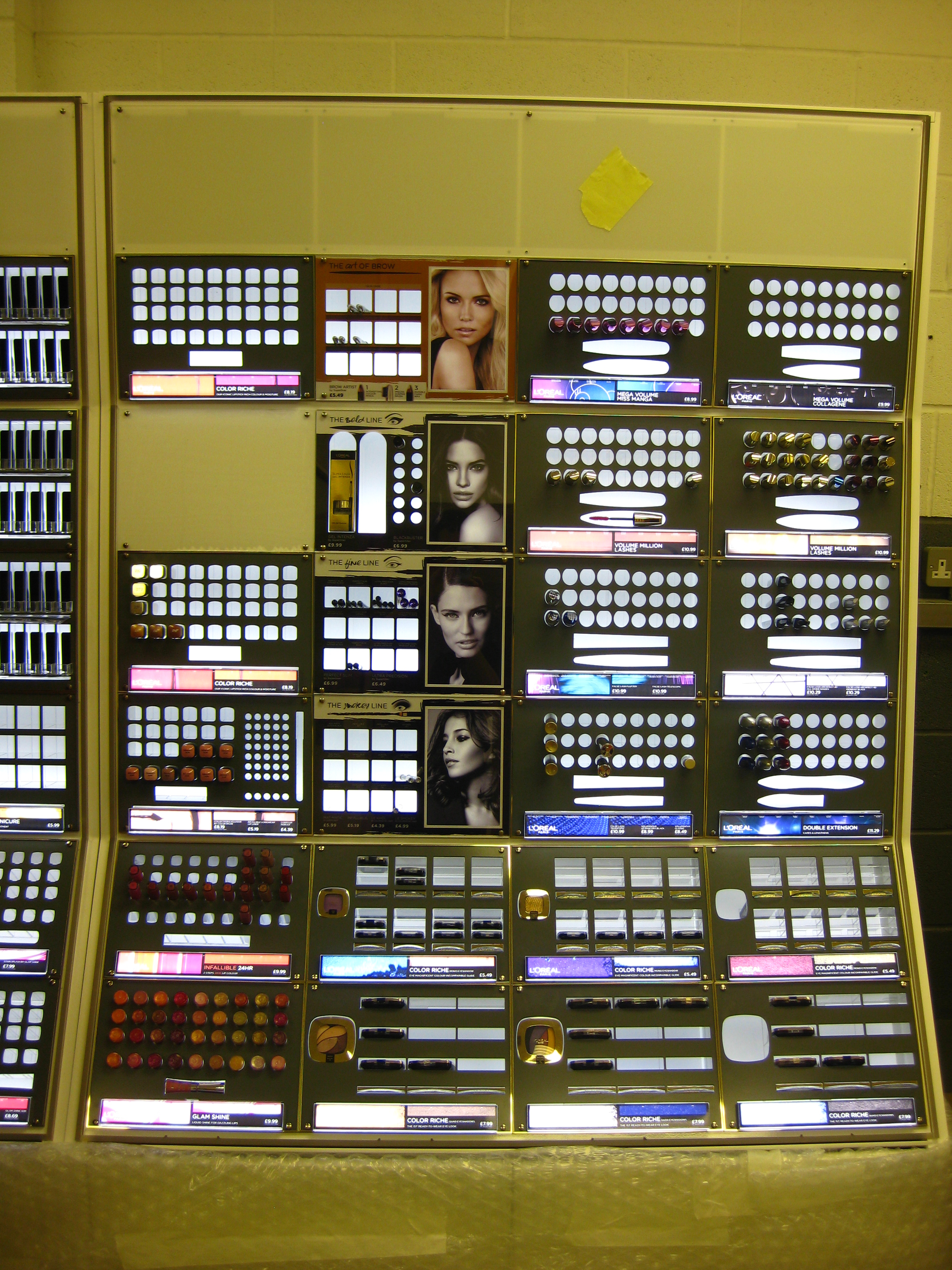
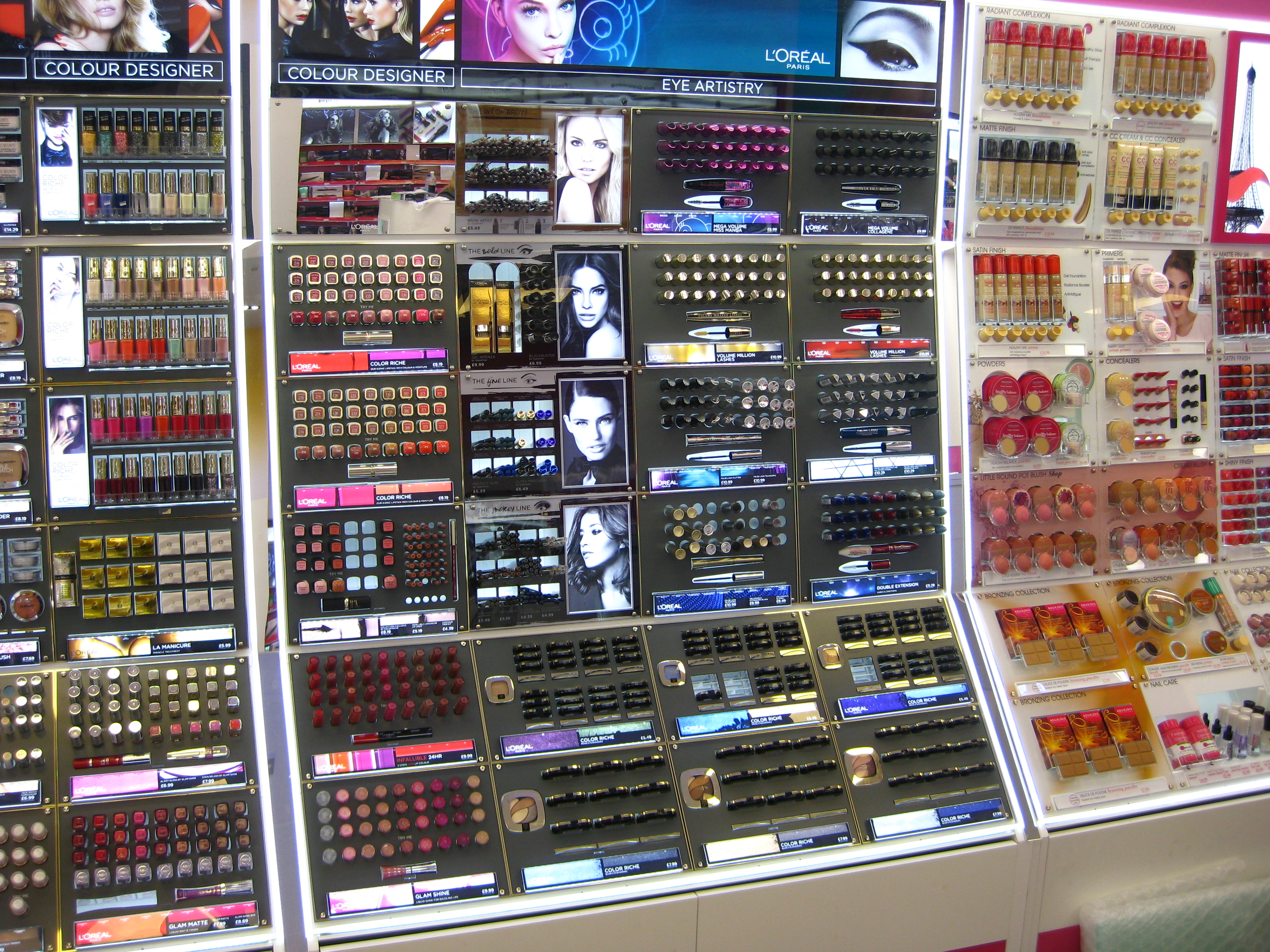
When Superdrug started to roll out their new look tile system in 2014, we were asked to create a set of parts to go into the first store, in Cardiff. I was in charge of drawing the "eggcrate" style cassettes, and managing the staff who were cutting and building the cassettes. I also did all the work on the various complex parts, such as the tester drawers. The tile fronts were cut from painted acrylic, with a thin gold band stuck around the edge, they were attached to the unit with four small thumbscrews.
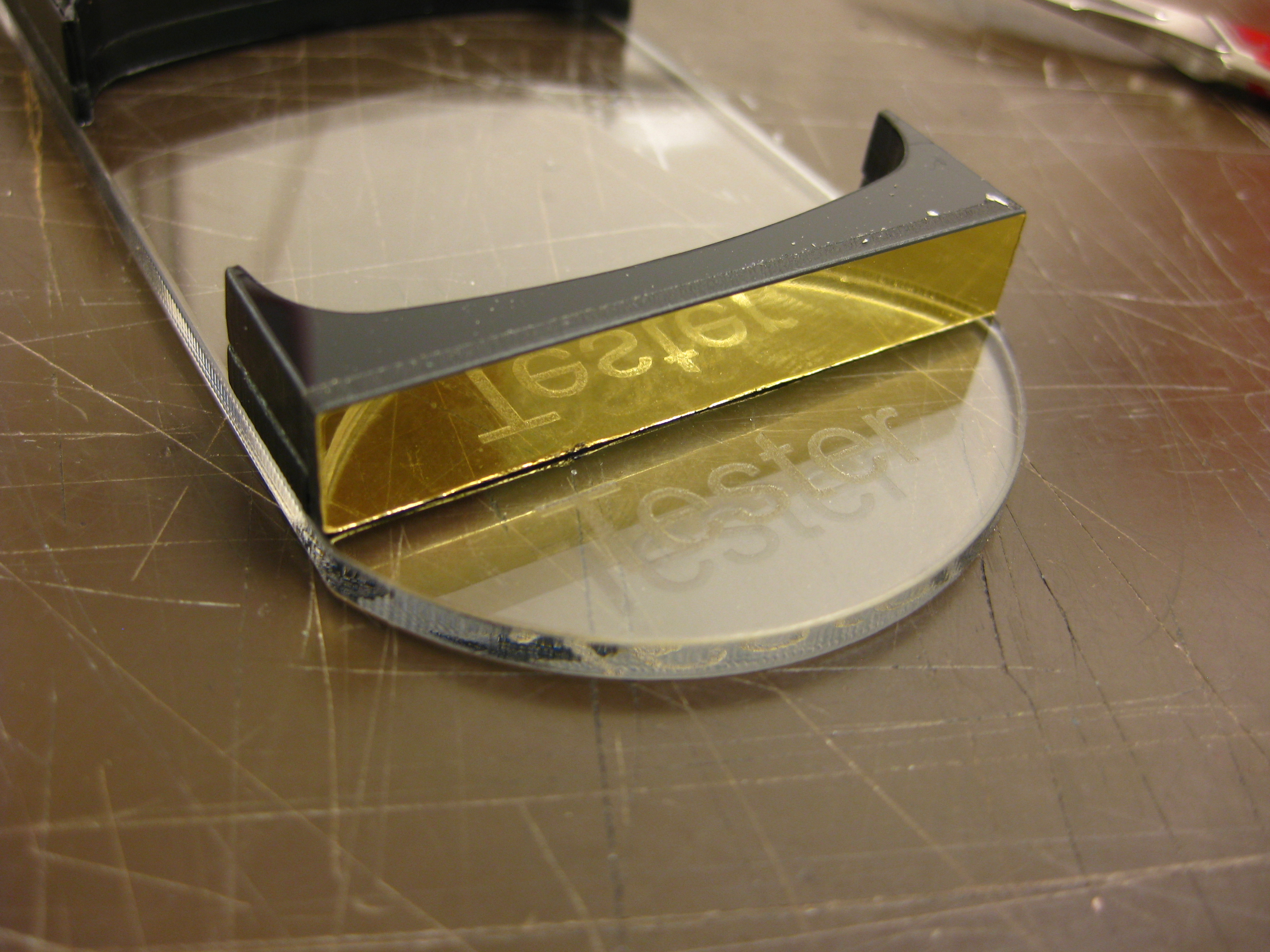 |
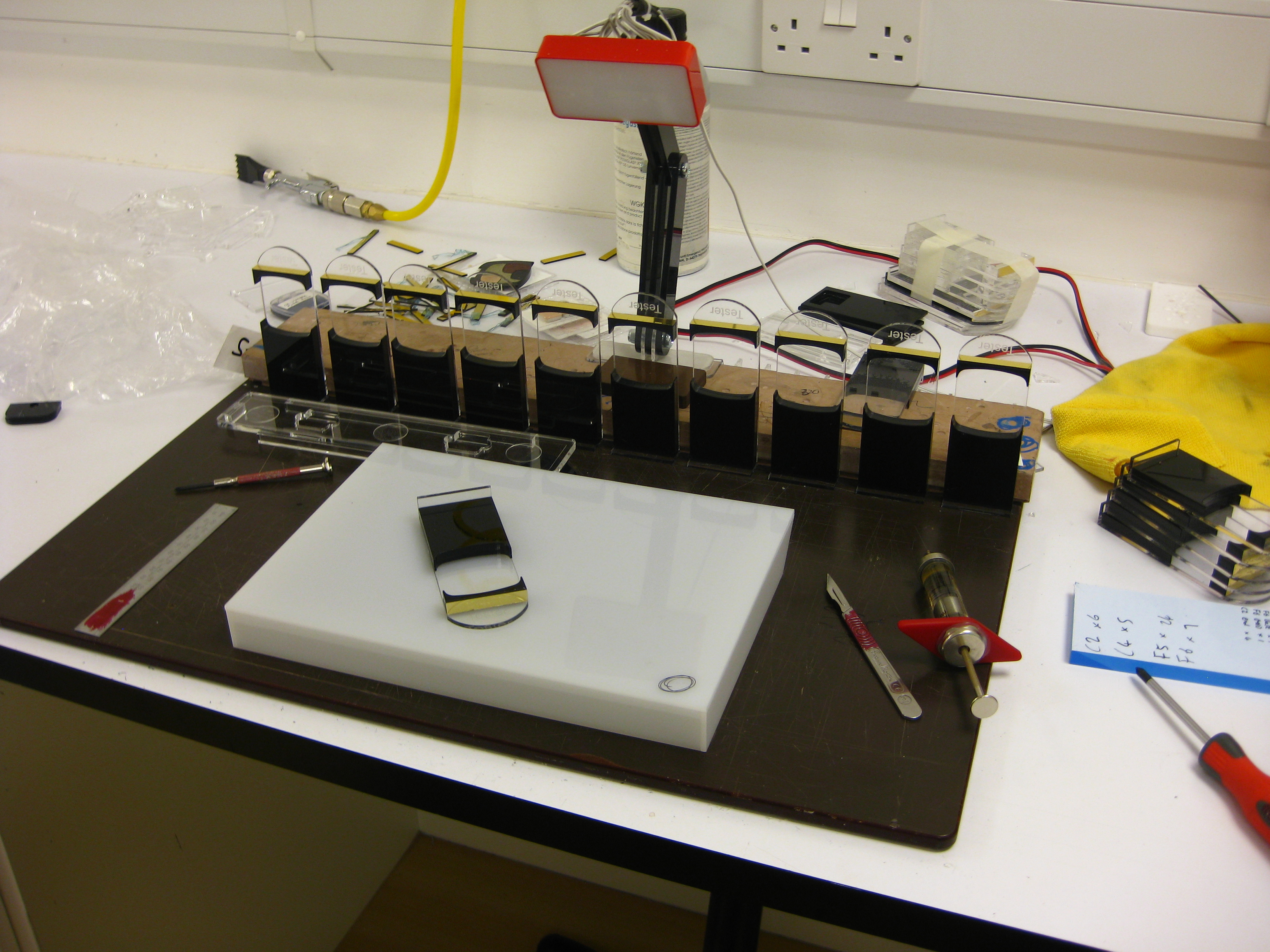 |
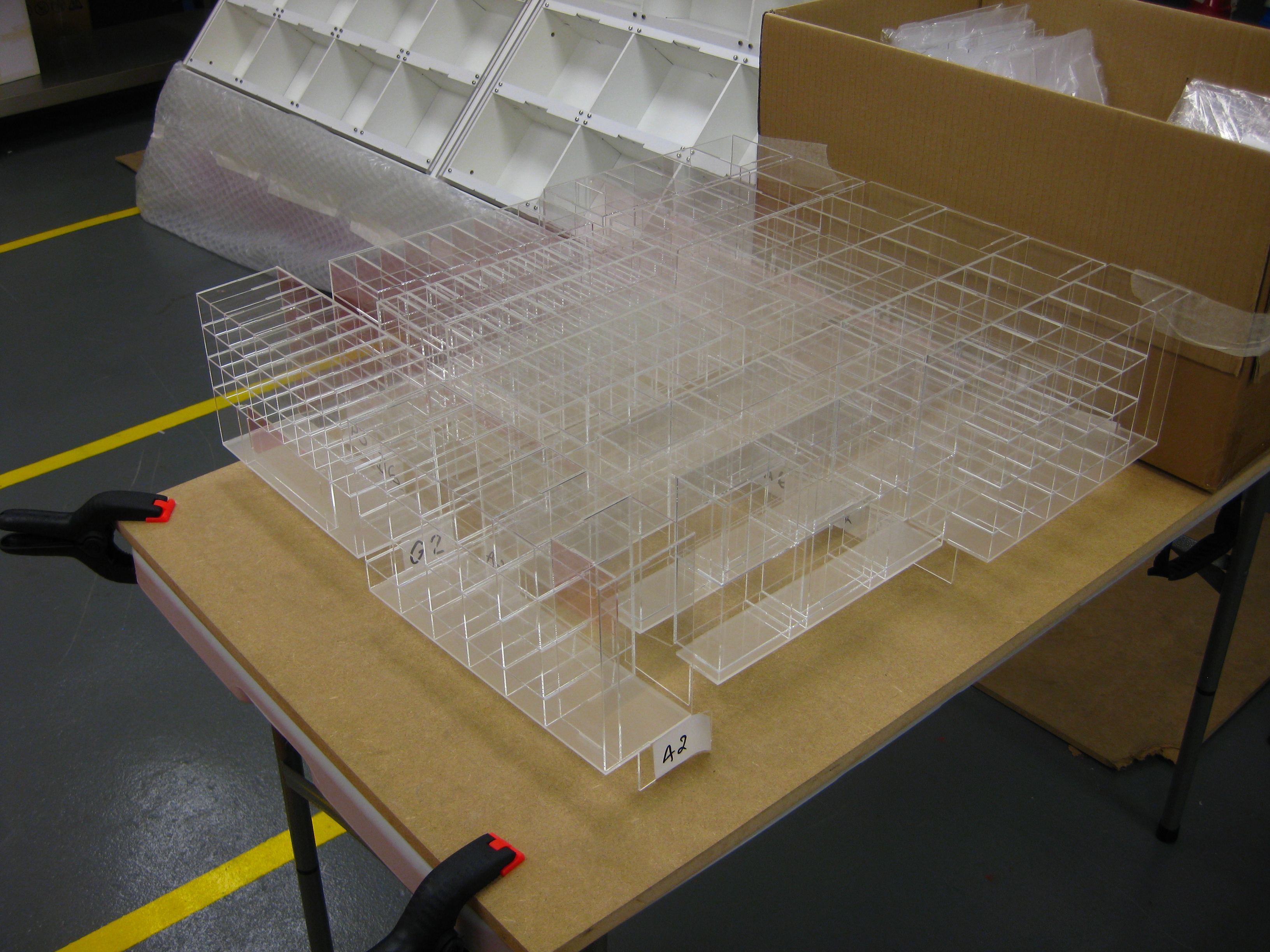 |
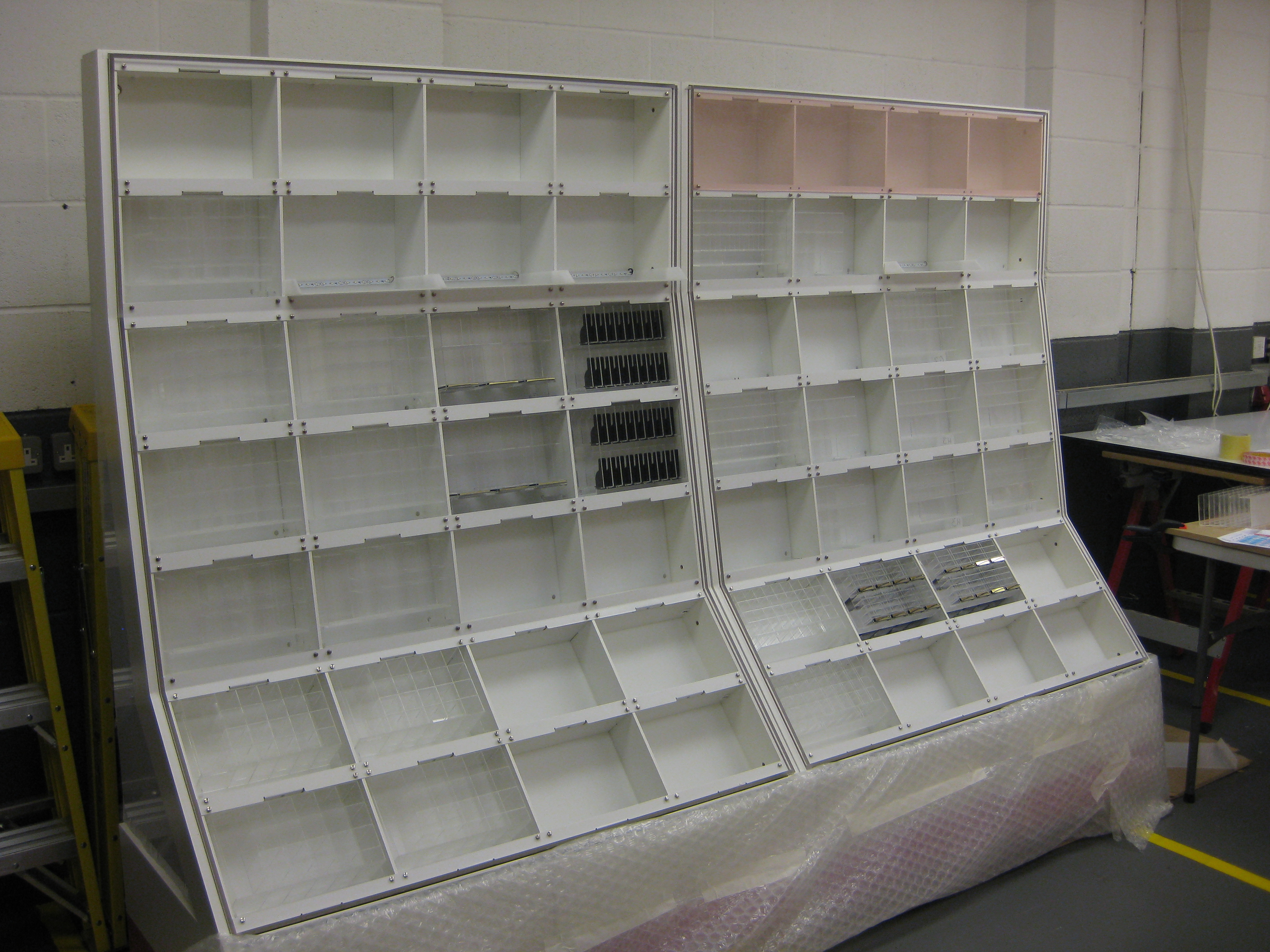 |
 |
 |
 |
 |
 |
| Tester Drawer Showing Etching | Tester Drawers | Finished Eggcrates | Assembled Carcass | Working Illumination | Printed Facias Installed | Thumbscrews And Tolerance | A Finished Section | The Unit In Store |
Innovation
In an effort to create new business, the company decided to create some units to show off our capabilities, and some of the latest tech. These units became the core of our "Innovation Roadshow" and received a great deal of interest.
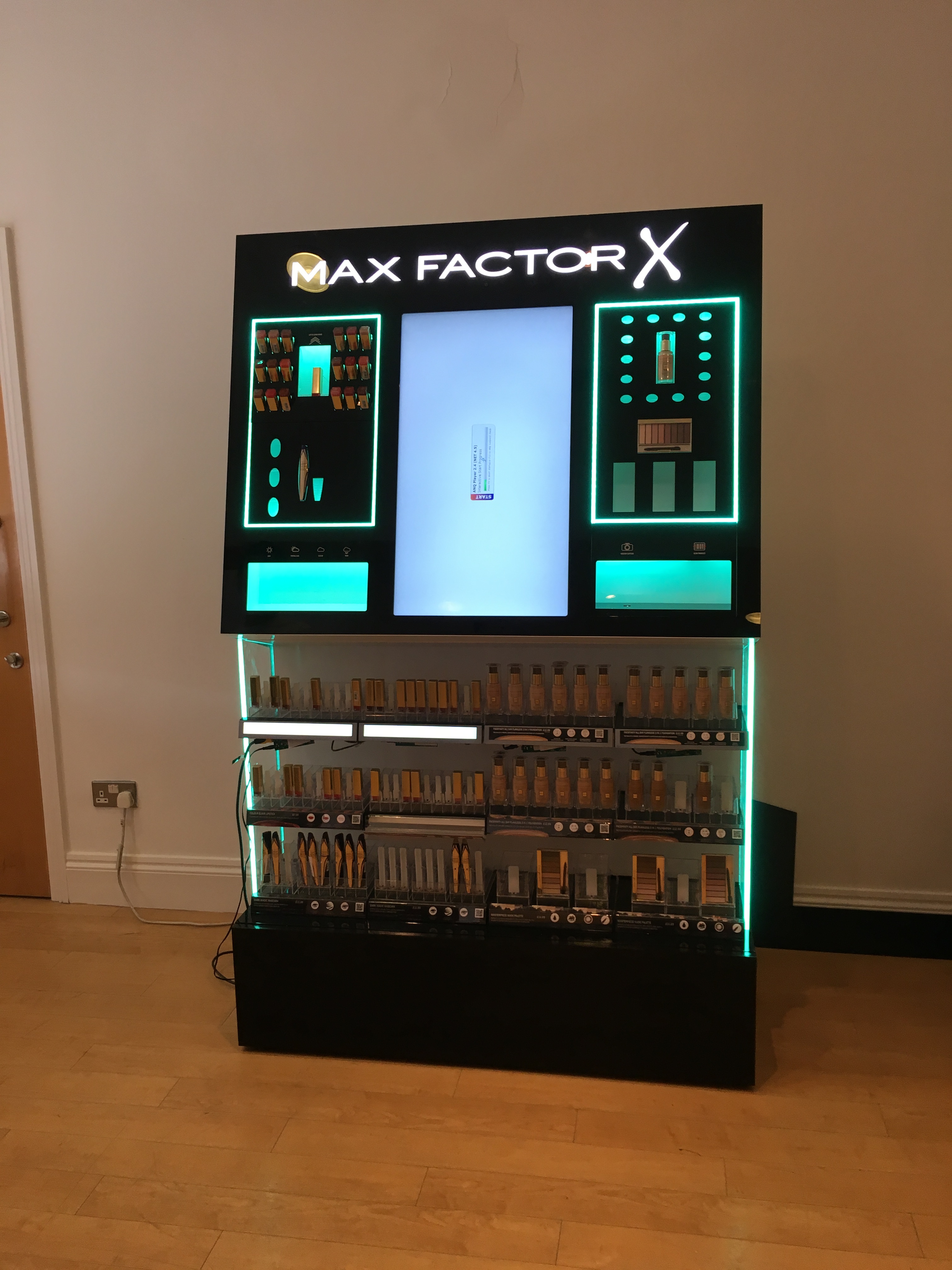
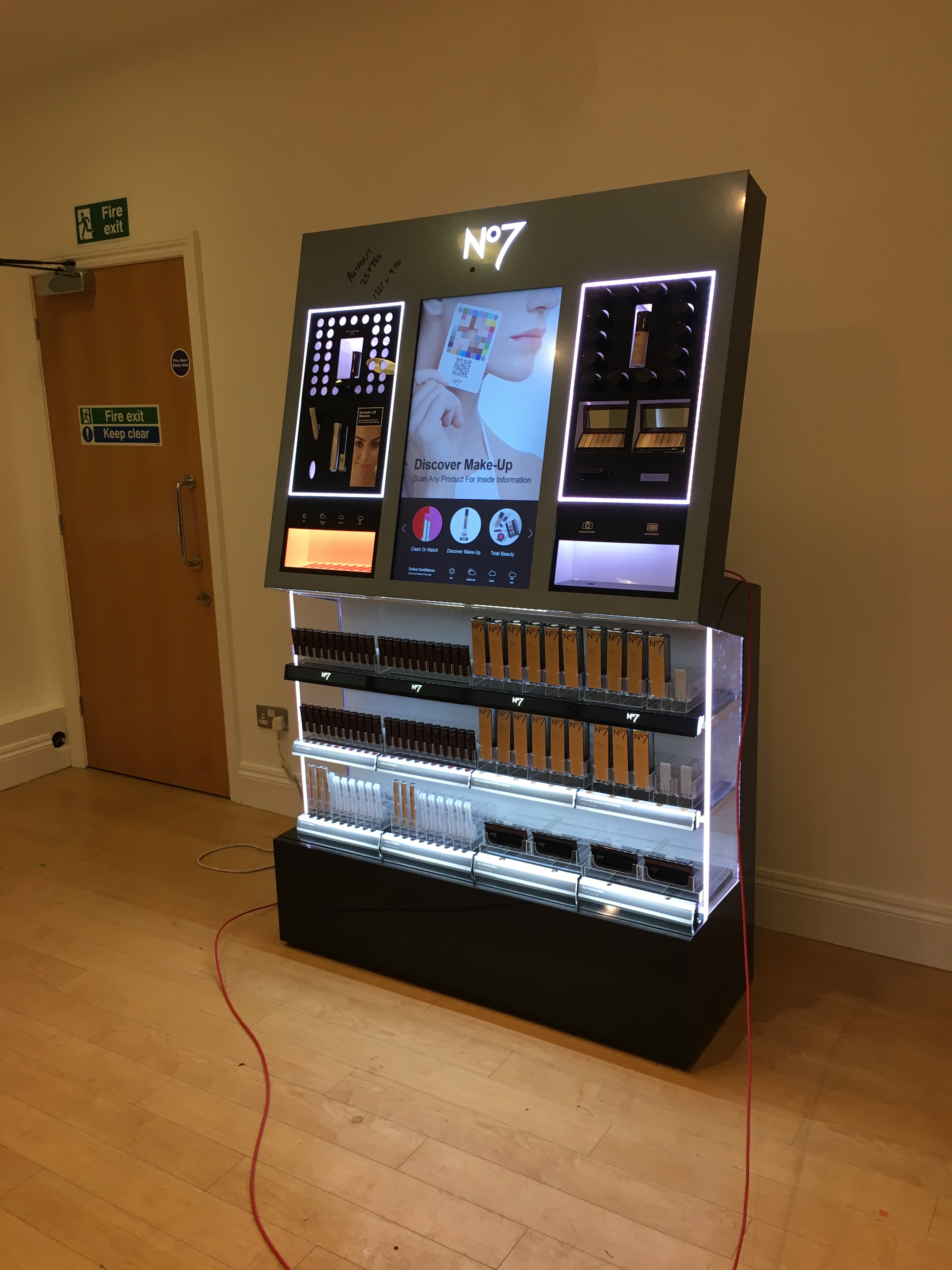
Firstly, came the "Unit of the Future", which was the main tech-filled demo piece. A large touchscreen fills the centre, with a couple of tile pods around it. Top left features a "Lift and Learn" product, which when picked up starts a video on the screen. Below this is a mirror and light-box with colour controlled LEDs, allowing you to simulate various lighting scenarios such as full daylight, or indoor lighting. This was controlled on the screen, and could be switched between the mirror and the light box.
 |
 |
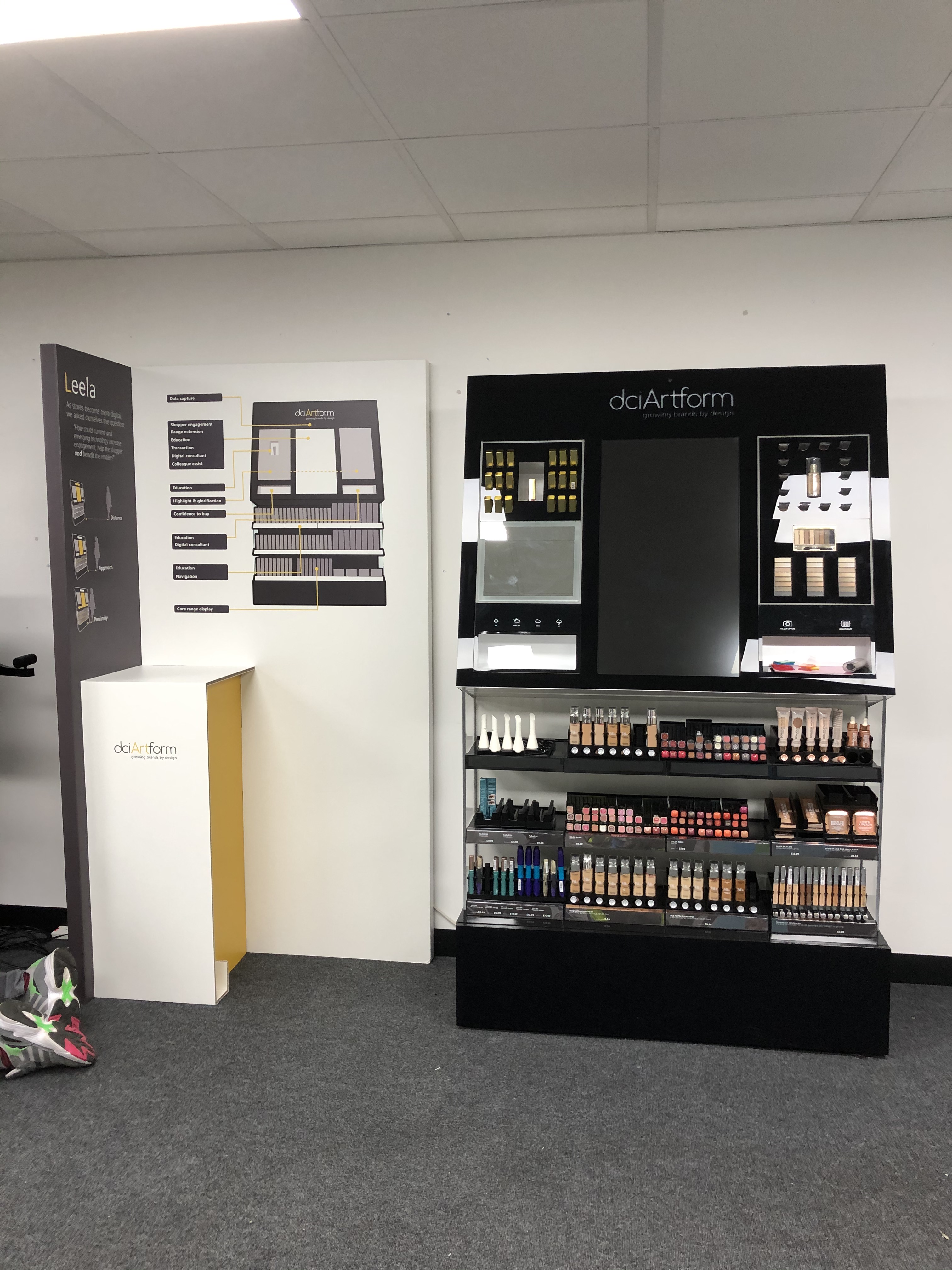 |
| Branded For Max Factor | Branded For No. 7 | Unbranded For The Roadshow |
The pod on the bottom right has a barcode scanner as well as an NFC scanner which perform a "Pick and Place" demo; essentially the opposite of the lift and learn, it show a video about the scanned product. In the same pod is a colour scanner used to perform "Clash and Match", where a customer can scan an object, i.e. a handbag, and the software will determine what shades of the various products will clash, or match the scanned item.
The shelves at the bottom of the unit have individually selectable lighting, allowing the system to highlight a single product range when chosen on the screen. The tickets on the front of the shelves are digital screens, which can display attractor graphics, as well as the standard artwork. When combined with the main system, this allows easy updating if the content - no store staff involvement is required. It also allows for hidden barcodes; used by the staff to order more stock. The unit would be connected to the internet for automatic updating, which would also allow easy ordering of spare parts, and displaying of updated planograms.
The unit features a camera, that can collect metrics on shoppers, such as dwell time, and estimated age and gender. This camera is also utilised to provide a power saving mode; when no-one is near it turns off the lighting and switches to an attractor graphic on the main screen. As people get closer, it wakes up parts in groups depending on the distance.
For the roadshow, the unit was modified to fit wheels for transport. It is a very heavy unit, and also only slightly shorter than a doorway, making the use of a "wheelie-board" impractical. I designed a cantilevered cam system that allows one person to easily raise the unit and lock the wheels down, making it surprisingly easy to move. When in place, the wheels can be raised making it solid and unmoving.
The next unit was a consultation table featuring a large mirror, around which is colour temperature adjustable lighting, controlled by a set of capacitive touch sensors. To the side of the mirror is a box with a "Lift and Learn" sensor, which starts a video on a screen hidden behind the mirror. This was achieved using special 2-way mirror, and selective masking. The table surface features a wireless charging point, as well as retractable cables for charging apple and android phones.
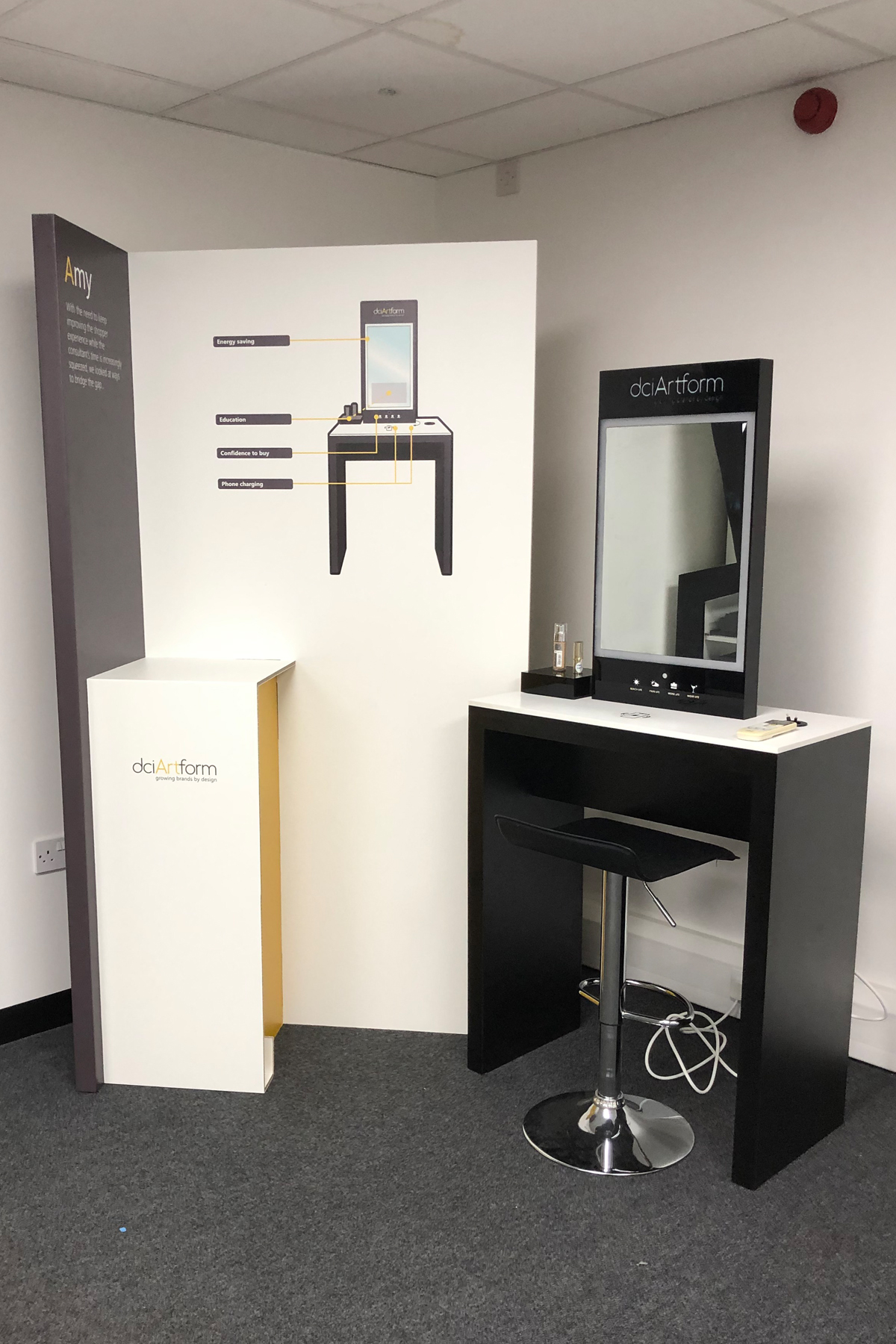 |
| Smart Consultation Unit |
Most of our units are made for large clients capable of absorbing the cost of several large injection mould tools, due to their large rollouts over the world. Smaller brands tend to have to rely on the store's own furniture, resulting in a generally bland, similar appearance between competitors. As an idea to help smaller brands afford a custom, dedicated unit we designed the 80:20 system; 80% of the unit, the structural parts and main shelf mass, are owned by our company, and the parts that are seen, shelf fronts, headers etc. are owned by the client and designed specifically.
In order to achieve this, we designed a removable shelf front that receives power when attached; no wire connectors required. As part of the roadshow we made a selection of shelf fronts; a standard angled shelf front, A solid glowing front for glorifying products such as perfumes, an angled shelf utilising our patented "Lightblade" technology, and a matching front with a built in digital screen. I built the latter and set up a Raspberry Pi Zero W to run the video - this took quite some tweaking as the screen is a very odd size.
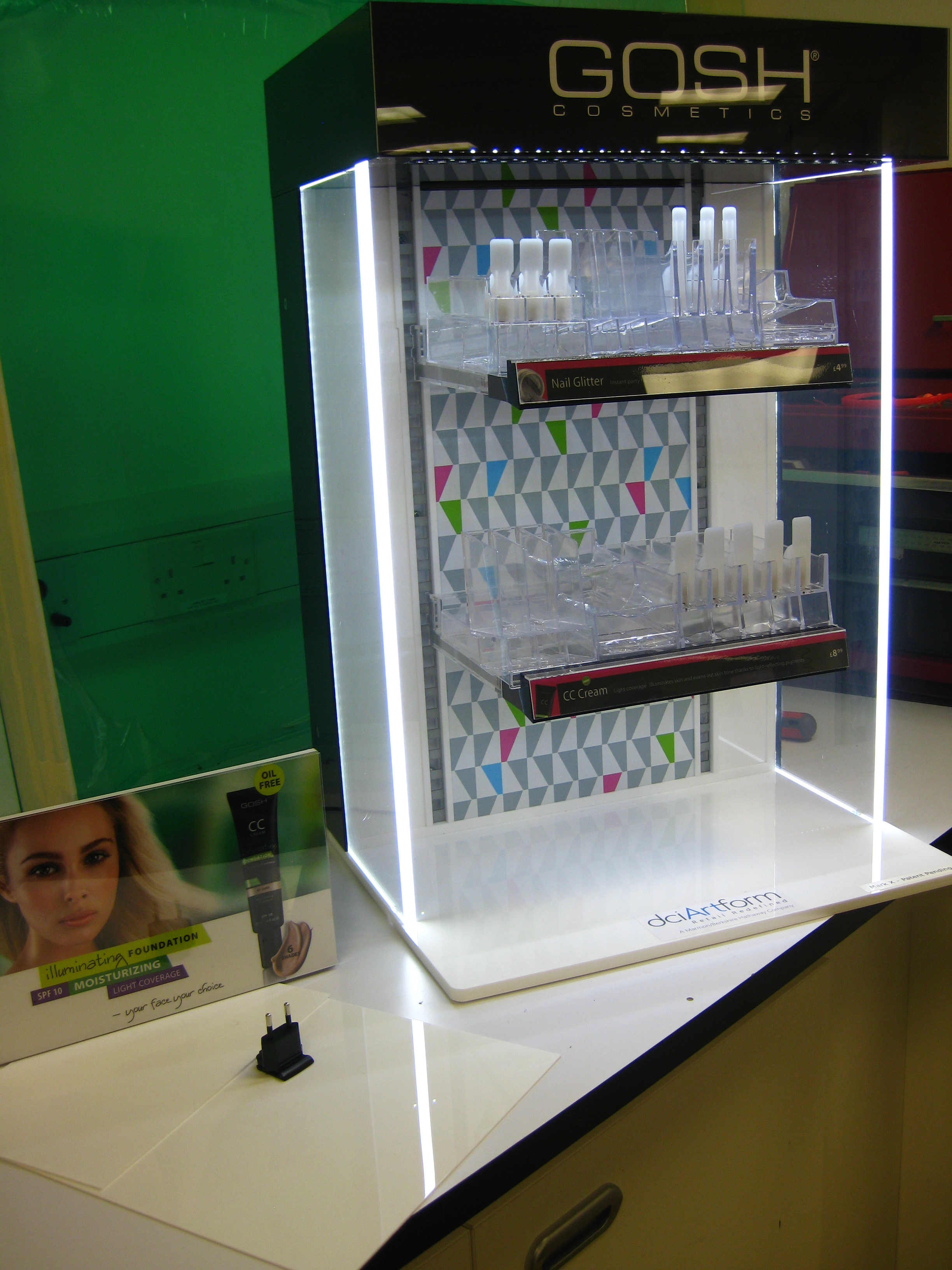 |
| 80:20 Shelving Rig |
NYX Drawer Tester
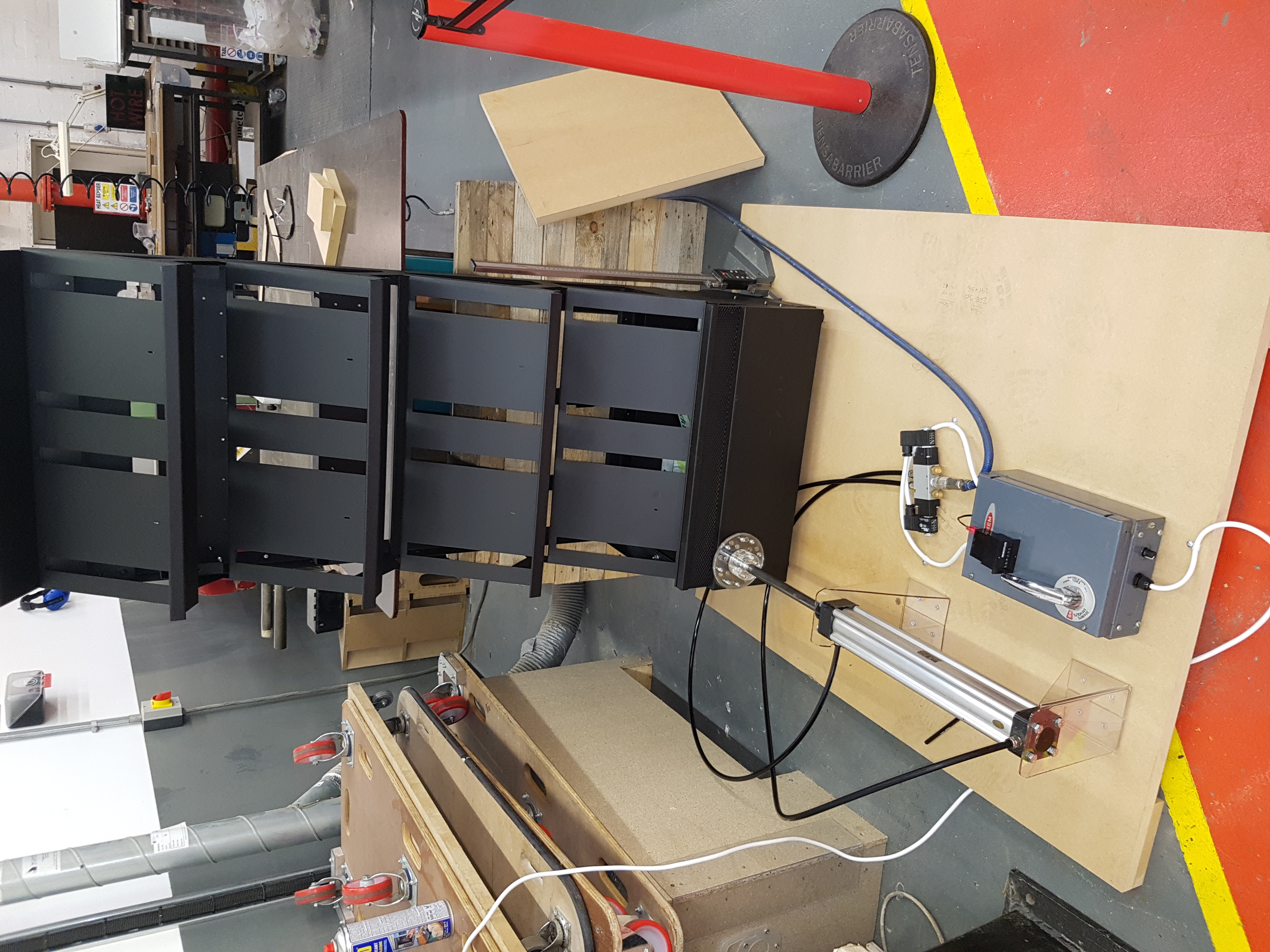
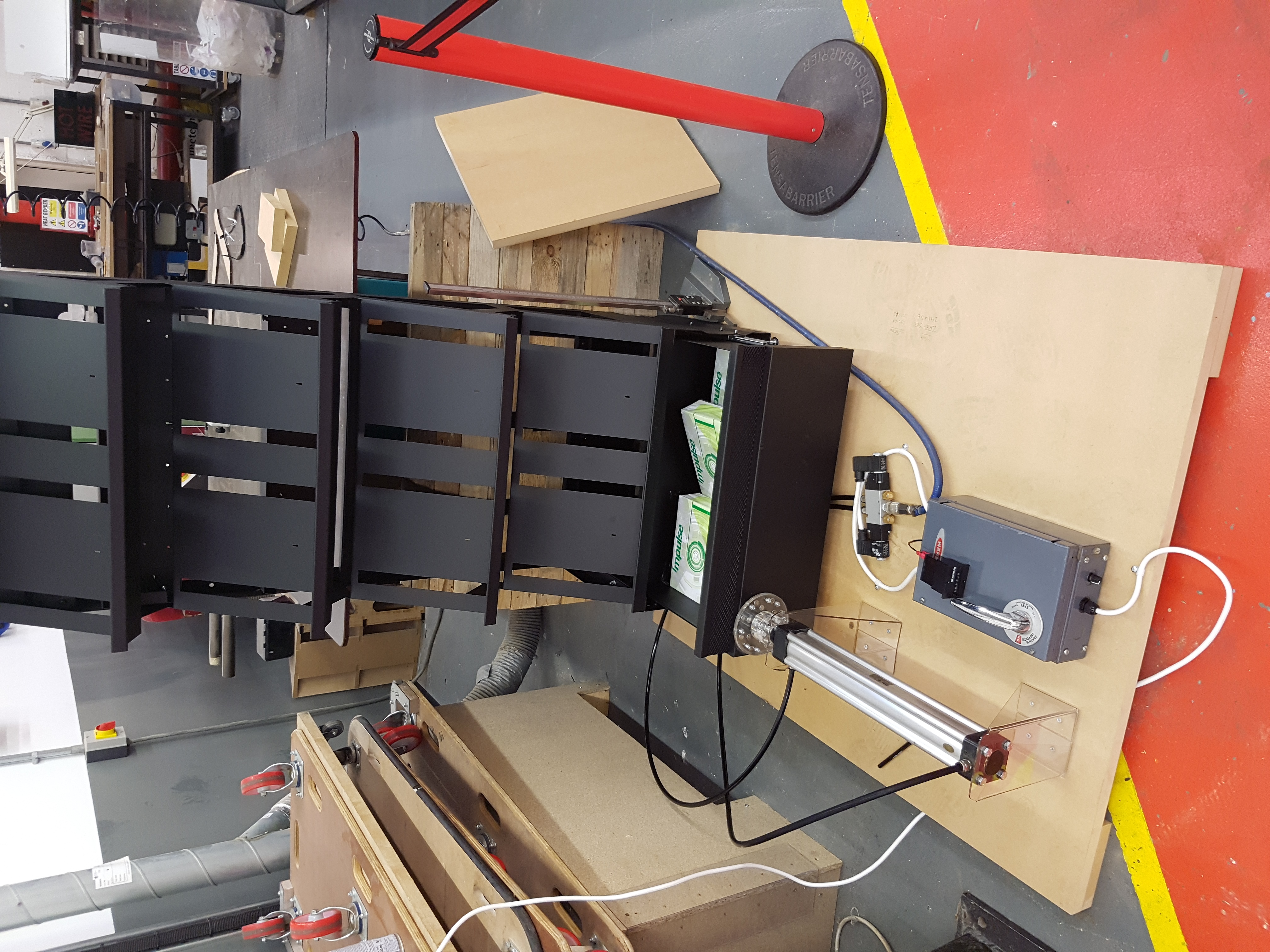
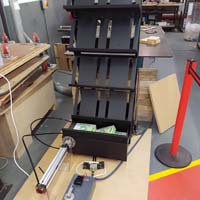
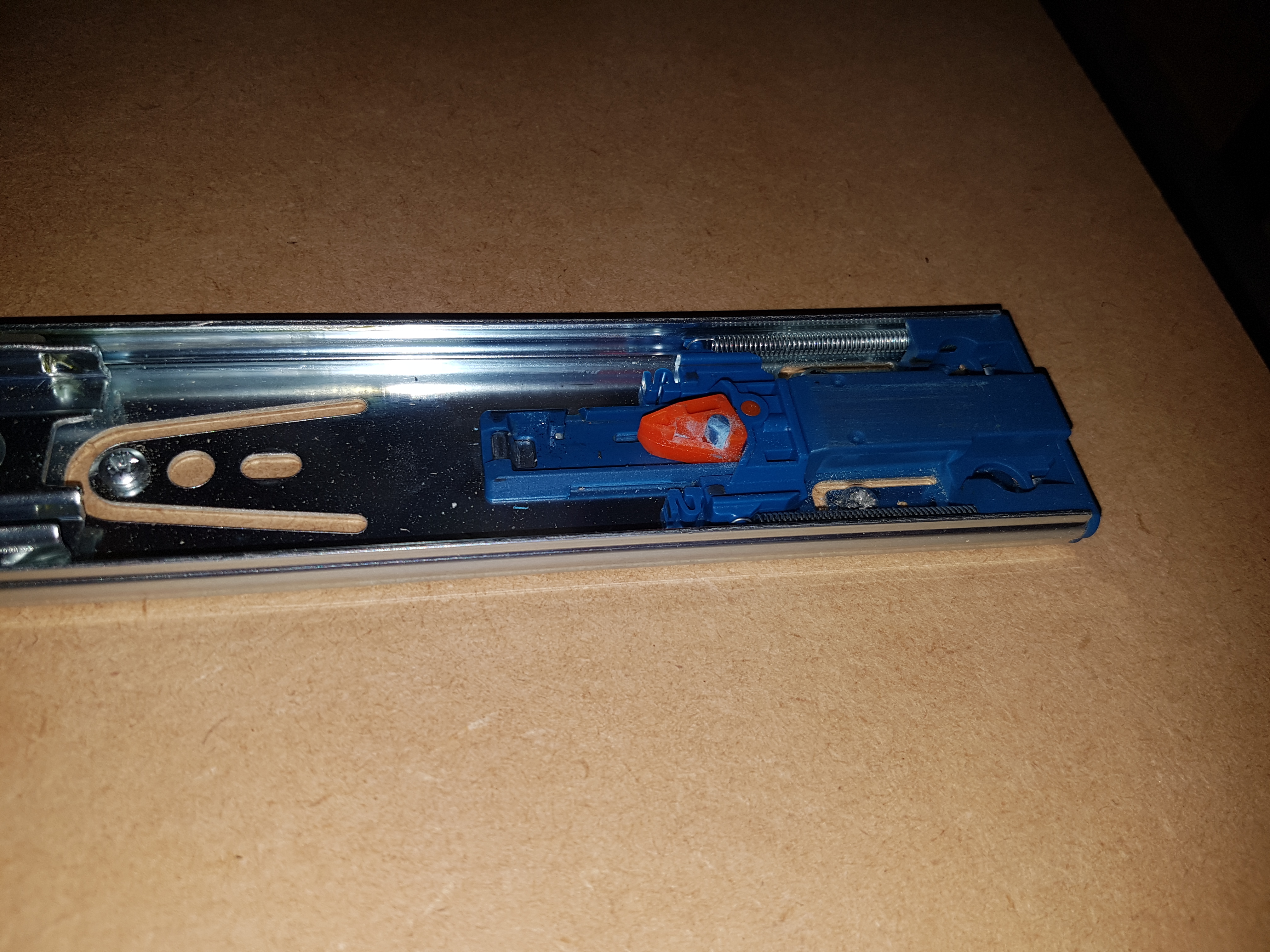
After manufacturing a number of NYX units we received complaints that the drawer at the bottom of the unit was failing. In an effort to find the cause of the problem I created a rig to open and close the drawer until failure. When pushing in the middle of the drawer it managed the equivalent of over ten years use without any signs of damage.
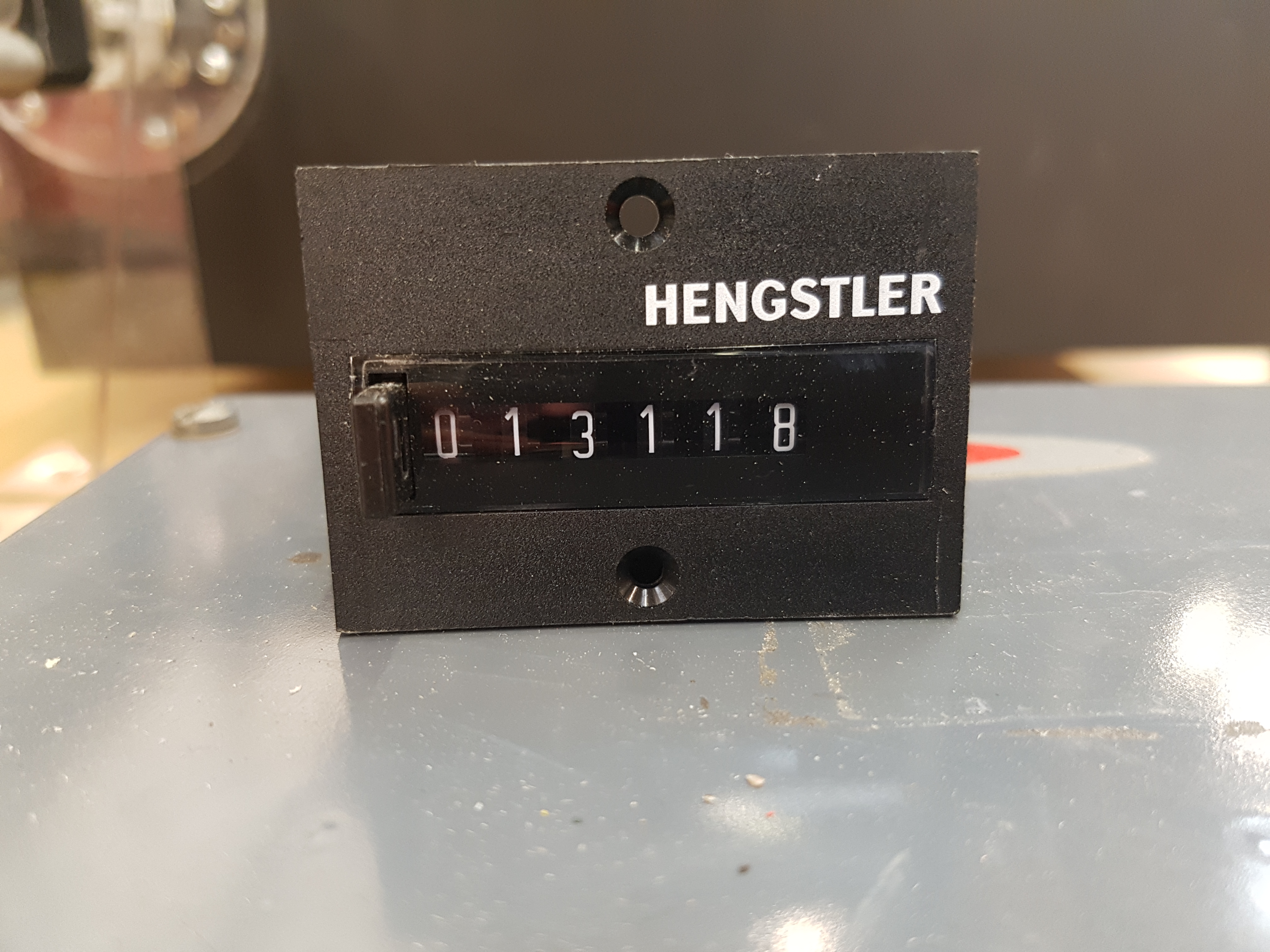
To simulate the worst-case scenario we moved the push point to the edge, allowing the 1 metre wide drawer to bind diagonally. Even with this abuse the drawer managed over 13,000 repetitions before failure. We determined that the cause of failure in-store must be due to mis-use rather than poorly spec'd parts.
The rig was built around a large pneumatic piston and air switches. These were switched by an Arduino mounted relay shield, which also ticked the counter for each cycle. This was all built into a large industrial switch-box purely to use the satisfyingly large lever. The Piston was attached to the drawer front using a fabricated 'pad' full of magnets so it could break away should anything fail. The drawer was filled with reams of paper to simulate the proper weight.
 |
 |
 |
 |
 |
| Drawer Test Rig | Drawer Test Rig | Rig Video | Wear on Drawer Runner | Counts to Failure |
Other Small Projects
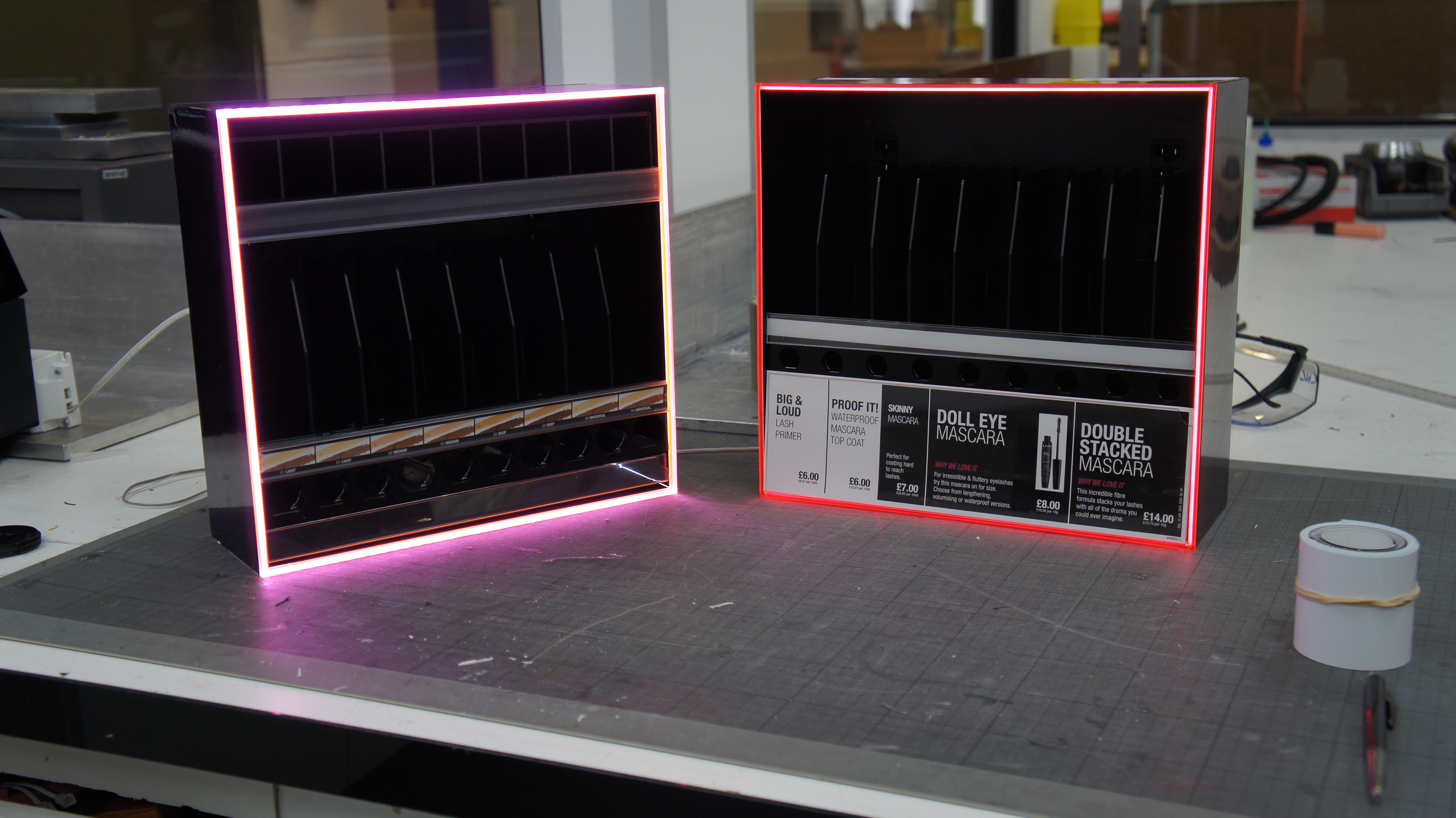
Below is a series of photos of assorted small projects, and a brief description.
 |
 |
 |
 |
 |
 |
 |
 |
 |
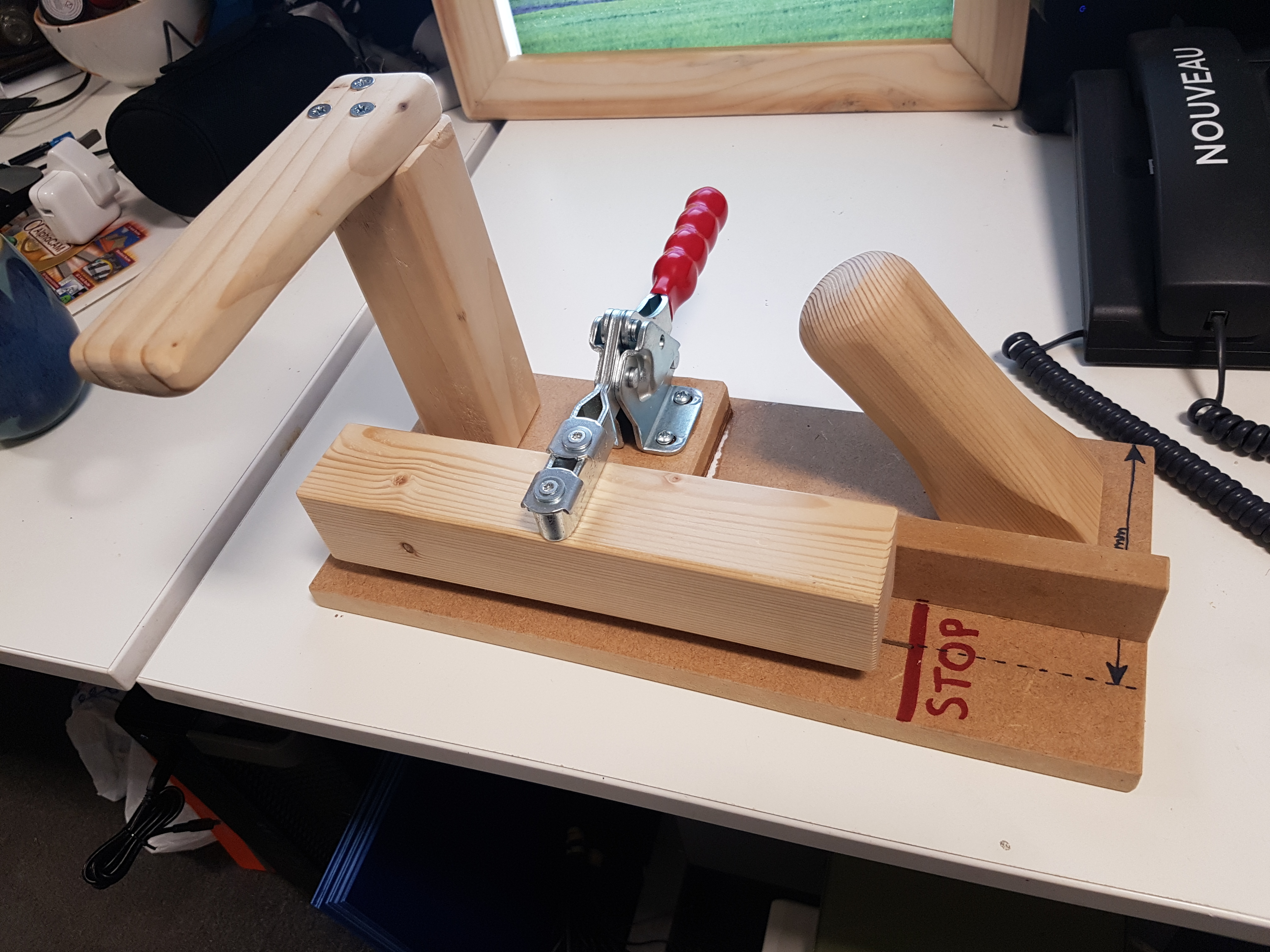 |
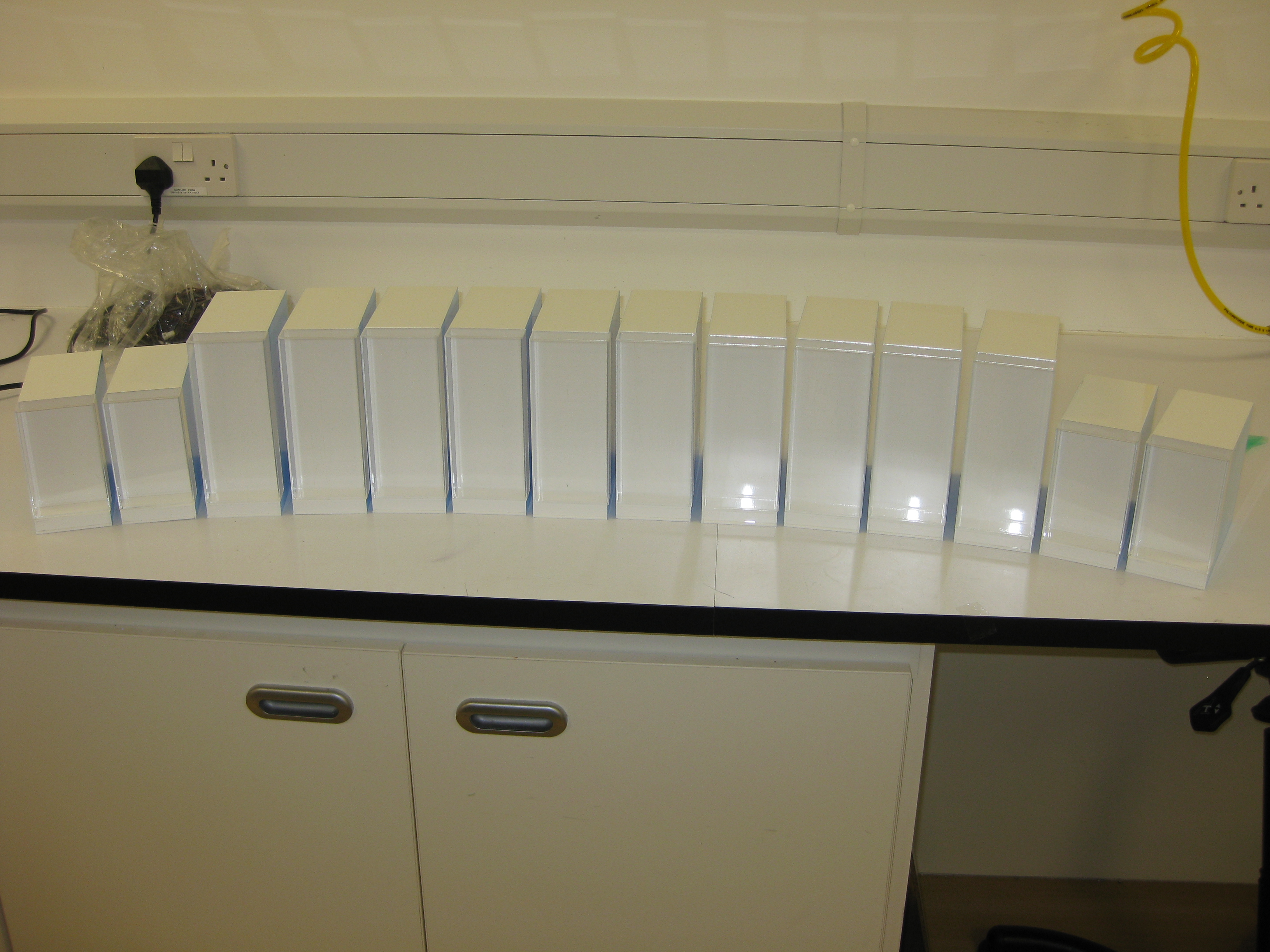
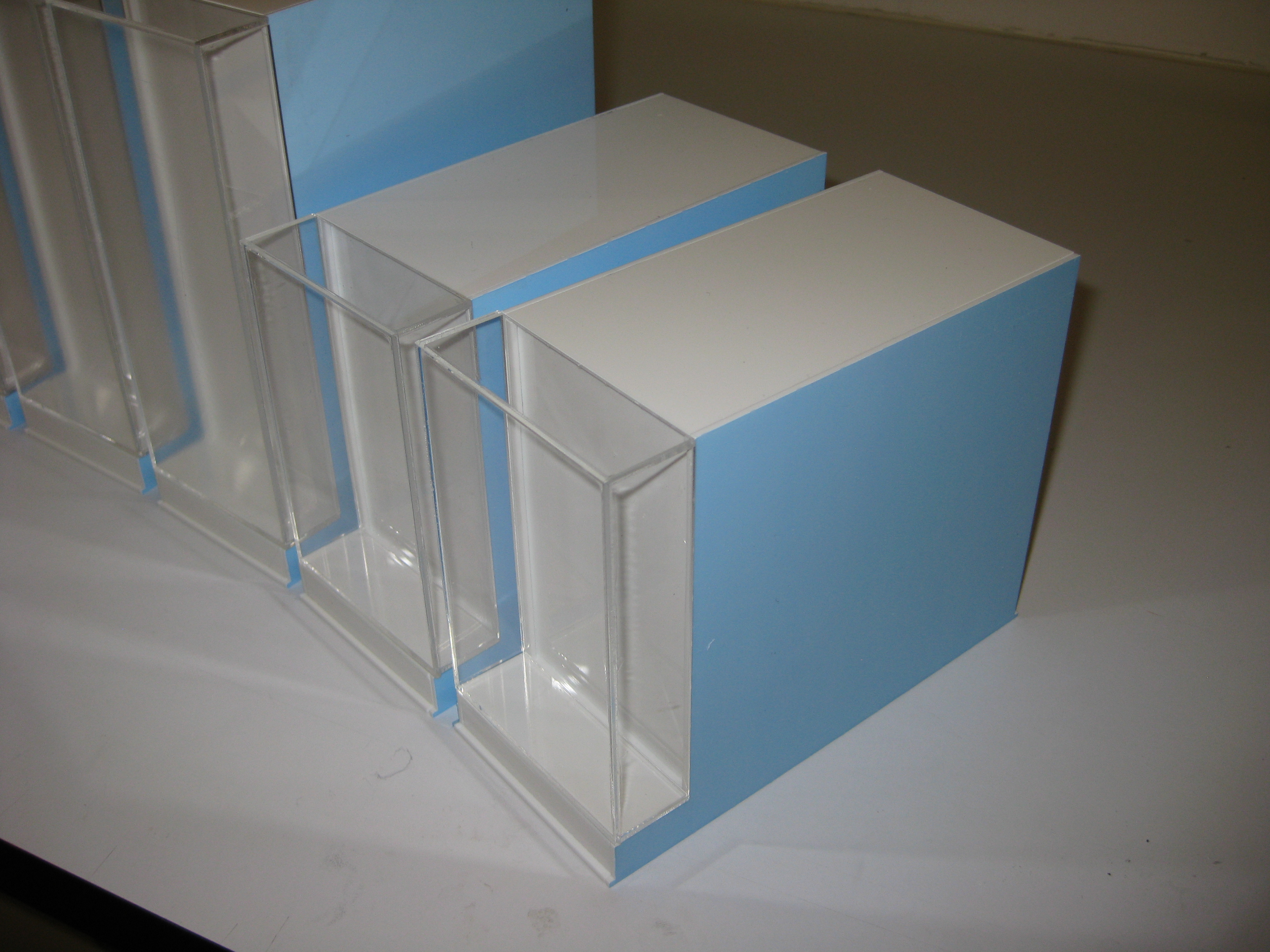
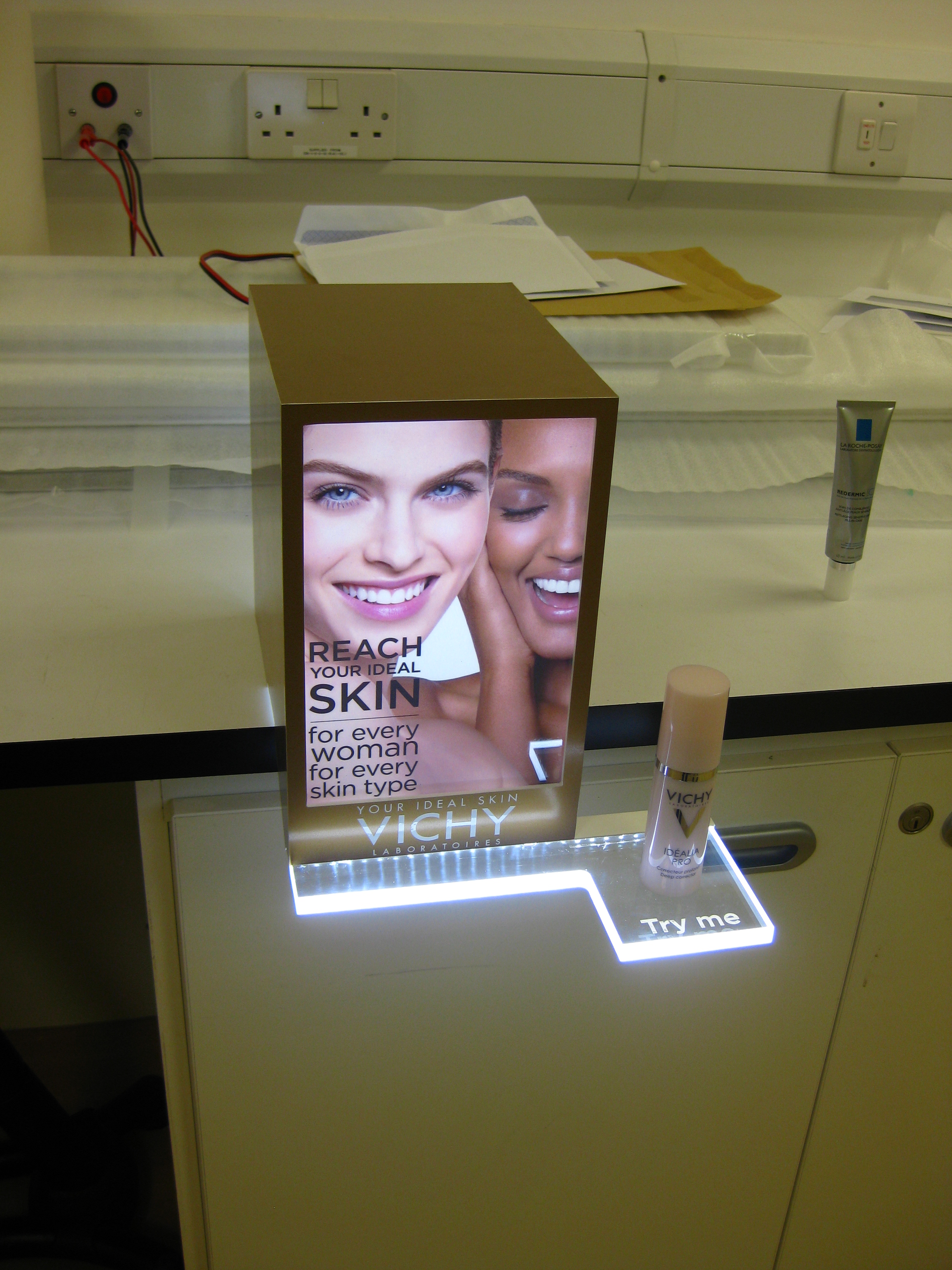
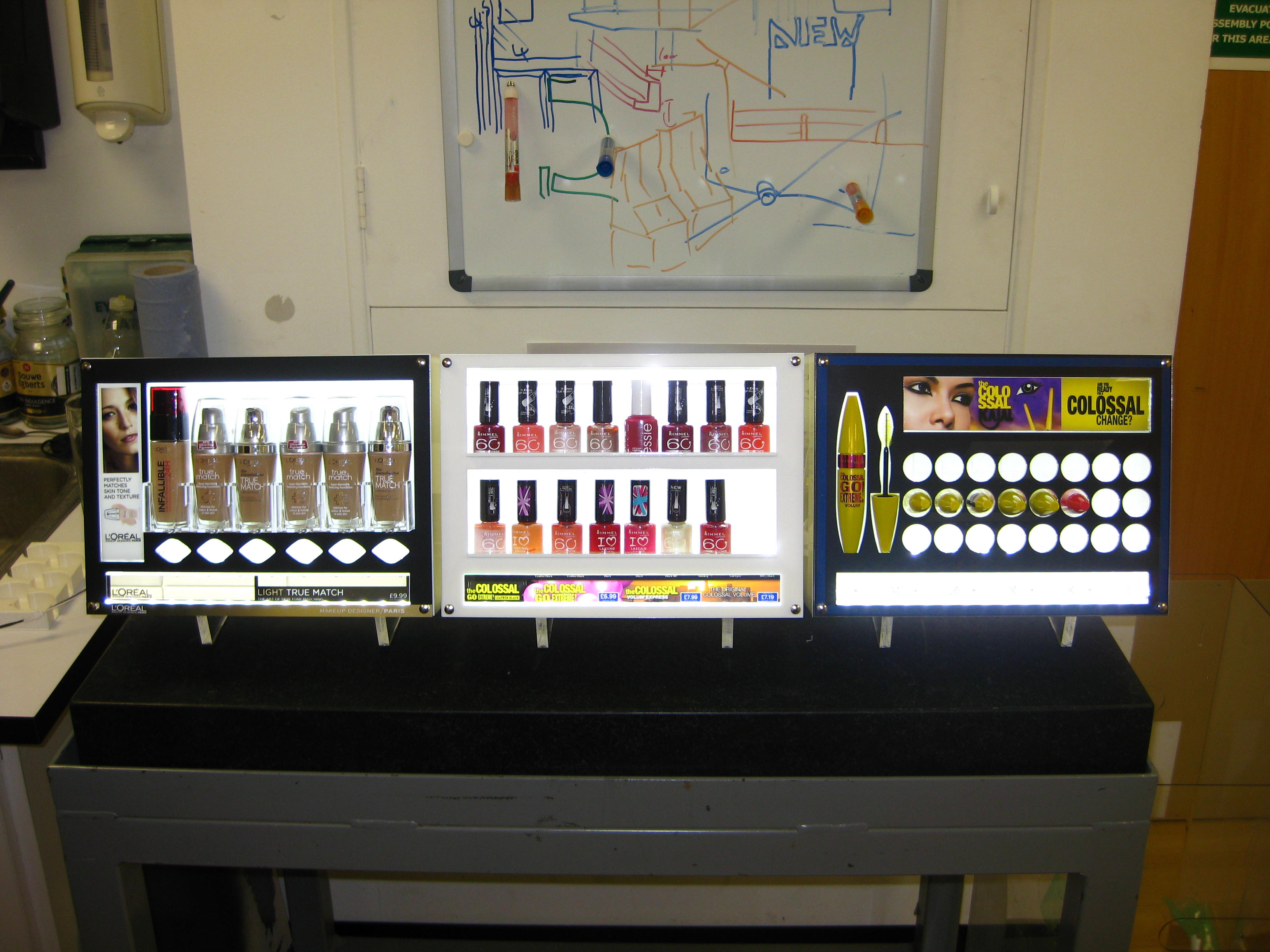
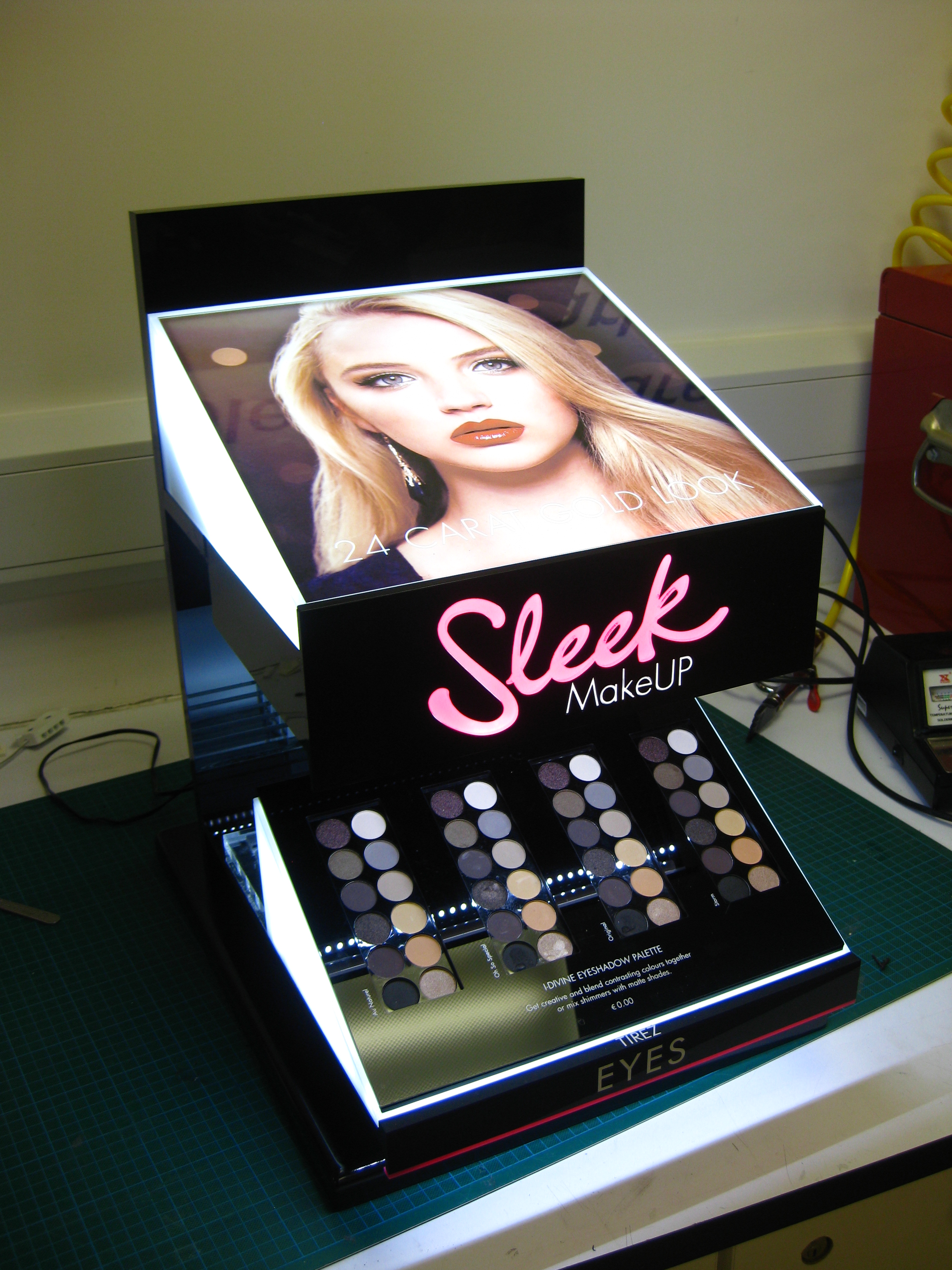
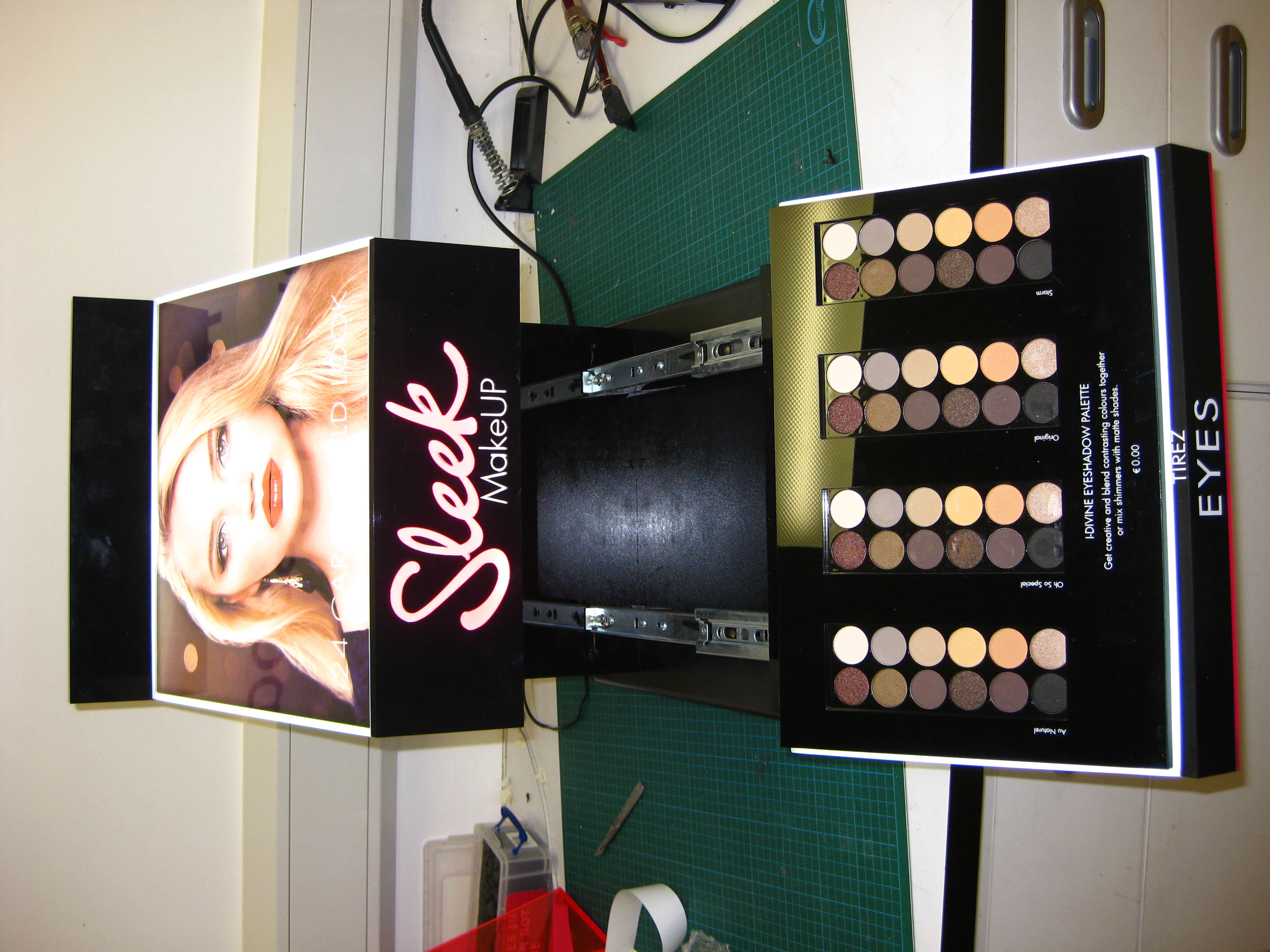
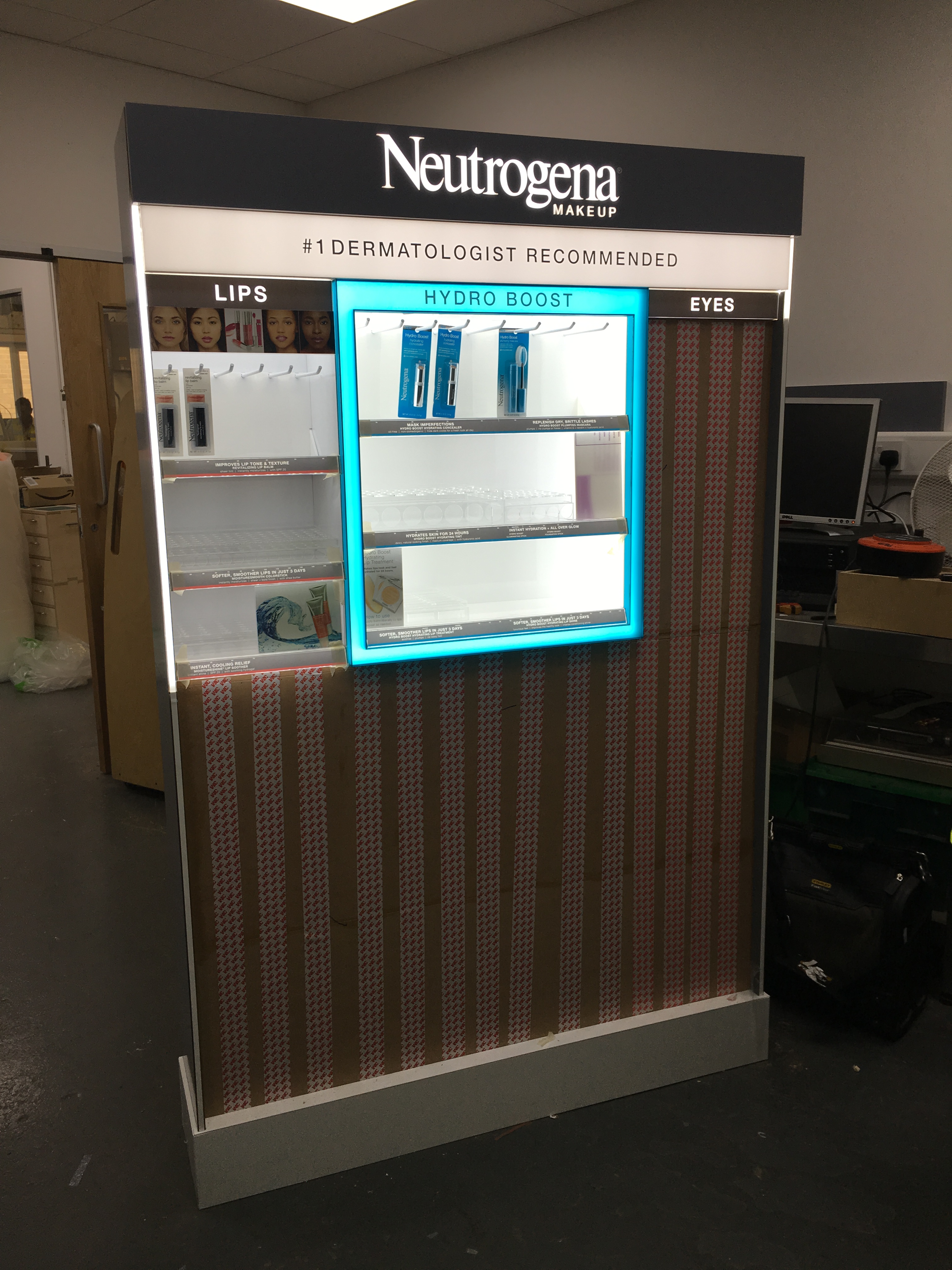
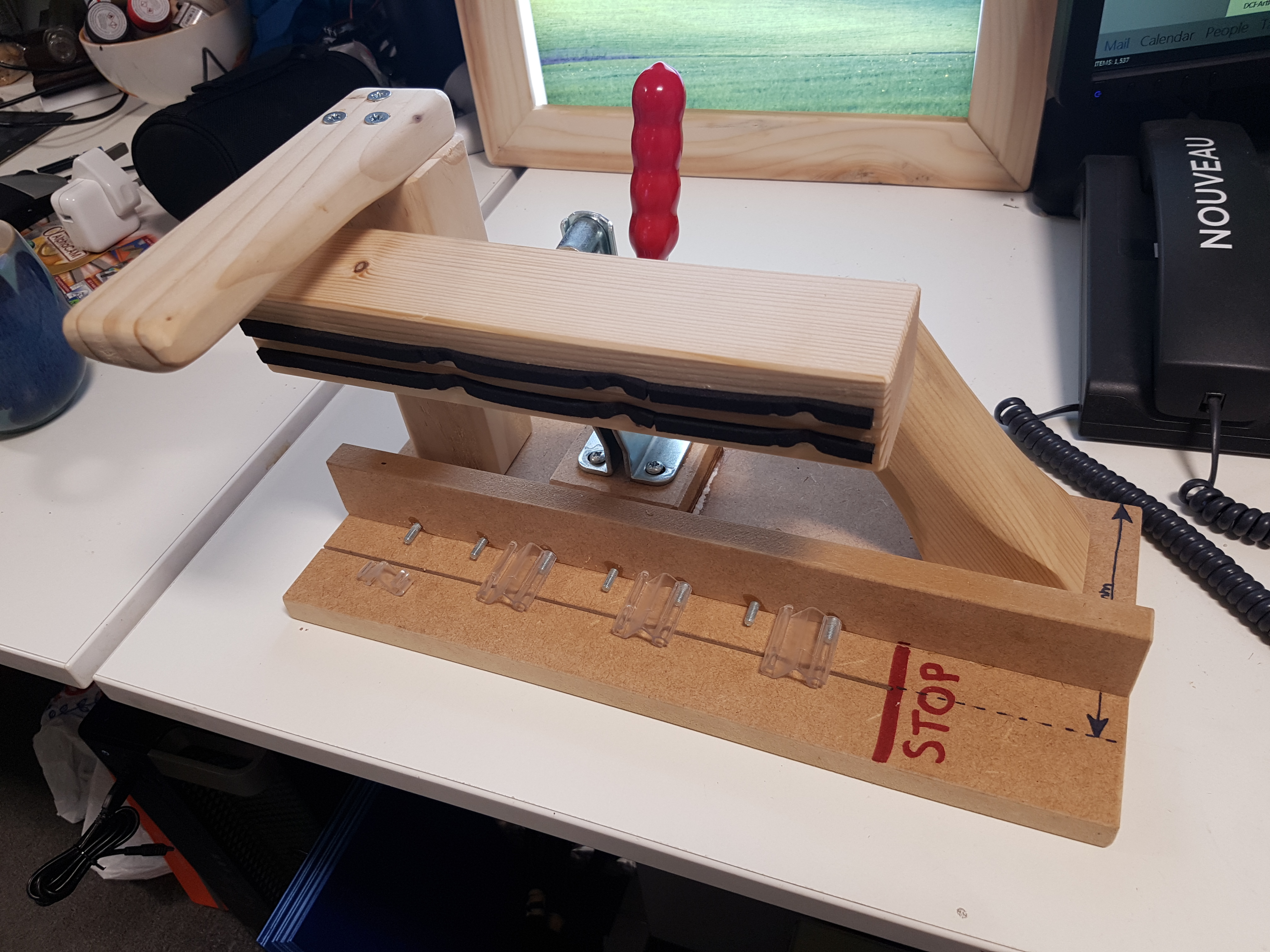
| A pair of alternative prototypes for creating an illuminated promo pod for a NYX system. | A batch of L'Oreal glorifier lightboxes. | Detail of the L'Oreal lightboxes showing fabricated clear lenses. | One of a set of lightboxes produced for Vichy, featuring tricky illumination, etched text and vinyl wrapping. | Original prototypes of the Superdrug tile system, focussing on smaller brands, such as Essie. | A prototype for Sleek Makeup. Notable for its use of drawer runners. | The power to the lighting was supplied down the drawer runners, for a clean look. | A Neutrogena hot-spot showing the use of vinyls and LED tinting film to produce a striking effect. | A Jig to safely cut down a large quantity of small mouldings on the tablesaw. | The clamp securely holds the parts in place, allowing the user to keep their hands well away from the blade. |
Sleeper Cab Storage Bin Hinge
I came to this project towards the end, after the main design was complete. Initially I was tasked with performing Finite Element Analysis on the assembled hinge to ensure it would perform as required. The hinge pins were then changed from machined steel, to injection moulded nylon; I change the models and drawings to be suitable for manufacture.
When the first moulded samples came in, I was tasked with assembling and testing the parts for fit and function, and then to produce an assembly plan utilising custom made jigs. One of the parts required minor rework, which was modelled and sent to the toolmaker for modification. I then assembled the first batch, testing each one to ensure there were no unforeseen issues.
Armoured Vehicle Entry Demo
We made a demo panel for an exhibition, showing the full entry system on one side of the panel. This involved making some custom pushrods and a bellcrank assembly so that both interior and exterior handles were operable.
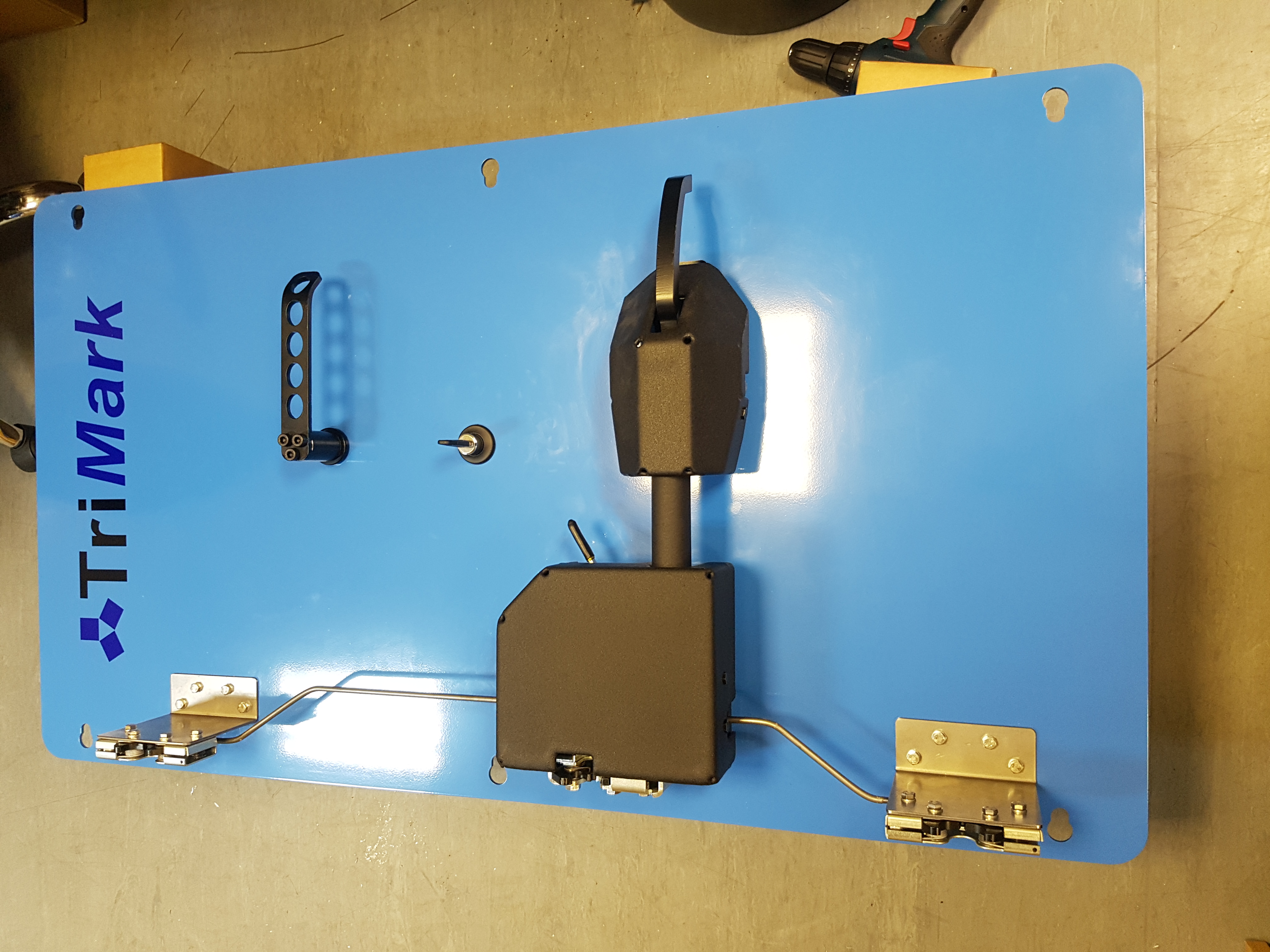 |
| Exhibition demo panel |
